- Home
- China
- World
- Europe
- Politics
- Business
- Opinions
- Tech & Sci
- Culture
- Sports
- Travel
- Nature
- Picture
- Video
- Live
- TV
- Specials


Share






Copied
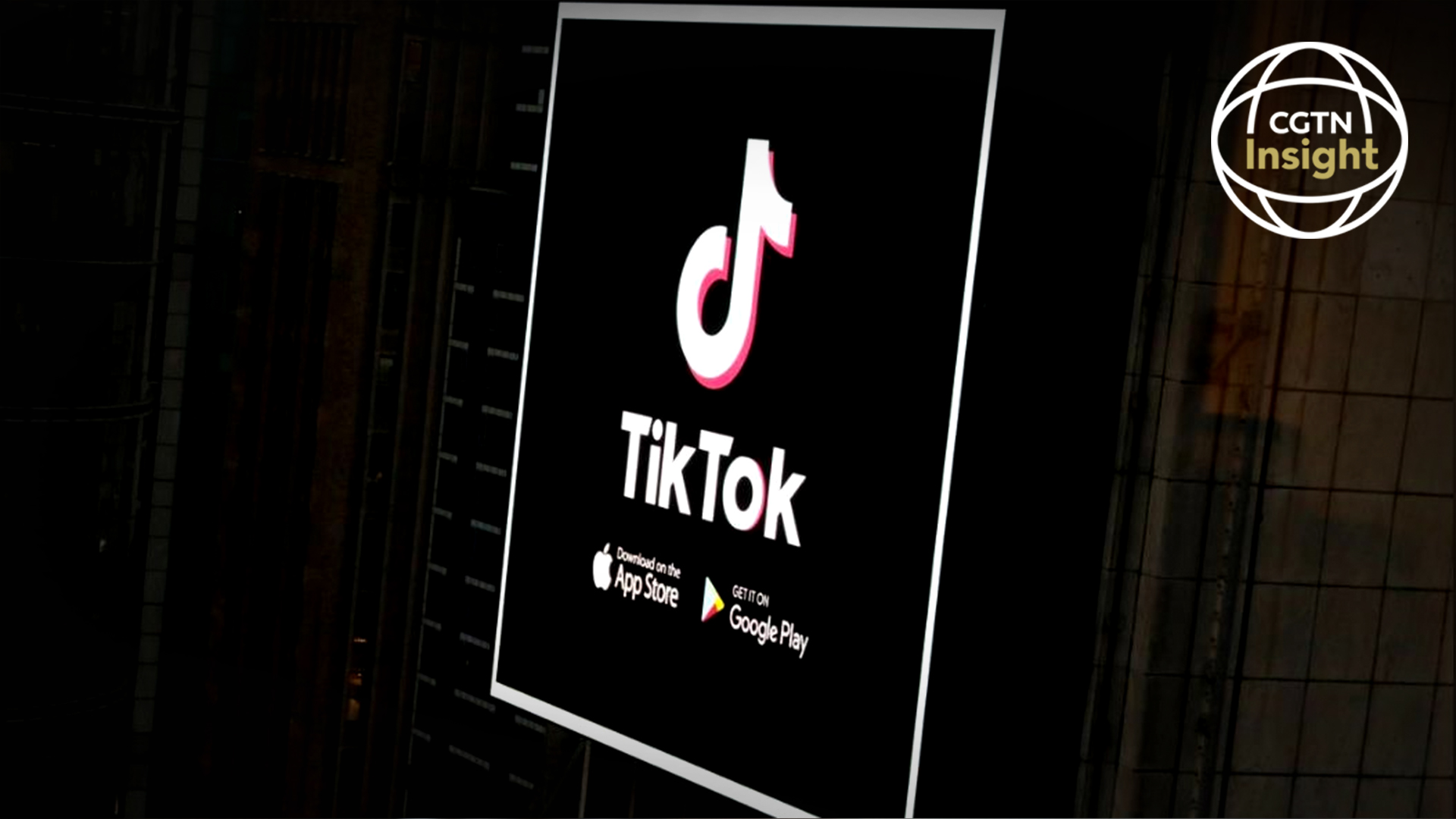
The popular video-sharing app, TikTok, has become the Trump administration's new punchbag in its anti-China policy. Americans are advised only to download the fun app if they want their private information "in the hands of the Chinese Communist Party", says Mike Pompeo. White House adviser Peter Navarro has even accused it of engaging in "information warfare" against the U.S., indicating that the president is "just getting started" by considering banning it, together with the popular messaging app WeChat.
So, what exactly is the information that TikTok is collecting? According to the company's privacy policy, users registering or uploading content to the platform are asked to provide their name, age, email or phone number, payment information, and their contacts if they want to connect to other users through their phone or social media contacts. It also automatically collects users' IP addresses, location, device information amongst other things. But that's the same as almost all social media platforms, including Google and Facebook.
As a young and fast-developing tech company, TikTok does sometimes have to grapple with security vulnerabilities, but coding flaws are almost unavoidable in any app and it's too far-fetched to link them to national security threats. In January, Cybersecurity Company Check Point said in a report, that it had found several security flaws in TikTok which potentially allowed hackers to take control of the accounts and manipulate content. But the problems were quickly fixed when they were raised, and according to Oded Vanunu, the lead researcher on Check Point's report, TikTok "were very happy to get this kind of information and were happy to cooperate."
TikTok's biggest vulnerability, from Washington's perspective, seems to be its link to China, as it is owned by the Chinese tech company ByteDance, which is headquartered in Beijing. TikTok has made it clear that it stores American user data in the U.S. with backups in Singapore, and that it has never provided user data to the Chinese government and wouldn't do so even if asked.

TikTok is hugely popular with young people in the U.S.. /AP
In common with other social media companies, TikTok follows the local rules of the countries where they operate. According to TikTok's latest transparency report, the company received 500 government requests for data during the second half of 2019, among which 302 were made by India and 100 were made by the United States. The report says it didn't receive any user information or content removal requests from China. But that doesn't seem to dispel Washington's mistrust, with Peter Navarro saying it wouldn't help even if TikTok was separated off as an American company.
The Committee on Foreign Investment launched a national security review of ByteDance late last year after its one-billion-U.S.-dollars acquisition of the U.S. social media app Musical.ly which was completed in 2017. And the U.S. Federal Trade Commission and Justice Department are probing whether TikTok has failed to meet its obligation to protect children's privacy under a previous agreement.
But up until now, there has been no concrete evidence showing that TikTok poses any threat to U.S. national security, which makes TikTok look simply just like another scapegoat of the China-U.S. rivalry.
Washington has taken a similar approach to Huawei, banning it citing national security concerns and asking other countries to do the same without providing any evidence. It seems there's a presumption from the Trump administration that any Chinese company popular in the U.S. will threaten its national security and it is doing all it can to find a way to back up that argument.
It is looking at China through ideological lenses which is leading to serious misconceptions about China's intentions. A White House report released in May said that for decades, the U.S. has hoped that China would become closer to the U.S. model through deepening engagement of the two nations, but that hasn't happened. FBI Director Christopher Wray claimed in a recent speech that China was "the greatest long-term threat to our nation's information and intellectual property, and to our economic vitality."
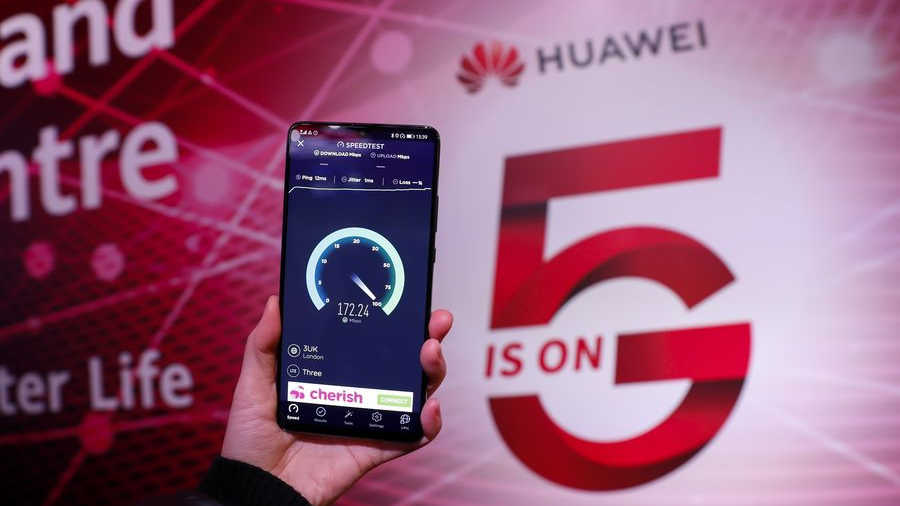
A staff member tests the Internet speed with a Huawei 5G mobile phone at Huawei 5G Innovation and Experience Center in London, Britain, January 28, 2020. /Xinhua
The U.S. is assuming that China would become an opponent or even an enemy as it becomes more powerful. But as Chinese Foreign Minister Wang Yi pointed out, "aggression and expansion have never been in the genes of the Chinese nation throughout its 5,000 years of history."
More importantly, the environment for ideological confrontation between capitalism and socialism no longer exists as countries today have intertwined interests in trade, finance, fighting terrorism and dealing with all kinds of unconventional challenges like the coronavirus pandemic. It is not in China's interest to take on the U.S. as an enemy, nor will it ask TikTok to provide its user data or force Huawei to spy, because that would kill the country's leading tech companies.
Using a Cold War mentality to handle international relations today is like treating a healthy person with cancer therapy. A technological decoupling between the U.S. and China will hurt both countries and undermine innovation. Domestic companies should try to win in the marketplace by upgrading their products, not through protectionist policies imposed by the government. Shutting its doors to foreign tech companies would harm America's reputation as a global innovation center.
After all, TikTok is just a fun video-sharing platform. Its focus is on sharing creative short videos like dancing and lip-syncing. Does the Trump administration really want to deprive American youngsters of the right to have fun?
(If you want to contribute and have specific expertise, please contact us at opinions@cgtn.com.)