- Home
- China
- World
- Europe
- Politics
- Business
- Opinions
- Tech & Sci
- Culture
- Sports
- Travel
- Nature
- Picture
- Video
- Live
- TV
- Specials


Share







Copied
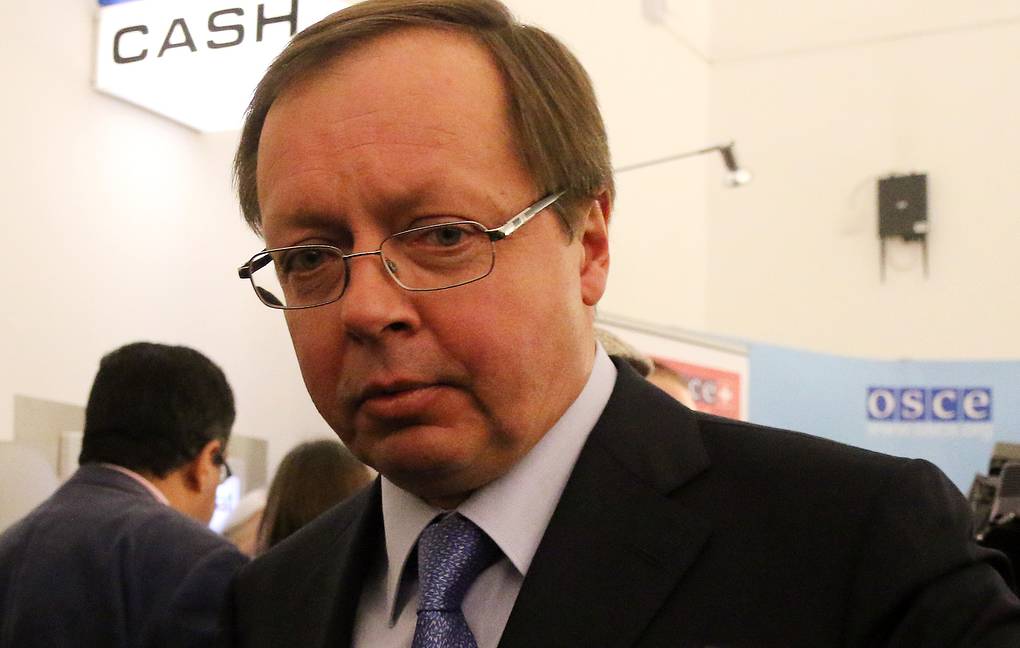
File photo of Russia's ambassador to Britain Andrei Kelin. /AP
Russia's ambassador to London has denied accusations by Britain and its allies of helping hackers target labs conducting coronavirus vaccine research, in a UK television interview.
Andrei Kelin said the allegations Thursday by Britain, the United States and Canada that a hacking group called APT29 was behind the online attacks, and "almost certainly" linked to Russian intelligence, made "no sense."
"I don't believe in this story at all, there is no sense in it," he told the BBC's Andrew Marr Show, adding he had learned about the hacking collective's existence from British media reports. "In this world, to attribute any kind of computer hackers to any country, it is impossible."
Kelin, who was appointed Moscow's top envoy in Britain last November, also rejected a separate claim by London that Russia had interfered in UK politics.
Earlier this week, British Foreign Secretary Dominic Raab said Russians sought to interfere in the 2019 UK election through spreading papers online, which detailed UK-U.S. trade discussions and were used by Labor in its election campaign.
"I do not see any point in using this subject as a matter of interference," Kelin said.
"We do not interfere at all. We do not see any point in interference because for us, whether it will be [the] Conservative Party or Labor's party at the head of this country, we will try to settle relations and to establish better relations than now."
Elsewhere in the interview, the ambassador mentioned that Russian officials studying the country's recent constitutional referendum discovered "several cyber-attacks" originating from UK territory. But Kelin stressed that Russia didn't use it to accuse UK as a state of being involved in the cyberattacks.
(With input from AFP)