- Home
- China
- World
- Europe
- Politics
- Business
- Opinions
- Tech & Sci
- Culture
- Sports
- Travel
- Nature
- Picture
- Video
- Live
- TV
- Specials


Share







Copied
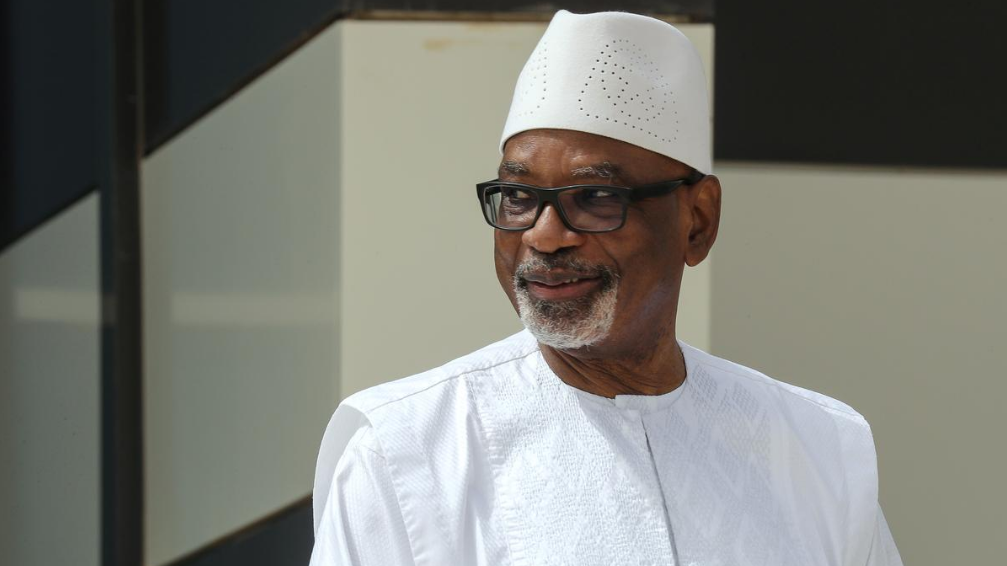
Mali President Ibrahim Boubacar Keita poses for a picture during the G5 Sahel summit in Nouakchott, Mauritania ,June 30, 2020. /Reuters
West African leaders gathered in Bamako on Thursday in a fresh push to end an escalating political crisis in the fragile state of Mali.
In an exceptional one-day summit, the presidents of Senegal, Ivory Coast, Ghana, Nigeria and Niger have scheduled meetings with Malian President Ibrahim Boubacar Keita and leaders of a protest movement clamoring for his resignation.
The unrest deeply worries Mali's neighbors and allies, who fear a country bloodied by a jihadist insurgency could slide into chaos.
Presidents Alassane Ouattara of Ivory Coast and Macky Sall of Senegal were greeted at the airport by Keita. They were due to be followed by Nigeria's Muhammadu Buhari, Mahamadou Issoufou of Niger and Nana Akufo-Addo of Ghana.
A small group of demonstrators gathered outside the airport.
"We're here to demand IBK's resignation and ensure our comrades who have been killed are not forgotten," said Yaya Sylla, a young protester, using the acronym by which Mali's leader is known.
The June 5 Movement, named after the date when the protests began, has tapped into deep anger over Keita's perceived failure to tackle the dire economy, corruption and the eight-year jihadist revolt.

Recent unrest has pushed Mali to the brink. /AFP
Malians are also incensed at the disputed outcome of long-delayed parliamentary elections in March and April that handed victory to Keita's party.
The summit comes on the heels of a five-day mediation mission from the 15-nation Economic Community of West African States (ECOWAS), which ended on Sunday without reconciling the two sides.
"It is this Thursday that the last act is played, the curtain will fall," said a Malian opposition politician who declined to be named.
The West African leaders will weigh on proposed solutions that have been crafted in behind-the-scenes talks between the president and opposition this week.
Deepening crisis
Keita, who came to power in 2013, has come under increasing pressure to end Mali's long-running jihadist conflict.
The poor nation of some 20 million people has been struggling to contain an insurgency that first emerged in the north in 2012 before spreading to its center, as well as neighboring Burkina Faso and Niger.
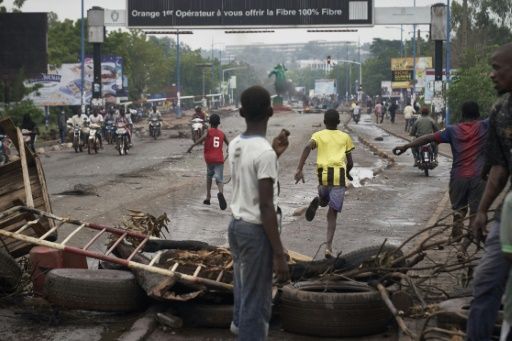
A protest in Mali's capital Bamako earlier this month, as the country's opposition demands the president resign. /AFP
Thousands of soldiers and civilians have died in the conflict, and hundreds of thousands of people have been driven from their homes.
But much of the current tension was sparked in April, when the constitutional court tossed out 31 results from the parliamentary elections, benefiting Keita's party and sparking protests.
Tensions then ratched up into a crisis on July 10 when an anti-Keita rally organized by the June 5 Movement turned violent.
Protesters blocked bridges in Bamako, stormed the premises of the state broadcaster and attacked the parliament.
Three days of clashes between protesters and security forces followed, leaving 11 dead and 158 injured in the worst political unrest Mali had seen in years.
Seeking a way out, ECOWAS mediators suggested forming a new unity government including opposition members and appointing new constitutional court judges who could potentially re-examine disputed election results.
But the June 5 Movement had already rejected any outcome that did not involve Keita's departure – a demand opposition leaders have repeated for weeks.