- Home
- China
- World
- Europe
- Politics
- Business
- Opinions
- Tech & Sci
- Culture
- Sports
- Travel
- Nature
- Picture
- Video
- Live
- TV
- Specials


Share







Copied
Editor's note: Bradley Blankenship is a Prague-based American journalist, political analyst and freelance reporter. The article reflects the author's opinions, not necessarily the views of CGTN.
The U.S. CARES Act, the legislation that has kept tens of millions of families financially afloat through the coronavirus crisis, has been expired for exactly one week and the Congress is yet again caught in a deadlock. While most other countries' political systems have allowed them to streamline their legislative processes and pass relevant measures to accommodate the ever-changing situation, the U.S. has shown itself to be slow and dysfunctional. This slowness – a point of pride for the constitution's founders – is a built-in mechanism to resist systemic change that has shown itself to be incompatible with modern problems.
With that said, it is also clearly a lack of foresight by political leaders. After all, the deadline of the CARES Act was mandated by Congress itself and everyone, from Senate Majority Leader Mitch McConnell, House Speaker Nancy Pelosi and even U.S. President Donald Trump, was aware of the deadline and its corresponding effects on workers. Not only did they fail to act, they (especially in the case of the administration) didn't even have any semblance of a plan. This is a matter of priorities; workers are evidently at the bottom of the list.
The self-imposed Friday (August 7) deadline for the round of stimulus will not be met – something White House officials have digested, meaning yet another week of lost income for millions of Americans that will severely damage the economy. President Trump may be forced to hold his nose by bypassing Congress through executive action to continue these Republican-loathed programs. The exact legal grounds for this are unclear, however.
In the political theater, Republicans are proposing a skinny deal that would leave out a number of important measures including aid for schools, essential workers, tenants facing eviction, homeowners facing foreclosure and food stamp recipients. Radicals within the Republican-held Senate have bucked party leaders by criticizing even this austere deal as 'expensive' and ideologically out of focus.
Even as these right-wing ideologues continue to talk about a non-existent lack of "incentive to work" due to the enhanced unemployment benefits, the Republican-led Senate took a three-day weekend the day before the federal unemployment benefits expired. The irony of this is resounding.
On the other side of the aisle, Democrats in the House of Representatives have been sitting on their own version of the next round of stimulus since May that has not even been considered by the Senate.
"I'm going to speak in animal terms. Say you are at the zoo. You see a giraffe. You see a flamingo. These two bills aren't mateable," Speaker Pelosi awkwardly explained last week.
Majority Leader Mitch McConnell has thus blamed his political opponents for the dysfunction, saying that, "Democratic leaders say they'll keep blocking federal unemployment aid unless we pay people more to stay home than to work. That isn't just bad economics, it's unfair. We should not be taxing essential workers to pay their neighbors a higher salary to stay home."
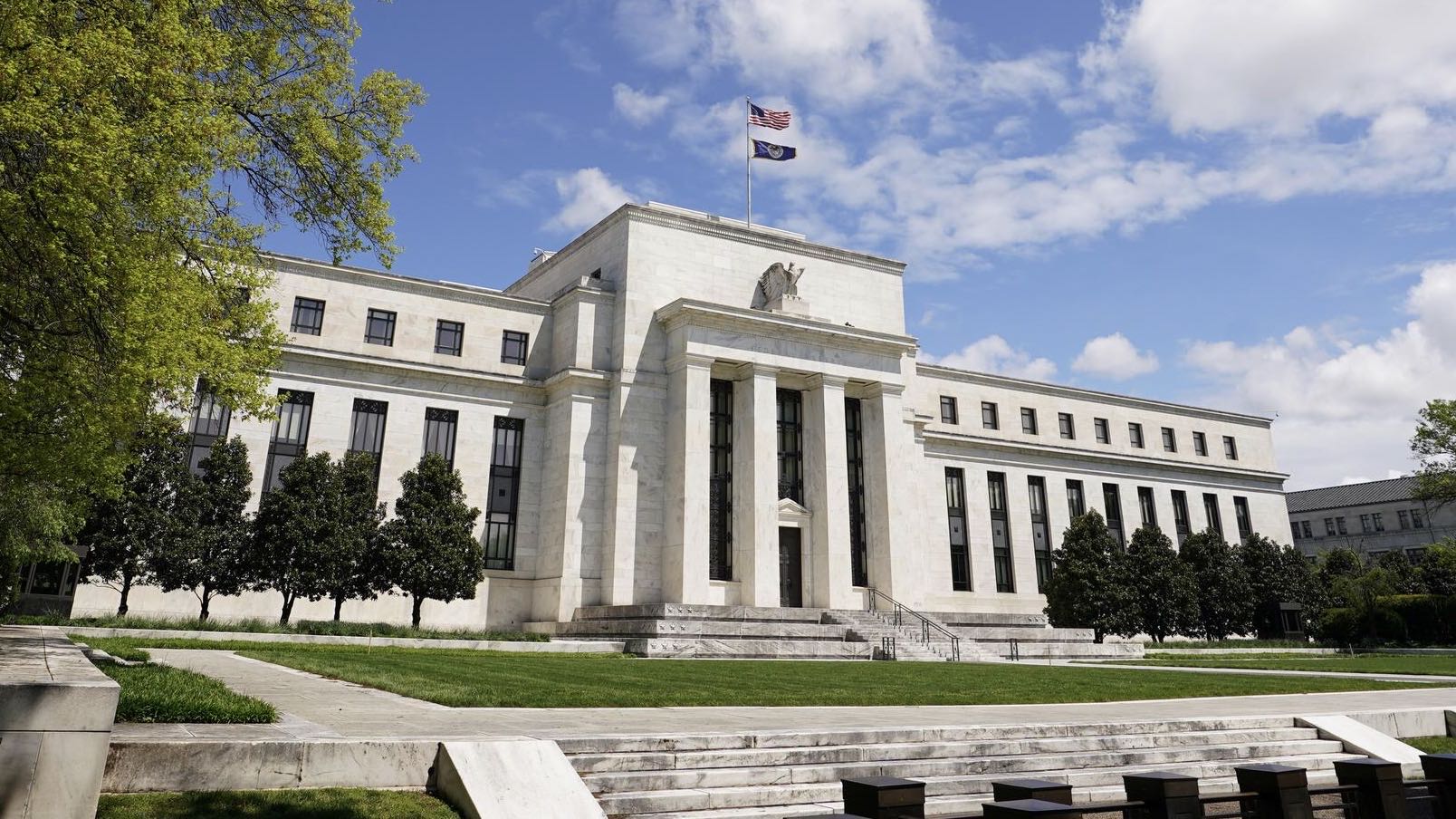
The Federal Reserve building is set against a blue sky, amid the COVID-19 outbreak, in Washington, U.S., May 1, 2020. /Reuters
Every part of McConnell's statement bears no relation to reality. Democrats have refused the skinny Republican deal for what it leaves out plus the fact that it would cut the federal enhanced unemployment payments to 200 U.S. dollars a week which will result in 3.4 million fewer jobs being created over the next year, according to the non-partisan Economic Policy Institute.
Furthermore, McConnell himself pioneered obstructionism as a mode of governance during the Obama years by vowing to block each and every move by the administration – something he was successful at doing when it came to even the most modest reforms.
Americans are being let down by the perpetual warfare going on in Congress rather than the problem-solving needed to meet the moment. Political scientists, Norman Ornstein and Thomas Mann most famously, have long-noted that this dysfunction is fundamental.
The fact that the executive branch has no codified way to dictate what goes through Congress, which is something that most parliamentary systems incorporate to some degree, is one obvious example. Countries with parliamentary systems act quicker because governments pre-approve legislation and assign priorities – ensuring that legislative votes are quick and the priorities of voters are put at the top of the agenda. There are also procedural differences in the House and Senate that make agreeing on a piece of legislation more insurmountable.
Because of this lack of focus, America's system has given way to extreme polarization that has made legislating nearly impossible. Consensus is hardly reached and, especially since Mitch McConnell's ascendance in the Senate, a focus on obstructionism has led to the priority of ideology over actually performing tasks.
Opposition is to be expected in any political system, of course. But the asymmetrical nature of America's polarization favoring the political right has created a Republican Party that is so ideologically minded, and so radical, that debate is impossible. Because of this, debate and consensus are abandoned in favor of using any available tool – for example, the Senate filibuster that essentially leads to every bill in the chamber requiring a super majority vote – to kill any consequential legislation.
At its heart, America's political system was designed to be slow and unrelenting to change – exclusively those changes which lead to the fundamental pursuit of freedom and equality. A cursory examination of the complicated legislative process and the near-impossible task of amending the constitution reveals this in practice. In this sense, the political system is not broken, but rather doing exactly what it was designed to do. But Americans deserve far better, especially now more than ever.
(If you want to contribute and have specific expertise, please contact us at opinions@cgtn.com.)