- Home
- China
- World
- Europe
- Politics
- Business
- Opinions
- Tech & Sci
- Culture
- Sports
- Travel
- Nature
- Picture
- Video
- Live
- TV
- Specials


Share







Copied
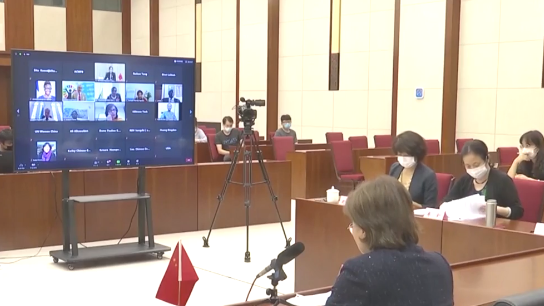
A virtual ministerial round-table meeting on ensuring progress toward gender equality amid the COVID-19 pandemic, August 5, 2020. /CGTN
Editor's note: Diane Wang is a Chinese National Chapter member of BRICS Women's Business Alliance (WBA), co-chair of B20 Digitalization Taskforce and a member of B20 Women in Business Action Council, and an alternate member of APEC Business Advisory Council (ABAC) China. She is the founder and CEO of DHgate.com, one of the leading B2B cross-border marketplaces in China. The article reflects the author's opinions, and not necessarily the views of CGTN.
A policy brief report by the United Nations, "The Impact of COVID-19 on Women", stated that the disease has a devastating effect on gender equity. Women, girls, and businesses owned by women are particularly impacted.
What's more, the digital gender gap has been widening. Women without technology, such as internet connection, are kept away from online education, e-commerce, or medical technologies. They are left behind. It is all about their natural gender, the place they come from, their social status, and their education.
With the virus, these problems are the common enemies that we need to unite to tackle together. As a Chinese National Chapter member, I attended the BRICS Women's Business Alliance (WBA) inaugural online meeting on July 20.
The meeting highlighted the urgency to help women and girls navigate the crisis. All representatives shared their insights and outlined future areas of cooperation in addressing women's vulnerability, particularly in digital development.
The digital era is of utmost friendly for women with reducing the entry barrier dramatically. Digitalization provides everyone with equal chances, bringing unprecedented opportunities for women, and thus it narrows the gender gap.
In order to achieve this, we need to offer digital capacity-building projects to the hard-hit women and girls, and efforts to boost the confidence of women entrepreneurs to overcome the storm, ensuring that they are not further marginalized in an increasingly digitalized world.
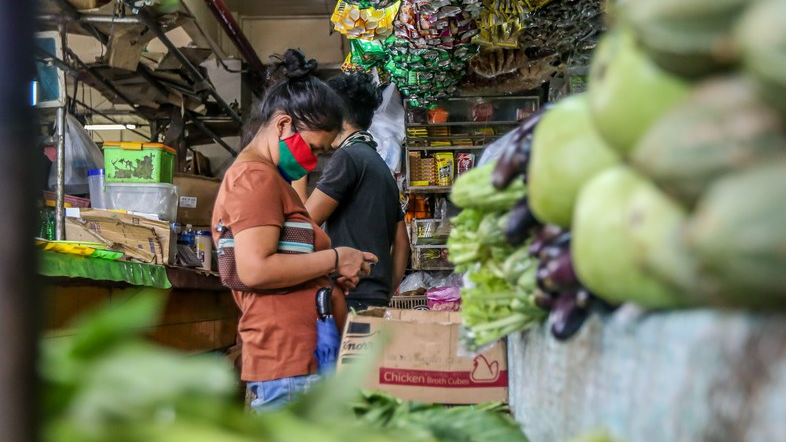
A woman wearing a face mask shops at a market in Manila, the Philippines, August 3, 2020. /Xinhua
Here, I would like to share two capacity-building initiatives I proposed at the meeting that have effectively empowered women with skills and narrowed the digital gender gap:
1. Women Connect program: We recommend building a community through online and offline activities to empower women to realize entrepreneurship by effective sharing, learning, and awarding. We shall share experience and case studies of women leaders and entrepreneurs to inspire more women to pursue their dreams. Also, we can equip them with the necessary skills to fulfill their dreams. Further, we shall discover rising stars in recognizing them for their efforts and accomplishments.
But due to the global lockdown, we have to switch to online. For example, we can conduct a series of virtual seminars to introduce digital empowerment. Outstanding women from various fields can share their successful experiences and give recommendations to those who lack digital solutions, especially on how to weather the storm. These topics should cover the most critical areas, such as e-commerce, e-learning, and best practices. Currently, more than 40,000 female entrepreneurs around the globe have participated in this program.
2. Cross-Border E-commerce Training (CBET) program: We propose to launch a comprehensive capacity-building program on cross-border e-commerce for women startups, young girls, and SMEs. The program offers online courses to learn how to start a cross-border e-commerce based business with the most professional, practical, and localized knowledge, skills, and entrepreneurial guidance.
The program has successfully trained over 10,000 women entrepreneurs and SMEs across over 50 economies. It has been recognized and endorsed by the UN, APEC, and G20, and has been included as an annual key policy recommendation in the Report to APEC Economic Leaders for five consecutive years by APEC Business Advisory Council.
These initiatives have helped tremendous women in the world. One story I would like to share of a female entrepreneur is Sarah in Canada. As a single mother of two kids, she needs to take care of her kids, but the reality tells her that she has to have a job to put food on the table. In order to do both, she set up an online mother community two years ago, where she has shared her parenting experience, recommends and sells baby toys and accessories, and then has DHgate to drop-ship the orders to her customers.
Today, she has become a successful entrepreneur at home while enjoying the time with kids. She told me, "I am the change I wanted to see." I believe these digital skills have helped her make a significant change.
Our goal is to see millions of mom and young-girl entrepreneurs from different countries with different backgrounds to achieve.
To that end, we need to unite all the BRICS stakeholders, including business leaders and governments, and share our knowledge, practices, capacities, and where possible, resources, in digital transformation with those female communities. I believe, with our persistent efforts, we will see more outstanding female entrepreneurs in the business community, to be the change we all wanted to see.
(If you want to contribute and have specific expertise, please contact us at opinions@cgtn.com.)