- Home
- China
- World
- Europe
- Politics
- Business
- Opinions
- Tech & Sci
- Culture
- Sports
- Travel
- Nature
- Picture
- Video
- Live
- TV
- Specials


Share







Copied
When a product launch coincides with a company's 10th anniversary, it's probably the perfect time for the founder to awaken a wave of nostalgia among loyal fans.
From starting from scratch to seeking product inspiration, stories of his entrepreneurial journey rolled off the tongue of Lei Jun, CEO of Xiaomi Corp. when he took the stage on Tuesday night.
But as a consumer, what we care about most is, of course, the new products at the launch ceremony.
Screenshot from Xiaomi's Twitter account
First on stage
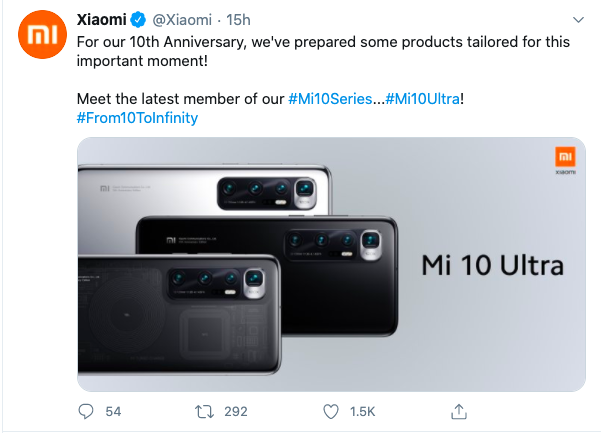
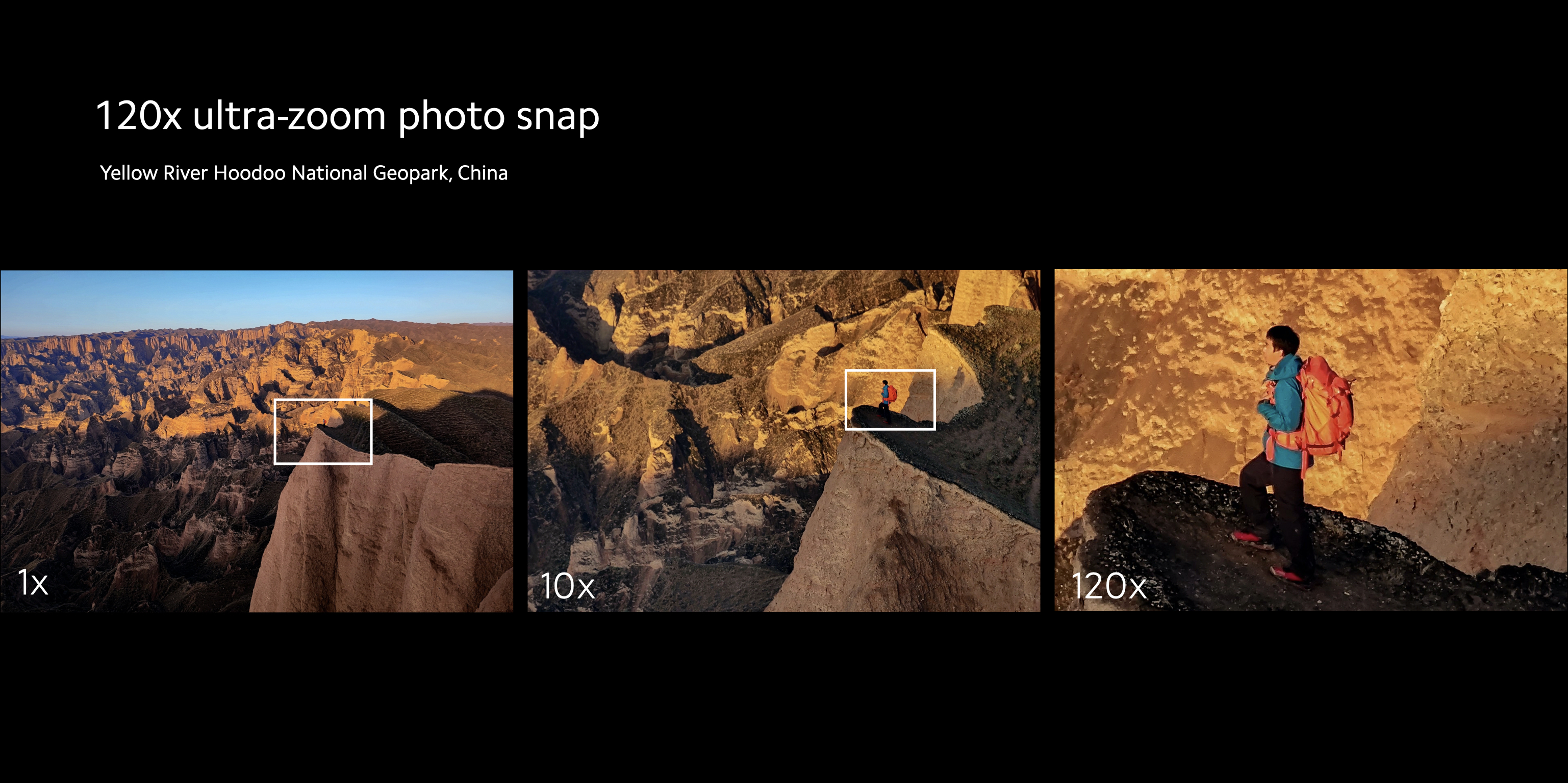
Without a doubt, the new flagship Android smartphone "Mi 10 Ultra" is the first smash brought to the audience. The handset is highlighted with its impressive camera specs that include a 48-megapixel primary shooter, a 1/1.32-inch sensor, a 120x hybrid zoom camera, and 8K video recording capabilities, according to the company.
Mi 10 Ultra has a 6.67-inch OLED display with a 120Hz refresh rate. The Verge reports this can lead to smoother animations and scrolling than you'll get with a traditional 60Hz display.
Pic via Xiaomi
The new member is powered by the Snapdragon 865 processor, one that has equipped many of the fastest Android phones on the market. On top of that, 120-watt wired fast charging and 50W wireless charging are also supported on this phone.
This series is priced at 5,299 yuan (about 760 U.S. dollars) for 8GB of RAM and 128G.
Screenshot from Xiaomi's Twitter
Smart manufacturing
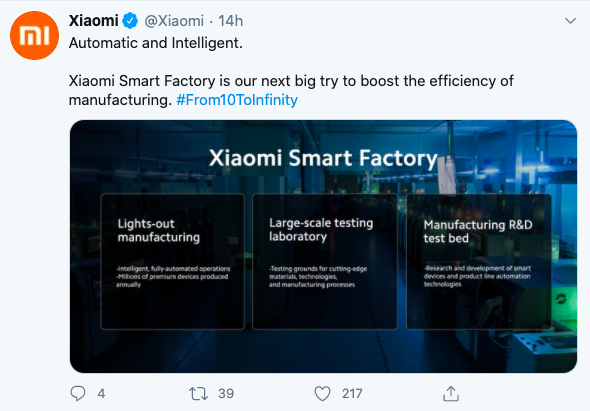
The CEO also boasted that all Mi 10 Ultra lines were produced by the firm's own automated assembly line. "Xiaomi will systematically empower China's manufacturing industry with internet know-how," the CEO said. "Smart manufacturing will fuel the prominent growth of Chinese brands."
Founded in early 2010, the once obscure startup has turned itself into the world's fourth-largest smartphone brand, on a par with Apple, Huawei, and Samsung. Although the CEO admitted that Xiaomi still lags behind the other three during his speech, he did say that they've done a pretty good job so far.
Xiaomi initiated the internet-based sales and marketing model when most mobile devices were sold in brick-and-mortar stores. Featuring low prices and high product performance, the company became an instant hit in the following years.
'See-through transparent TV'
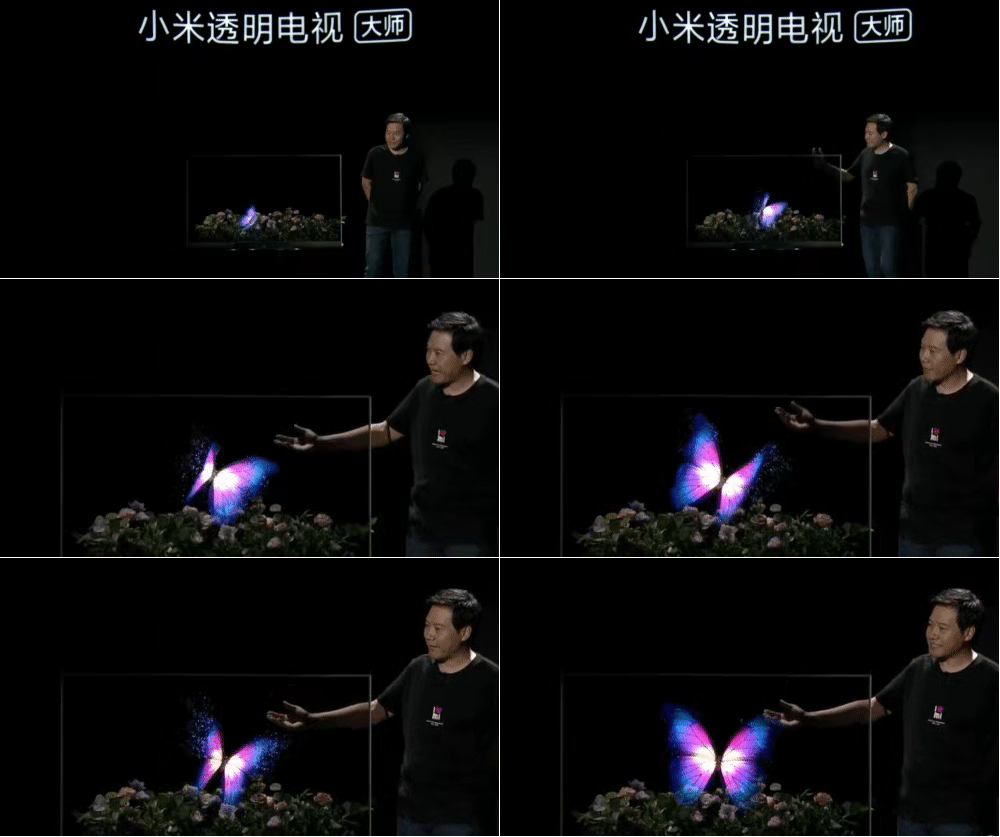
Surprisingly, the finale of the show is not the long-rumored MIX 1 featuring a bezel-less screen or the foldable phones but what the company claimed as the "world's first mass-produced transparent TV."
Xiaomi's transparent TV. /GIF from Twitter
As you can see, no circuits and backboard in traditional TVs can be found in this see-through smart set. "When Mi TV LUX OLED Transparent Edition is turned off, it looks like a mere glass display," the company said in a release. "The pictures it displays seem to be floating in the air, merging the virtual and the real to bring an unprecedented visual experience."
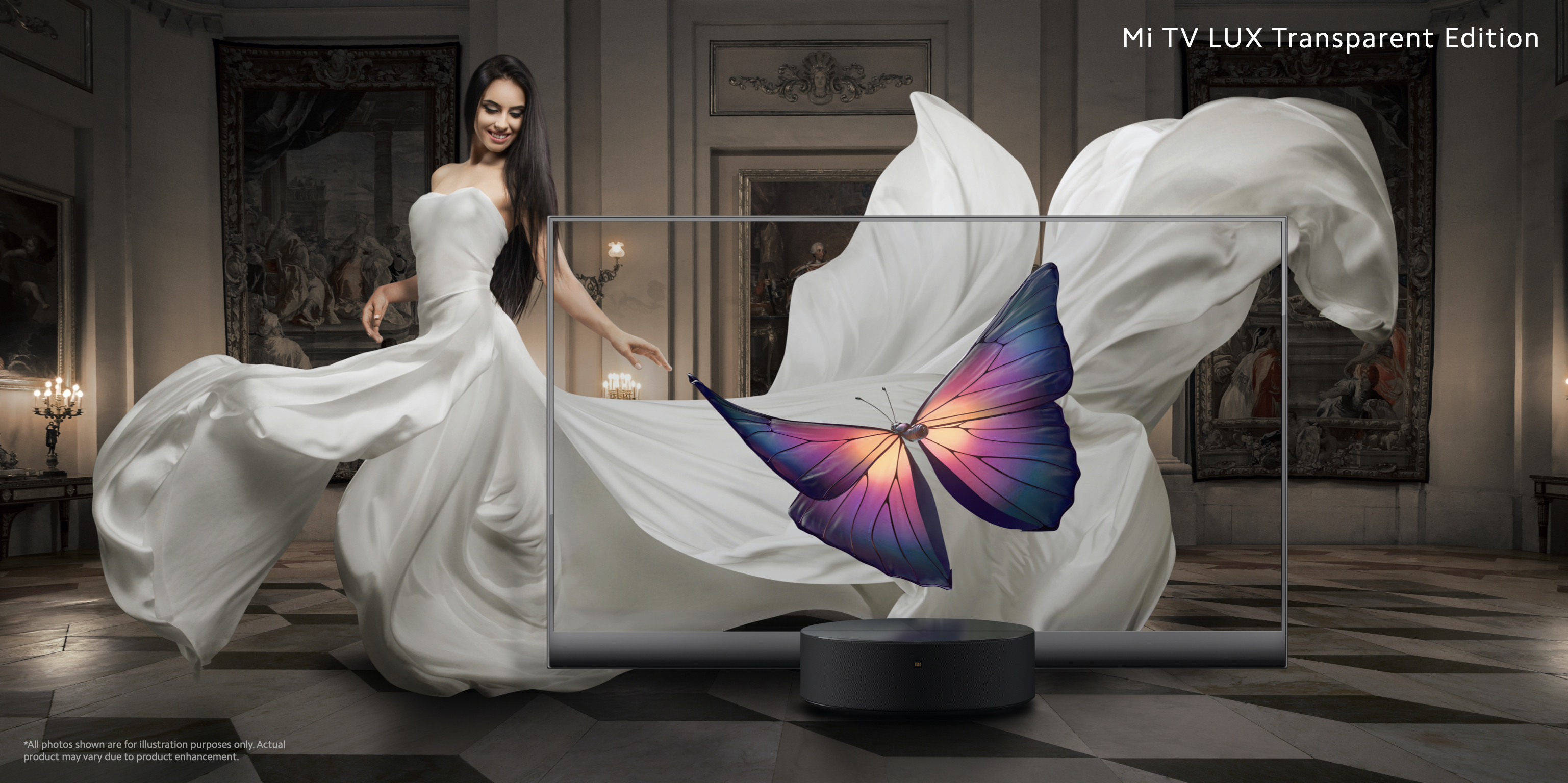
Pic via Xiaomi
But some social media users commented on Twitter that it's nothing new as South Korean brands like Samsung and LG have produced the same for years. Others also questioned whether the technology is really practical or is just a gimmick.
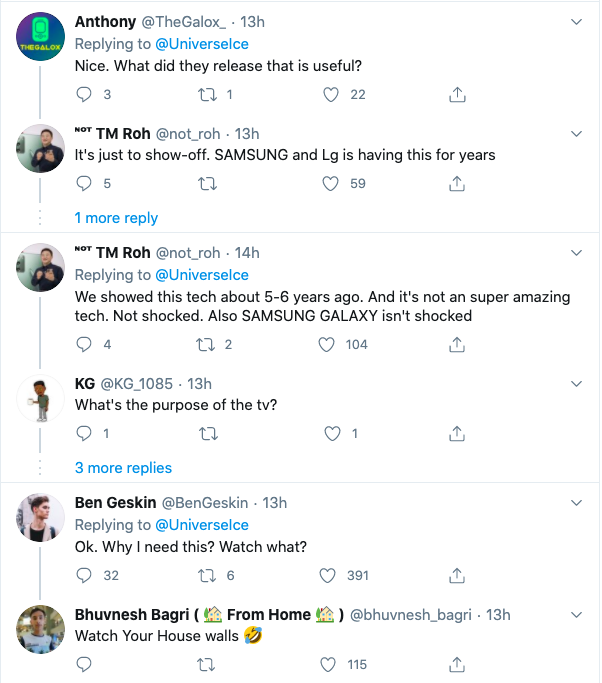
Users' comments on Twitter
Anyway, no matter whether you like it or not, the futuristic-looking device will be available in the Chinese market on August 16, at a price of 49,999 yuan (around 7,200 U.S. dollars).