- Home
- China
- World
- Europe
- Politics
- Business
- Opinions
- Tech & Sci
- Culture
- Sports
- Travel
- Nature
- Picture
- Video
- Live
- TV
- Specials


Share







Copied
Editor's note: Andrew Korybko is a Moscow-based American political analyst. The article reflects the author's opinion, and not necessarily the views of CGTN.
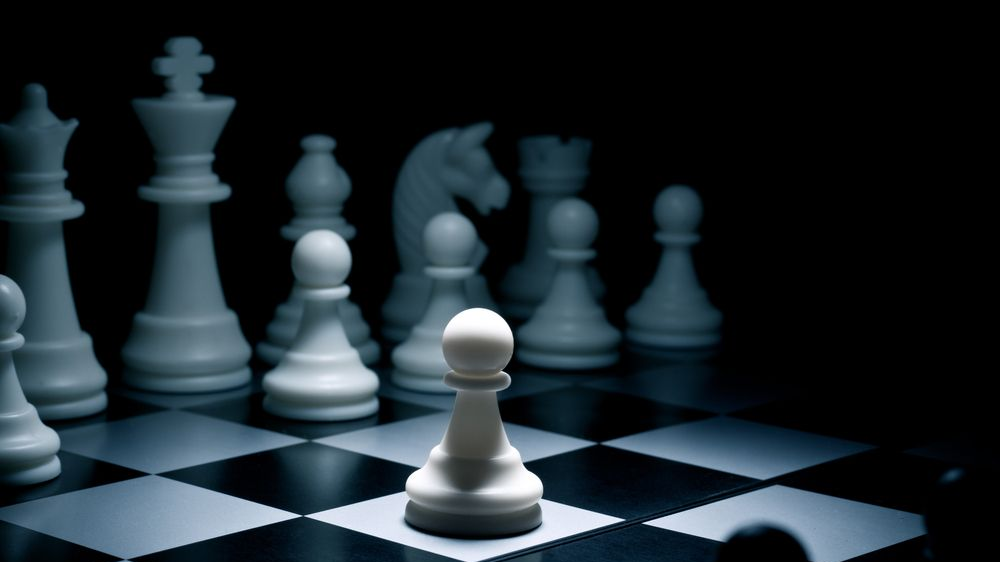
Trump compared international relations to a game of chess during a rally on August 17. He was quoted as saying that "one thing I've learned: Putin (of Russia), President Xi of China, Kim (of DPRK) and Erdogan of Turkey are world-class chess players." While international competition veritably exists, it's not accurate to compare it to chess, let alone to imply that other countries' leaders think the same. By doing so, however, Trump revealed something very important about the way that he regards foreign affairs.
Pawns, the weakest piece on the board, are regularly sacrificed by the player in pursuit of victory over their opponent. In comparing international relations to chess, Trump is strongly suggesting that countries sacrifice their partners as part of their competition with one another. That's only partially true though since it's just the U.S. that does this and not anyone else. The four countries that he mentioned in his diatribe support international law, the proverbial rules of the game, and are not sacrificing their Iranian friend to new sanctions for instance.
America, however, has been repeatedly violating international law at a greater frequency than ever under Trump's presidency and it has no qualms about sacrificing its partners' interests in pursuit of its own. A recent example of this is the U.S.' threat to impose sanctions on any country violating America's own against Iran. These so-called "secondary sanctions" have pressured the U.S.' partners to stop trading with Iran and thus compelled them to purchase more expensive American energy instead. As in chess, the pawns serve the king.
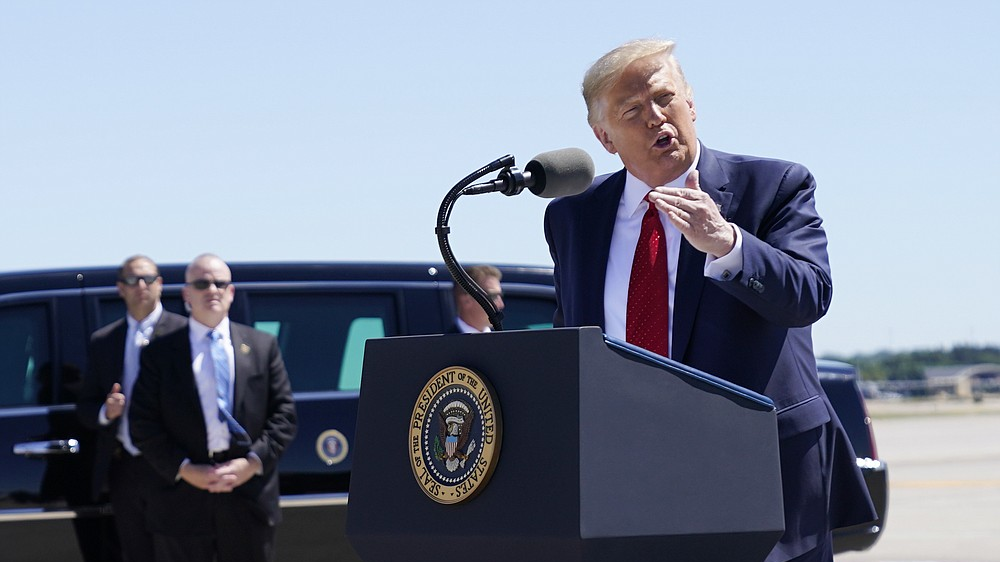
U.S. President Donald Trump speaks to a crowd of supporters at Minneapolis-Saint Paul International Airport in Minneapolis on August 17, 2020. /AP
This isn't anything new either since the U.S. is known for provoking divide-and-rule proxy wars throughout the world in a desperate attempt to retain its fading hegemony. Perhaps the most notorious example of this was when it encouraged Iraq to attack Iran, which led to an eight-year-long war that directly killed over one million people (if not more through indirect causes) and devastated both countries. Shortly afterwards, it winked at Iraq in the run-up to its invasion of Kuwait, only to viciously turn on it as an excuse to launch the Gulf War.
That pattern of the king sacrificing pawns for his own gain by provoking a bloodbath along the lines of the Iran-Iraq War model is dangerously at risk of repeating itself in the South China Sea nowadays. The U.S. is encouraging its regional partners to provoke China by violating its maritime integrity through so-called "freedom of navigation operations," following America's own lead in this regards. It can't be emphasized enough how irresponsible this is, and all efforts must be done to raise awareness of this dark scenario.
The U.S. is obsessed with zero-sum thinking and has convinced itself that China, which it considers to be its top rival in the world, also feels the same way. With such a paranoid mentality, American decision makers believe that they're compelled to "act first" in order to prevent China from gaining an edge over them. This might explain why it ordered its pawns to provoke China so much in recent years, wrongly thinking that China would have already done the same thing if only it had the opportunity.
That mindset, however, is completely wrong. China sees all interactions through the win-win paradigm of mutual benefit, not zero-sum competition between an inevitable winner and loser. It also doesn't have any pawns since its decision-making doesn't support hierarchies of any kind, whether in economic relations or international ones, but equality between all. As proof of this, China has massively invested in improving its partners' living standards, not provoking them into war against others.
In order for peace to prevail, the U.S. needs to stop thinking that international relations is a game of chess. It isn't, but thinking otherwise dangerously influences it into provoking divide-and-rule conflicts between its pawns and whichever country it regards at the time as the opposing player, be it China, Russia, the DPRK, or Turkey, to name the four countries whose leaders Trump used as examples of "world-class chess players." If the U.S. insists on continuing to play chess, however, then it's only a matter of time before it's checkmated.
(If you want to contribute and have specific expertise, please contact us at opinions@cgtn.com.)