- Home
- China
- World
- Europe
- Politics
- Business
- Opinions
- Tech & Sci
- Culture
- Sports
- Travel
- Nature
- Picture
- Video
- Live
- TV
- Specials


Share







Copied
Editor's note: Stephen Ndegwa is a Nairobi-based communication expert, lecturer-scholar at the United States International University-Africa, author and international affairs columnist. The article reflects the author's opinions and not necessarily the views of CGTN.
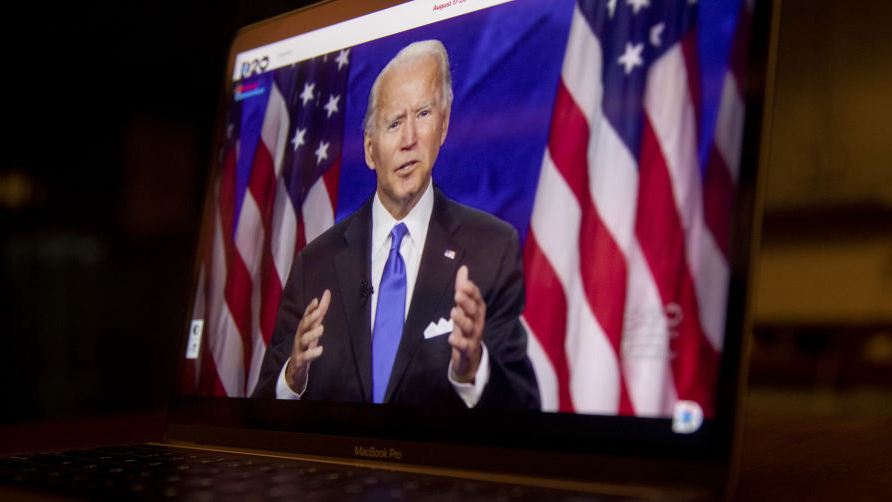
With former U.S. Vice President Joe Biden formally accepting his nomination for the presidency on August 20, the curtains have now fallen on the Democratic Party Convention (DNC). Due to the deadly coronavirus pandemic, the event was held virtually for the first time ever from Wisconsin Center in Milwaukee, Wisconsin.
Analysts are now taking stock of the Convention's achievements, particularly deciphering Biden's nomination speech for the impact his presidency would make. Biden's agenda consisted of mainstream promises to address what he sees as four major historic and current challenges facing the U.S. – the coronavirus pandemic, the economic fallout, racial injustice and climate change.
The 77-year-old presidential candidate put the pandemic on top of his to-do list if he became president after the November 3 election. Of course, this was music to the ears of Americans in general, as it has turned out as the country's Achilles heel.
The U.S. has acquired the dubious distinction of being the global epicenter of the pandemic, with more than 170,000 deaths and five million infections. A lack of decisive leadership has been blamed for the worst public health crisis America has faced in modern history. And leadership is what Biden promised to offer.
Biden's major credentials seem to be vice president under former President Barack Obama from 2009 to 2017. Former President Bill Clinton and Former Secretary of State Hillary Clinton were also major speakers during the four-day DNC. Although this would be expected of the former leaders, analysts say their impassioned entreaties risks giving the impression that they would be hovering over Biden's presidency as his fallback.
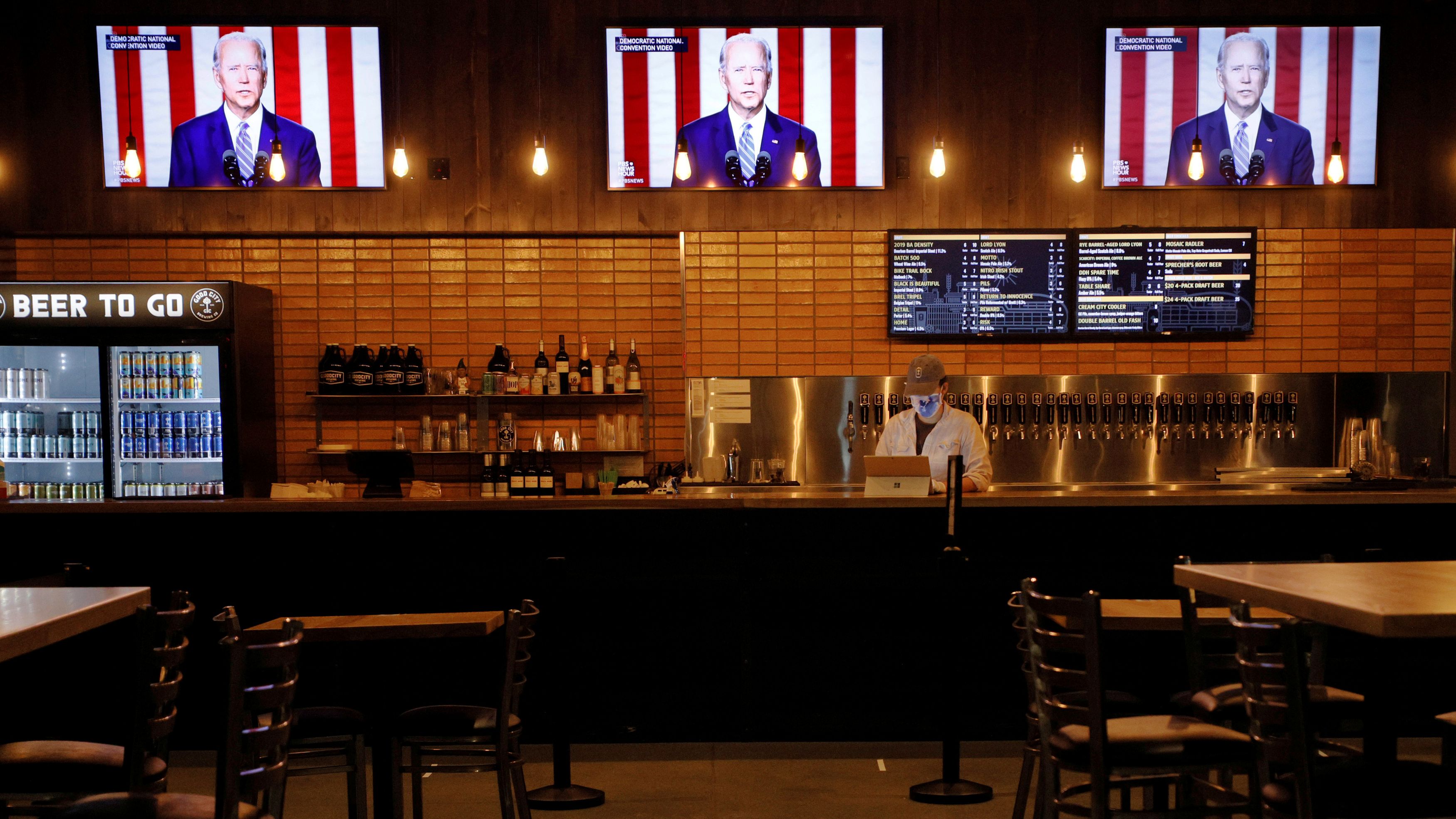
Televisions at Good City Brewing show footage of Democratic presidential nominee Joe Biden during the Democratic National Convention's broadcast, a largely virtual event due to COVID-19, in Milwaukee, Wisconsin, U.S., August 19, 2020. /Reuters
Interestingly, Biden avoided a bare-knuckle duel with Trump in his nomination. He decided to stick to the issues at this critical moment to avoid giving the incumbent munitions for a needless personality fight.
Apart from the race card, Biden's vice president pick Kamala Harris's political weight may not really be a game-changer. Being multiracial, the Dems may have assumed her potential appeal to the minority voters. But this may be more ideal than real.
In an opinion for The Washington Post on August 18 titled "Let's hope the DNC's inexplicably weak Latino lineup is not a fatal mistake," León Krauze warned that, "It was clear the Democratic National Convention's initial session left one of the party's vital coalitions notoriously underrepresented."
As a woman, some pundits are saying that Kamala cannot outperform Hillary, the Dems' presidential candidate in 2016. Gender cannot fix what the racial card fails to deliver.
May be due to the lack of razzmatazz that accompanies such events, one gets the feeling that Americans did not get the conviction of a clean break from what Biden called "season of darkness" in his speech; that a Democratic government would definitely restore America's lost glory.
On this, however, Biden sought empathy by narrating how he has overcome personal adversity in his life. He positioned himself as the right person to life the U.S. out of its hole.
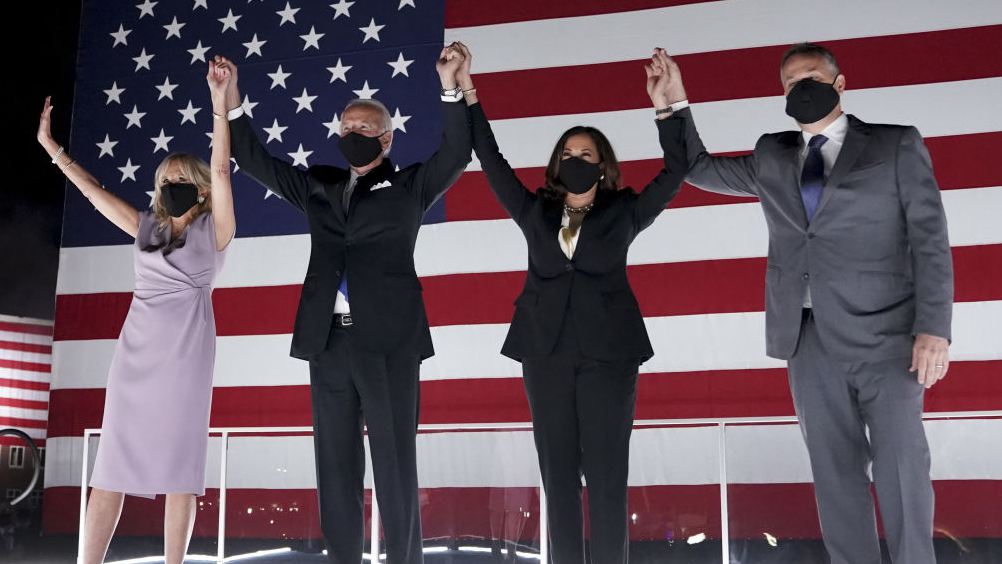
Democratic presidential nominee Joe Biden (2nd L), his wife Jill Biden (L), Senator Kamala Harris (2nd R), Democratic vice presidential nominee, and her husband Douglas Emhoff, at the Democratic National Convention in Wilmington, Delaware, U.S., August 20, 2020. /Getty
Much of the DNC consisted of Trump bashing and trashing by almost all speakers. Speakers generally made their mark by ranting about both the character and performance flaws of the incumbent, but not much articulation of a vision in overcoming the thorny issues Biden listed.
The DNC failed to come up with a rallying call, a mantra that would captivate Americans. On this, they would have actually borrowed a lesson from the effectiveness of Trump's "Make America Great Again" campaign rider in the 2016 Presidential Election. Trump managed to prey on the fears of many Americans, particularly in his Republican Party, that the U.S. was a declining superpower, and the country needed a "tough guy" like him to restore its might and power.
Emanating from his own shortcomings and other factors beyond his control, Trump's restoration efforts have backfired. The net result of his isolationist and unilateral "America First" mantra is damaging the country's geopolitical stature in an increasingly multilateral world. If the Dems do not offer more inspiring messaging, Americans could easily ignore Trump's dented record and maintain the status quo, even if by a razor thin margin.
Anyway, the Biden-Harris and Trump-Pence race for the White House is in full swing. The U.S. now awaits the GOP Convention that is set to take place from August 24 to 27, which will also be given similar television, virtual and social media coverage to the DNC. No doubt, the stage for a no-holds-barred battle for the White House in the coming weeks is now taking shape.
(If you want to contribute and have specific expertise, please contact us at opinions@cgtn.com.)