- Home
- China
- World
- Europe
- Politics
- Business
- Opinions
- Tech & Sci
- Culture
- Sports
- Travel
- Nature
- Picture
- Video
- Live
- TV
- Specials


Share







Copied
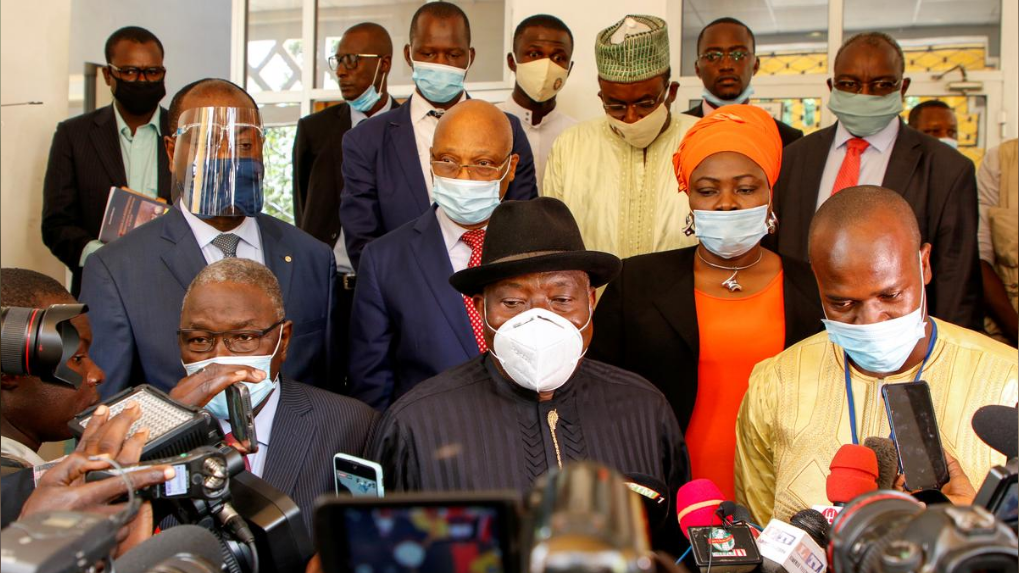
Talks between West African mediators and Mali's military coup leaders ended on Monday after three days of discussions without any decision on the make-up of a transitional government, a junta spokesman said.
West Africa's regional bloc dispatched negotiators to Mali, on the weekend, in a bid to reverse President Ibrahim Boubacar Keita's removal from power last week. But talks had focused on who would lead Mali and for how long, rather than the possibility of reinstating the president, diplomats said.
Colonel Ismael Wague said mediators would report to regional heads of state ahead of a summit on Mali this week but, highlighting the backing the soldiers enjoy, the final decision on the interim administration would be decided locally.
Former Nigerian President Goodluck Jonathan, who led the regional mediation team, said they requested and were granted access to Keita.
"President Ibrahim Boubacar Keita told us that he has resigned. That he was not forced to do so. That he does not want to return to politics and that he wants a quick transition to allow the country to return to civilian rule," Jonathan told reporters.
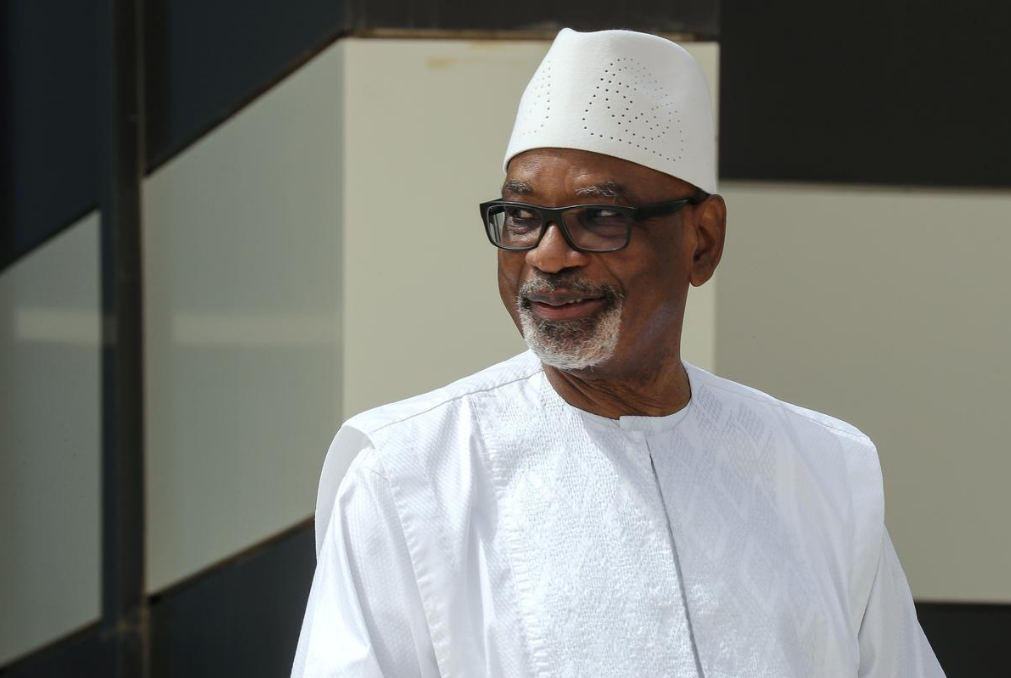
Mali President Ibrahim Boubacar Keita poses for a picture during the G5 Sahel summit in Nouakchott, Mauritania, June 30, 2020. /Reuters
The mutiny has been condemned by the Economic Community of West African States (ECOWAS), which said in a statement the act would complicate "an already very complex socio-political context."
ECOWAS urged the Mali military to return to their barracks and reiterated calls for dialogue to resolve the crisis facing the country.
Four sources, who have direct contact with people involved in talks, had said earlier that Keita would not be involved in any transition.
Two sources said a year-long transition, was on the table. Another source said the junta was eager to prioritize reforms over elections so it could be longer.
Wague earlier denied reports by French radio RFI that the CNSP wanted a three-year transitional government led by a soldier and mostly made up of the military.
An African diplomat monitoring the talks said that ECOWAS was keen to push for a "short transition" with a focus on holding the elections and allowing an elected civilian administration to handle the reforms afterwards.
However, several analysts warned against rushing to fresh elections without addressing the corruption and mismanagement that the soldiers and opposition leaders who led weeks of protests in the run up to the coup complained about.
(With input from Reuters, AP)