- Home
- China
- World
- Europe
- Politics
- Business
- Opinions
- Tech & Sci
- Culture
- Sports
- Travel
- Nature
- Picture
- Video
- Live
- TV
- Specials


Share







Copied
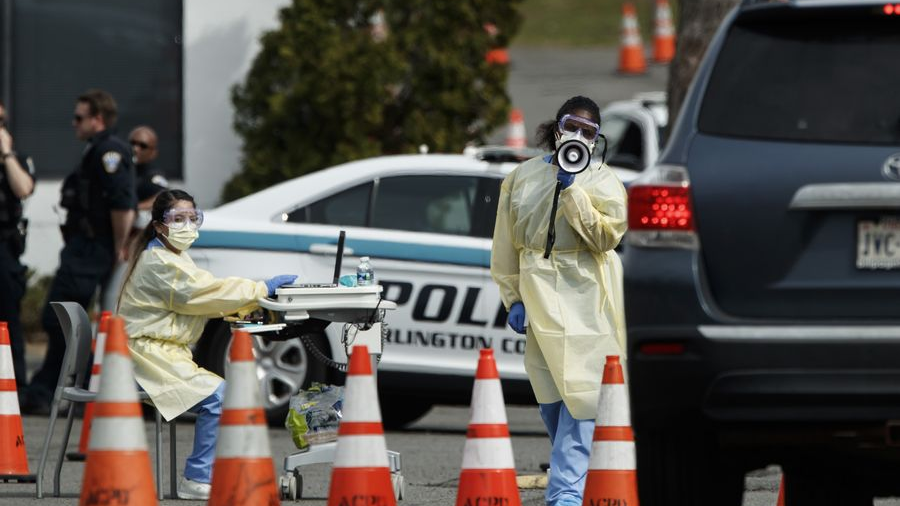
A drive-through testing location set up by the Virginia Hospital Center in Arlington, Virginia, U.S., March 19, 2020. /Xinhua
Editor's Note: Simon Johnson is co-chair of the COVID-19 Policy Alliance and a professor at MIT's Sloan School of Management. The article reflects the author's opinions, and not necessarily the views of CGTN.
To escape the clutches of a pandemic, a country needs three things. First and foremost, it needs a sufficient understanding of the disease, including how transmission occurs. Second, it requires access to technology that will deliver a science-based solution: A cure, a vaccine, or some other effective way to prevent transmission. And, third, it must be able to pay for what needs to be done.
Ultimately, this is all about the economics. Has the government invested enough in creating basic scientific knowledge? Are there are sufficient competent scientists in the country to develop an understanding of the disease and its course, and to absorb knowledge from researchers and clinicians elsewhere? Is there a public health apparatus with adequate resources to address contingencies as they develop? And can everyone afford to protect themselves?
The most devastating pandemic on record is the Black Death – the wave of bubonic plague that swept Europe in the 14th century, killing perhaps one-third of the population. No one at the time had a grasp on the cause: most likely, a bacterium carried by fleas that lived on rats. Before modern science revealed the cause of disease outbreaks, humans were largely defenseless against pathogens.
By the mid-19th century, great progress had been made, owing in part to mastery of the microscope. But there was still much disagreement over how to refine scientific knowledge into useful anti-disease technology such as pharmaceutical drugs.
Over the next century, investment in large-scale public health campaigns eventually led to sanitary infrastructure, clean water, and vaccination against most childhood diseases. Modern public health reached a pinnacle of effectiveness and prestige in the years after World War II, with the eradication of malaria and polio in the developed world.
Unfortunately, we have never fully figured out how to enable everyone to have access to good health care at an affordable price. That is true even in the United States, the world's largest economy, and the country is suffering the consequences today.
The U.S. has no problem with scientific knowledge. The nature of the threat was known to the country's epidemiologists in January, and researchers subsequently perfected their understanding of the novel coronavirus. While potential vaccines and cures are still in the works, the U.S. has had access to enough technology, in the form of large-scale lab-based diagnostic testing, to drive back the disease at least since April.
But someone needs to pay for the tests. The true marginal cost for each virus test is under 20 U.S. dollars, and pooled testing could surely drive the cost to under five U.S. dollars per person per test.
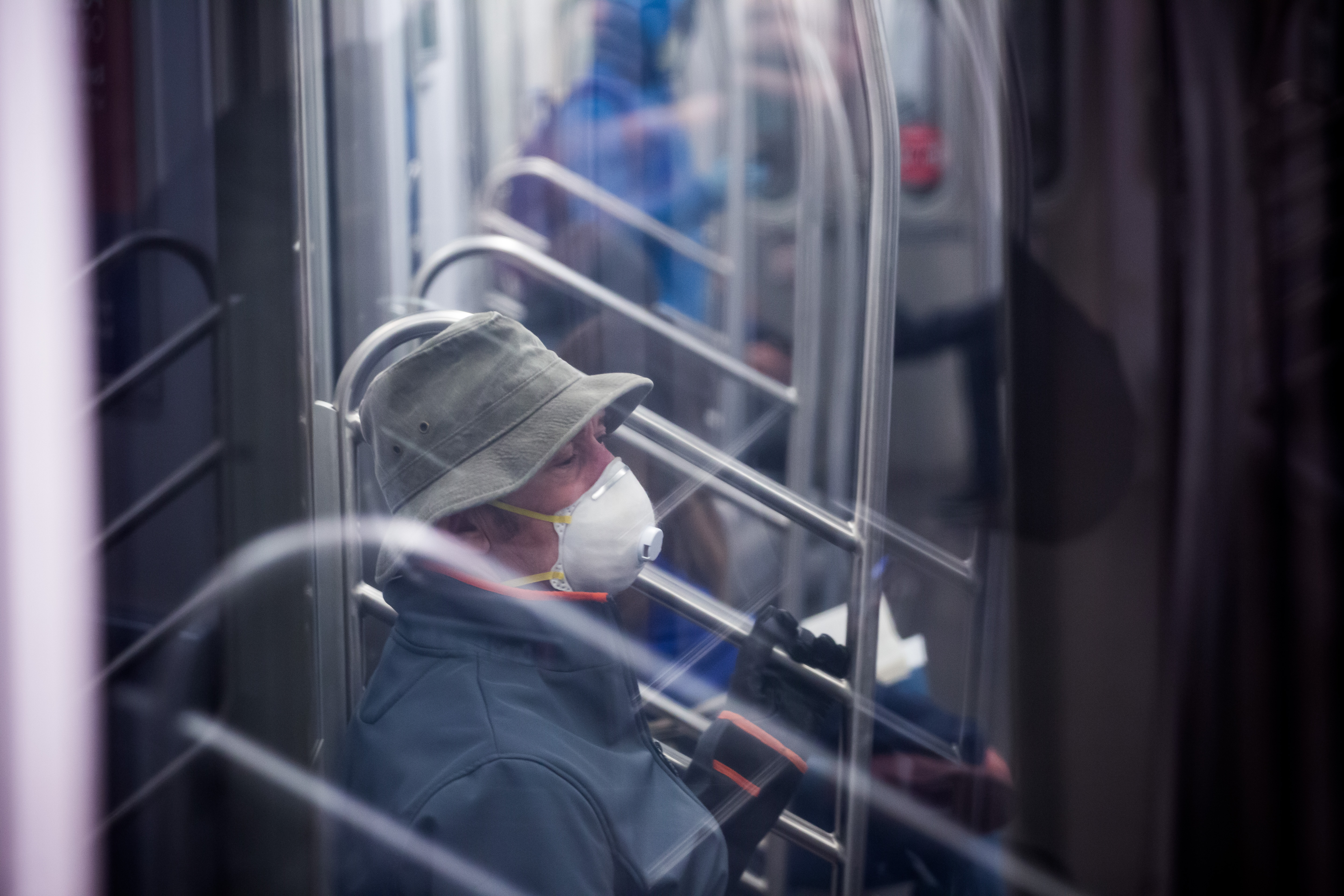
On a subway train in New York, U.S., March 17, 2020. /Xinhua
Unfortunately, in the American system, the "market" price must be paid, and in many parts of the country, that price is 100 U.S. dollars or more per test. With experts recommending weekly – or even twice-weekly – virus testing, who can afford it?
True, if you have COVID-19 symptoms in the U.S., testing is currently supposed be free – covered either by insurance or, failing that, by the government. But defeating the pandemic requires routine testing for everyone, including those without symptoms.
This is the type of public health "surveillance" that many universities have established to protect everyone on campus. Some universities have stood up their own labs for this purpose or supported the development of lower-cost private labs, adding to national testing capacity either way. And some significant public programs, such as Stop the Spread in Massachusetts, provide free testing in potential hotspots.
But most people cannot afford to pay for high-frequency testing, so they and the people around them are left unprotected. There are almost no testing solutions in place to support teachers, staff, students, and families at childcare facilities and K-12 schools.
The U.S. Congress recognized this issue early, and appropriated 25 billion U.S. dollars during the spring specifically to make testing more widely available. But, according to the U.S. Department of Health and Human Services, 85-90 percent of this money remains unspent.
To be sure, the U.S. should have invested more money in science in recent decades, established a virus and pathogen forecasting service, and built resilient public health systems on the basis of cost-effective diagnostics. And yet, even though the U.S. did none of those things, it can still limit the damage caused by the pandemic.
Perhaps 25 billion U.S. dollars will not be enough to cover all U.S. testing needs at this stage. Or perhaps better ways to test – at home, with greater accuracy, and at lower cost – will be found. And perhaps the U.S. Centers for Disease Control and Prevention should not flip-flop in a confusing and potentially misleading manner on its testing guidance.
But this crisis, the most globally disruptive pandemic in over 600 years, is on its way to causing the largest economic disaster of the modern era. So, let's be realistic. Spend the available 25 billion U.S. dollars on tests that already exist. Use the government's spending power to negotiate lower prices, while allowing a reasonable rate of return on capital for labs that are working hard to expand. Build the infrastructure necessary to support pooled testing. Buy enough tests to protect everyone who needs to go to work in person. Implement a comprehensive public health program based on this testing.
None of this is difficult, as other countries have shown. And there is no need for new legislation or a new appropriation of funds. The U.S. has everything any country needs to contain the pandemic – except the leadership to get it done.
Copyright: Project Syndicate, 2020.
(If you want to contribute and have specific expertise, please contact us at opinions@cgtn.com.)