- Home
- China
- World
- Europe
- Politics
- Business
- Opinions
- Tech & Sci
- Culture
- Sports
- Travel
- Nature
- Picture
- Video
- Live
- TV
- Specials


Share







Copied
VCG
Editor's note: CGTN's First Voice provides instant commentary on breaking stories. The daily column clarifies emerging issues and better defines the news agenda, offering a Chinese perspective on the latest global events.
China has brought the pandemic under control.
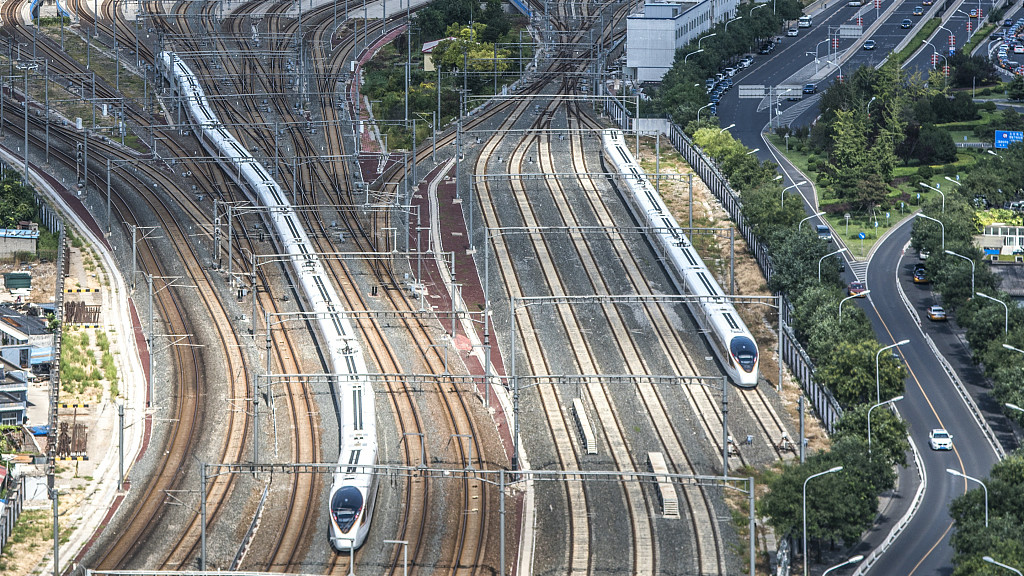
This is not news, but the fact that China has gradually returned to normal life and even started to have a tourism spike is making airlines in other countries look on in envy as millions of Chinese people go on holidays.
As people around the world continue to battle the virus, Chinese people have started to enjoy their "Golden Week," traditionally from October 1 to 7, a seven-day vacation celebrating the country's national holiday.
This year's holiday bears more significance as the holiday this year coincides with another traditional Chinese festival, the Mid-Autumn Festival, which is a time for family reunions.
Hotels are being booked and flight tickets are selling fast. The China Tourism Academy has predicted that more than 500 million trips will be made during this year's holiday. Although the number is still short compared with last year's 780 million trips, the sign of recovery is strong.
In a recent CNN article titled "China contained COVID-19. Now, hundreds of millions of people there are about to go on vacation at the same time," the piece has described China's easing of restrictions as a "show of confidence" as COVID-19 cases are still surging in other parts of the world.
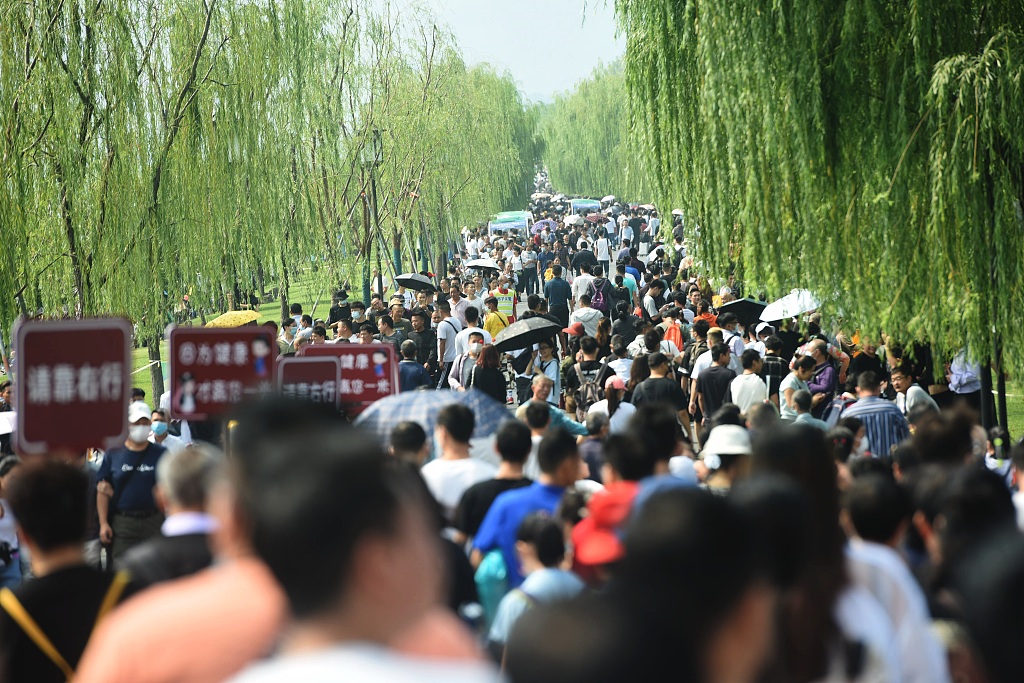
Tourists at West Lake in Hangzhou, Jiangsu Province, China, October 1, 2020. /VCG
People are still wearing masks and carrying sanitizers with them while out. The COVID-19 shadow has not been completely lifted while it still rages on globally. But local transmission was close to zero. Chinese government swift actions in controlling Xinfadi market epidemic situation in Beijing has given Chinese people more confidence as they return to normal lives.
There is no need to go into detail on how China fought against the virus. But there's one thing in particular worth mentioning, and that is China's experience proves no amount of monetary policies and stimulus packages can truly save the economy from the mire, except when the pandemic is under control.
China's first quarter economy contracted by 6.8 percent from a year ago due to the "shock therapy" China used to stop the virus spreading. But it worked. In February manufacturing purchasing managers' index hit a record low at 35.7. Economic activities almost came to a halt. But from March, PMI went back to be above 50 and stayed over the expansion line.
Even retail sales in China started to grow for the first time after the outbreak in August. It is fair to say while increase in industrial output has accelerated in recent months, consumption growth has been a weak point in China's economic recovery. Consumers were still cautious of spending in case there was a new surge of coronavirus cases. The latest data show consumers are gaining more confidence regarding the country's economic outlook. And the current vocational travel only means another boost to consumer demand.
China's economy recovery progress is also being closely watched by other countries. As China's bond market continues opening up, foreign investors are rushing into buying debts issued by China's policy banks at a record pace, according to Financial Times report. Higher yields are the main incentives as other major economies has cut the interests close to zero to tackle with economic recession.
Oxford Economics also has a positive outlook on China's economic recovery, saying it is "on a reasonably firm footing now and should continue through Q4 and into 2021, with solid investment growth, gradually recovering consumption momentum and resilient exports."
There are many other factors that can affect the course of a country's economy. But during a global pandemic, China's story has offered a valuable lesson that stopping the virus might just be the best therapy to curb an economic recession.
(Scriptwriter: Zhao Yuanzhen)
(If you want to contribute and have specific expertise, please contact us at opinions@cgtn.com.)