- Home
- China
- World
- Europe
- Politics
- Business
- Opinions
- Tech & Sci
- Culture
- Sports
- Travel
- Nature
- Picture
- Video
- Live
- TV
- Specials


Share







Copied
Editor's note: Hamzah Rifaat Hussain is a former visiting fellow at the Stimson Center in Washington, and currently serves as assistant researcher at the Islamabad Policy Research Institute (IPRI) in Pakistan. The article reflects the author's opinions, and not necessarily the views of CGTN.
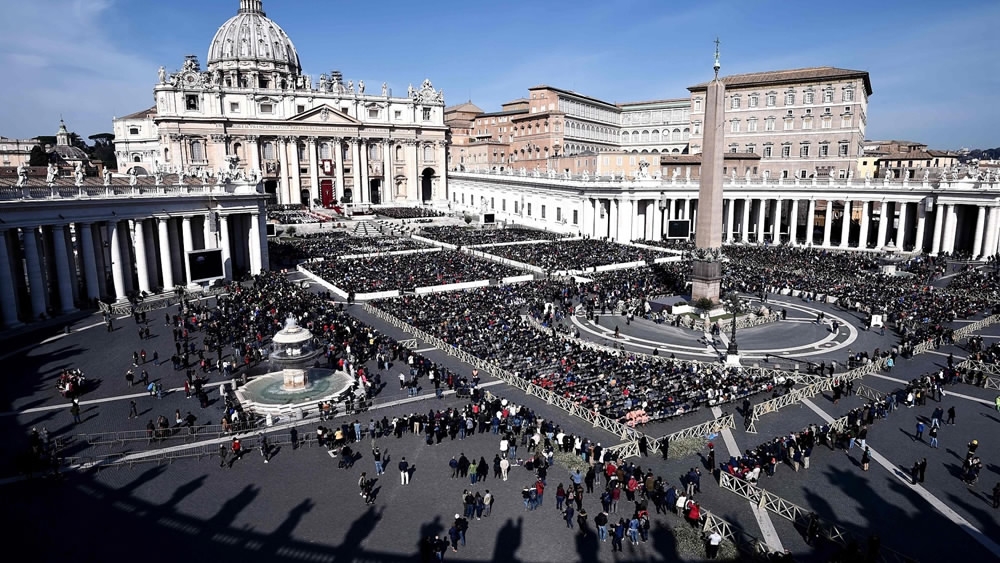
On Thursday, Cardinal Pietro Parolin, number two in the Vatican and Foreign Minister Archbishop Paul Gallagher met with U.S. Secretary of State Mike Pompeo. During the meeting, Pompeo lambasted China and censured the Holy See's agreement with Beijing regarding the appointment of bishops, resulting in dismay and surprise from Vatican officials.
What the officials found equally staggering was the fact that Pompeo's comments were also published in a conservative U.S. Catholic publication called "First Things," which had labeled Pope Francis's pontification of the future a failure. Additionally, there are several reasons as to why the Holy See's stance on preserving the 2018 agreement with China is based on principle and goes beyond Trump administration's assessments of Communist Party of China's (CPC) policies.
Firstly, the U.S. secretary of state's scathing article published in First Things had accused the Vatican of risking its moral standing by reaching an agreement with China on the appointment of bishops. The accusation was censured by the City State's officials and led to a minor diplomatic crisis between the two sides. The article is based on inaccuracies such as the alleged "sanitization" campaigns launched by the CPC.
Pompeo's bizarre analysis is based on the State Department's own 2019 annual report on religious freedom instead of on local sources of information, and presents an alarmist case on Hong Kong as well. In the article, Pompeo speculates that the CPC will use tactics of "intimidation" and it's full state apparatus towards repression against religious freedom without citing any evidence, similar to the tactics being used since the national security law in Hong Kong was passed in June. Furthermore, Pompeo also claims that 22 nations had sent a letter to the United Nations denouncing China's detention of Uygurs, failing to account for the other 54 nations which rejected such allegations and backed China's policies in Xinjiang. The factual inaccuracies employed and the usage of conjecture is startling for all concerned, yet not the least bit surprising in the current geopolitical environment.
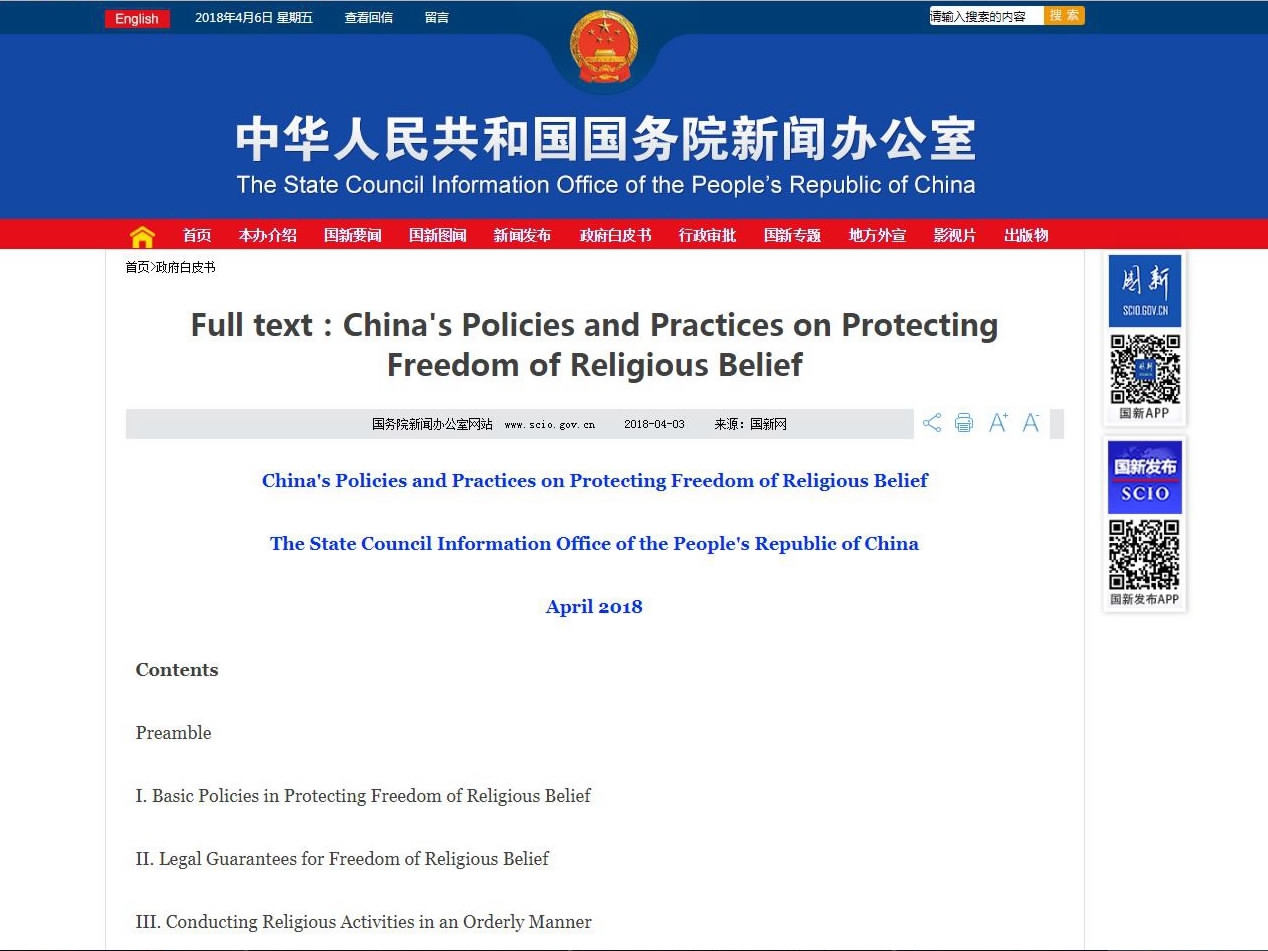
A screenshot of the official webpage of China's State Council Information Office displaying the White Paper titled "China's Policies and Practices on Protecting Freedom of Religious Belief."
Beyond these hollow assertions is also the irrefutable fact that the Vatican is being dragged into China-United States tensions prior to the 2020 U.S. presidential election. This has been acknowledged by Vatican officials, who consider Pompeo's visit to the Holy See as nothing more than an attempt to convince the City State to denounce its relationship with Beijing. Such binary approaches have been employed previously in regions such as the Middle East where American preferences over sovereign reservations have been a central feature of the Trump policy.
Cardinal Pietro Parolin made it clear that Vatican as a City State is a sovereign territory with an independent foreign policy, and the decision to move forward with China on the 2018 agreement is a conscious choice based on reflection as well as input from the Pope. In clear defiance of the United States' concerns, Pope Cardinal also state that the Vatican plans to renew the accord with China at the end of this month. This trend not willing to jeopardize relationships with Beijing based on American reservations has been pronounced throughout the Trump administration's tenure and is attributed to its narrow foreign policy approach – disregarding multilateralism and cooperation and constant tirades against China based on shoddy analysis. The Vatican has apparently understood this.
Another aspect not factored in Pompeo understanding of the Vatican's accord with China is that the agreement is essential as a conduit for dialogue with Beijing on the appointment of bishops. This perspective has failed to feature in the Trump administration understands of various aspects of the interactions between China and Vatican. Furthermore, what weakens the American case is that the Vatican has taken notice of the Trump administration's association with fundamental evangelicals within the United States which have often taken an ultra-nationalist stand on subjects such as immigration and been blatantly critical of Pope Francis as well.
Such controversial combinations make it clear as to why the Vatican remains convinced in forging its own ties with with China instead of following the Trump administration's proclivities. Thus, as the Holy See's agreement with China in 2018 is set to remain intact and the Vatican is constantly irked by the United States' questioning its moral authority, the Trump administration has once again failed in its efforts to force others to toe its line on China and defy China on shallow grounds.
(If you want to contribute and have specific expertise, please contact us at opinions@cgtn.com.)