- Home
- China
- World
- Europe
- Politics
- Business
- Opinions
- Tech & Sci
- Culture
- Sports
- Travel
- Nature
- Picture
- Video
- Live
- TV
- Specials


Share







Copied
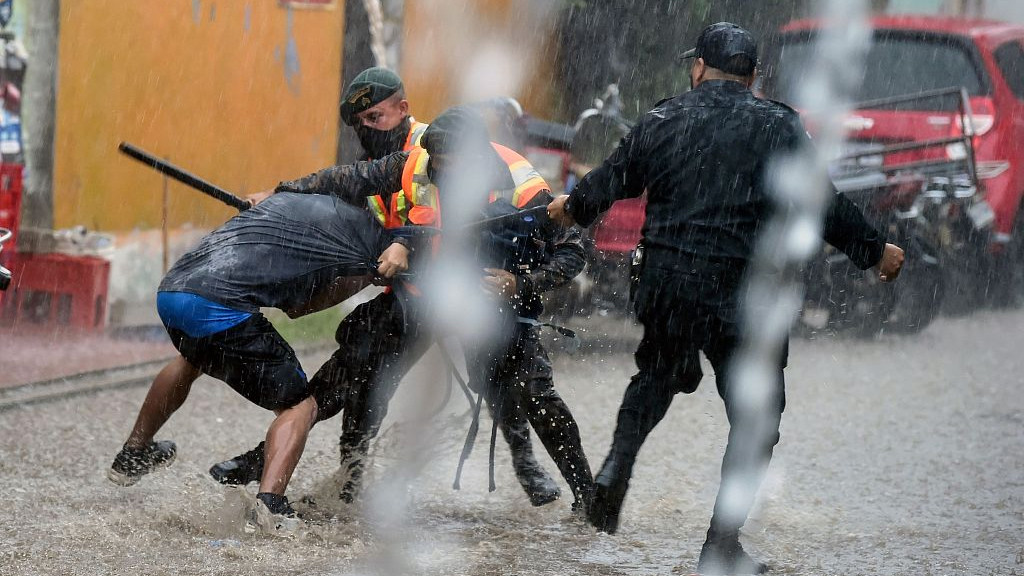
Undocumented migrants from Honduras clashes with Guatemala police, October 3, 2020. /VCG
Editor's note: Iram Khan is a Pakistan-based commentator on international affairs. The article reflects the author's opinions, and not necessarily the views of CGTN.
Today's prevalent system of global order is a result of the will to avoid the unprecedented destruction unleashed by the two world wars. A host of countries, including China, have worked together to build multilateral forums like the UN to provide conflicting parties an alternative to the battlefield when solving contentious matters.
After the fall of the Soviet Union, however, unilateralism started creeping back as the world was left with only one superpower. Initially, it created problems for weak nations but later even those becoming self-reliant realized that the U.S. was not leaving much maneuvering space for them.
American intelligentsia frequently touts the indispensability of free trade, uninterrupted supply chains and equal opportunities. American politicians, meanwhile, cannot shed their ungrounded fear of any rising power in the greater Eurasian continent. By the end of the Cold War, America shifted its focus to targeting Japan and with the turn of the century, it is pitting against China, the European Union and other strong economies of the day.
Perhaps it is less understood that none of these economies intend to threaten the U.S. They are part of the re-emerging multipolarity that is the natural order of the world.
The difference is that major countries had limited interaction in the past, whereas today they deal with each other on the minutest of issues. Consequently, some tend to maintain order and some tend to stir a supposedly manageable level of disorder.
To cite an example of the latter, the U.S. has historically prevented stability wherever it saw the potential rise of a regional power. Be it the Middle East, South America or the Western Pacific, the U.S. has pursued geopolitical primacy by cultivating disorder and embroiling the rising powers in regional or domestic conflicts.
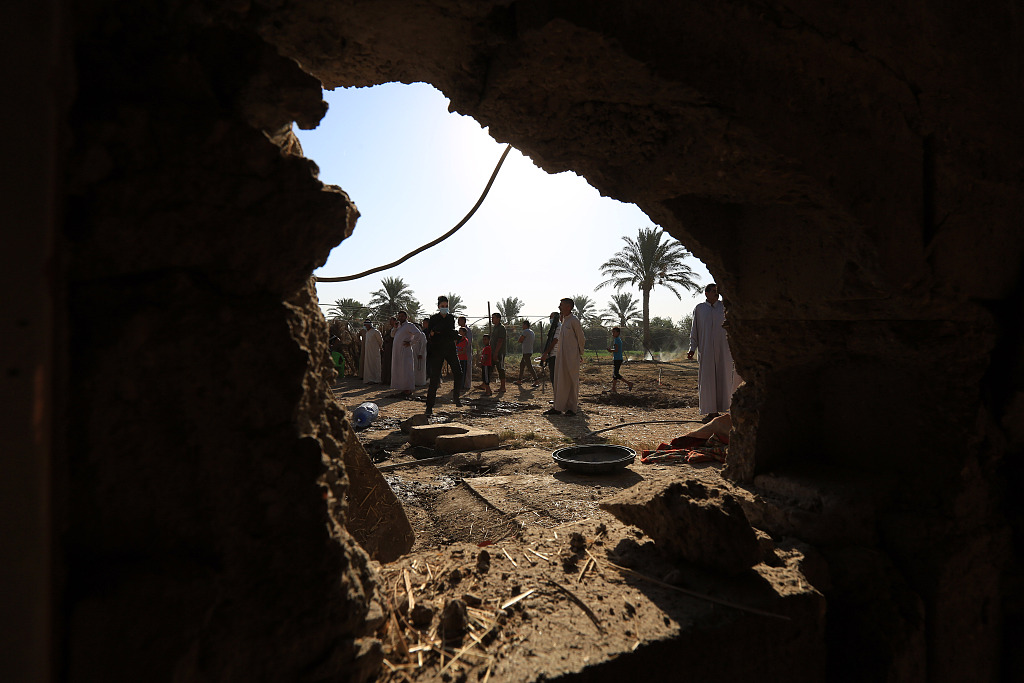
There are still constant conflicts in the Middle East region. /VCG
In many cases, the U.S. intervened in what appeared to be a continued and irrational use of force. But, ironically, winning the long wars was never the aim. The aim was to keep the targeted region unstable and incapacitate the rising power for at least a couple of decades.
The U.S.-induced instability persisted until the balance of power shifted in its favor. At the same time, the American military-industrial complex reaped profits by selling munitions to one or several of the warring parties.
Preventing any challenge to the American naval might was the plausible reason to entangle rising powers in land-based conflicts. When they fight on land, they have lesser interest and lesser resources to build navies. The presumed U.S. control over shipping lanes and international waters thus continues to prevail.
This also provides a hint as to why the U.S. is trying to create artificial crises in the South China Sea. Despite the fact that the water body has been under Chinese jurisdiction for nearly a thousand years, Pentagon advisers call for questioning China's sovereignty over it. Simultaneously, American politicians provoke trouble – although unsuccessfully – in Tibet and Xinjiang.
There have been some possibly unintended contributions as well to global disorder by the U.S. Its lax financial regulations have implications for other countries' economies and its overly aggressive security policies undermine the norms of international relations and trample the sovereignty of disadvantaged nations.
It was surprising to listen to U.S. Defense Secretary Mark Esper last month that China – and Russia – want to disrupt the U.S.-led international order. The Chinese Ministry of National Defence was quick to point out that it is China that upholds the international system by supporting the UN while the U.S. acts as the destroyer of international order by evading its responsibilities and retracting its support to the bodies running under the auspice of the UN.
China, therefore, remains a vocal proponent of upholding multilateralism and global order. It urges concerted efforts by the community of nations since consultations and mutual assistance form the core tenets of its win-win approach to addressing the deficits in global affairs.
On the other hand, instilling disorder appears as a panacea to the U.S. in retaining hegemony beyond its borders. But the sooner it realizes that multipolarity is the future of the world, the better it will be for global peace.
(If you want to contribute and have specific expertise, please contact us at opinions@cgtn.com.)