- Home
- China
- World
- Europe
- Politics
- Business
- Opinions
- Tech & Sci
- Culture
- Sports
- Travel
- Nature
- Picture
- Video
- Live
- TV
- Specials


Share







Copied
Editor's note: Iram Khan is a Pakistan-based commentator on international affairs. The article reflects the author's opinions, and not necessarily the views of CGTN.
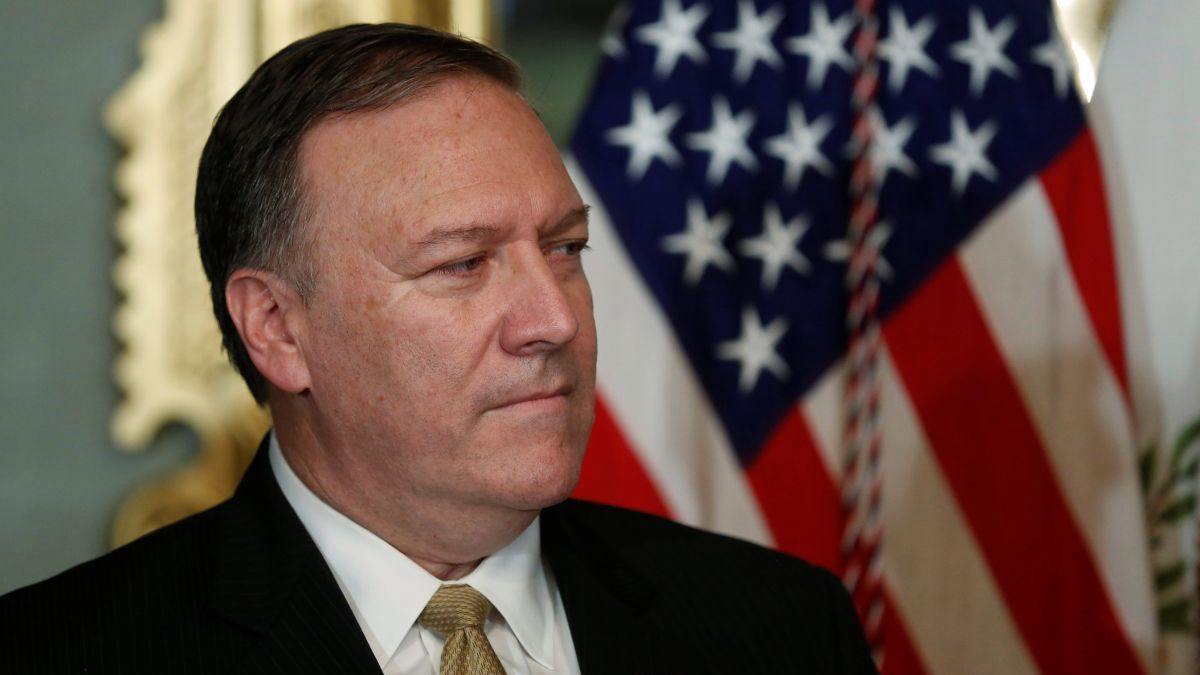
The Trump administration just can't make up its mind. On the one hand, it accuses China of stealing American people's jobs, while on the other, it accuses China of pushing its own people for labor. This time around, Secretary of State Mike Pompeo has made claims of forced labor in Xinjiang Uygur Autonomous Region, in the tradition of the administration, without substantiation.
This is a classic case of incoherent messaging of U.S. President Donald Trump and his officials: China is allegedly coercing its people to work despite the country's high appetite for jobs. What they are forgetting is that in China, the rule of law prevails with ample protection of rights, benefits and remuneration of workers.
Turning a blind eye to Chinese laws and not even checking with foreign companies or independent observers about the work environment in China before making vitriolic statements about the country have understandably backfired.
A new and timely white paper released by China's State Council Information Office earlier this month elaborately explained the situation of employment and labor rights in Xinjiang. The document reiterated that forced labor is a punishable crime and the local government, in fact, keeps track of job preferences of people through employment information platforms and encourages trade unions to safeguard workers' rights.
Concurrently, the Development Research Center (DRC) of Xinjiang released a report of its latest investigation of enterprises, labor cooperatives and business startups. Its main findings are that there is no forced labor and people are opting for various jobs voluntarily.
Another important finding of the DRC report is that many of the surplus laborers from Xinjiang are working in other parts of the country. This is evident from the presence of a large number of Uygurs in many east coast cities. A government might introduce forced labor when people are not willing for this kind of work but a surplus in the case of Xinjiang negates this claim.
Human resources are China's biggest asset. Being the world's most populous country, it makes the prosperity of its people a definite priority. At the same time, the government makes sure that industries, businesses and workers operate at the best of their efficiency – something that is not possible with forced labor.
With the resilience and determination of its people, China rose to become the manufacturing powerhouse of the world and is now on the way to becoming the innovation powerhouse. Pardon repetition, but that, too, is not possible through forced labor.

Tourists and local residents dance in the old town of Kashgar, northwest China's Xinjiang Uygur Autonomous Region, July 11, 2018. /Xinhua
A major problem of Xinjiang in the past was extremism emanating from ignorance, economic backwardness and unemployment. To offset these issues, infrastructure development, welfare activities and adequate compensation of workers were ensured by the local and the central governments.
This nullified anti-social tendencies and provided business and job opportunities to the people. Xinjiang of today is thus vastly different from that of a decade ago. The improved security situation is providing an environment conducive for business and investment. Economic development is progressing in full gear, in line with the national vision of eliminating absolute poverty by the end of this year.
Another fact that negates the forced labor myth is the Chinese economy's rebound after the COVID-19 induced downturn. Even during the initial wave of infections, factories in China quickly sprang into action as they had to fulfill global demands of medical supplies. Now during the recovery phase, China is way ahead of the world in fully resuming industrial production.
U.S. accusations at such a crucial time stem from the unwarranted insecurities of the Trump administration. Many great powers have coexisted peacefully in the past and China envisions a similar world order where everybody contributes to a shared future without an antagonistic competition.
Meanwhile, the American vision is to pressurize China on one pretext or the other to impede its peaceful economic rise. American policymakers want to retain their country's hegemony on global politics and global trade.
In the same context, the U.S. Department of Commerce has invoked sanctions on several companies from Xinjiang while using the forced labor slander as a pretext. Foreseeably, attempts will now be made to prowl on the markets where these companies might face hindrances in doing business.
As the U.S. feigns concern for the people of Xinjiang, these sanctions could be termed counterproductive for the province's economic wellbeing. The world hasn't, however, stopped spinning in the face of American actions. The innovative Chinese corporate sector will move to other ways of expanding its capacity but the intent behind the American moves has been fully unmasked.
The basic problem is the growing tendency of unilateralism – often leading to protectionism – in America's power corridors. Not only is the U.S. undermining multilateral bodies but is also undertaking one-sided measures against China, the EU and a host of other countries. The result has been a serious impediment to the growth of international trade.
Despite the decreasing gap between the sizes of Chinese and American economies, that of the latter is still the world's largest. This requires U.S. lawmakers to behave more responsibly and avoid making unsubstantiated allegations against other countries, as it affects their own country's credibility, respect and standing in the community of nations.
(If you want to contribute and have specific expertise, please contact us at opinions@cgtn.com.)