- Home
- China
- World
- Asia-Pacific
- Americas
- Europe
- Middle-East and Africa
- Politics
- Business
- Opinions
- Tech & Sci
- Culture
- Sports
- Travel
- Nature
- Picture
- Video
- Live
- TV
- Specials
- Learn Chinese


Share







Copied
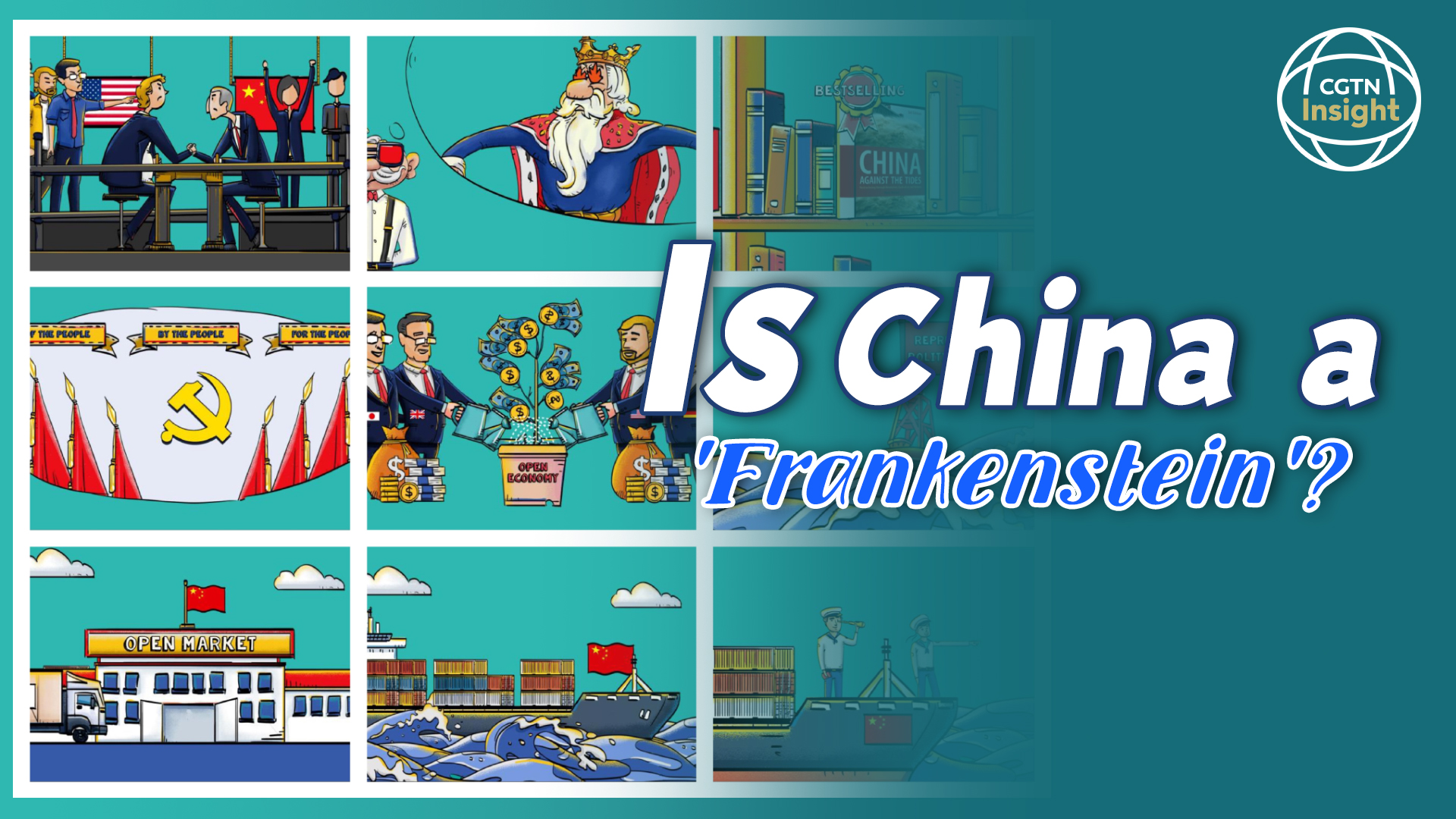
Editor's note: Former U.S. Secretary of State Mike Pompeo once compared China with Frankenstein. China's political system differs from Western multiparty politics, but what is wrong with that? Many in the West retain their outmoded views, despite China's deep integration within the global economy. Who is swimming against the tide?
"President Nixon once said he feared he had created a "Frankenstein" by opening the world to the CPC (Communist Party of China). And here we are," former U.S. Secretary of State Mike Pompeo once said.
Three decades after the Cold War between capitalism and communism was thought to have ended, some Westerners still tend to view communism as an evil alien.
For them, communism is synonymous with oppressive politics and closed economies. They see the Communist Party of China as the embodiment of their fears. But is the Party the monster they make it out to be?
A few years ago, China Against the Tides was a bestselling college textbook on Chinese political history. Its author Marc Blecher depicts China in a way that contradicts the book's title.
If the tides of modernization mean representative political systems and the market economy, China is actually observing, not flouting them.
Politically, the Communist Party insists that the government should be of the people, by the people, and for the people.
That is no empty slogan. The Party has proved that it can call on the unwavering support of the Chinese people whenever it seeks to deliver key national development goals. COVID-19 is the latest example.
"I have never seen, in my life, this kind of mobilization. Not only what they are doing is protecting their people, but from the [COVID-19] figure, you know that it's protecting the rest of the world," WHO Director-General Tedros Adhanom said.
The political system in China differs from Western multiparty politics, but what is wrong with that? Under the Chinese system, the Communist Party makes people its priority rather than spend precious time and resources on political opponents.
When it comes to the economy, China, despite its avowed socialism, has been building an open market that can compete globally. This sounds like swimming with the tide, not against it.
"There is very strong optimism about the (Chinese) market, about investment here in China. More than two-thirds of our businesses have said they are still dedicated to the market, showing the market potential of China and the potential growth," Steven Lynch, managing director of BritCham China, said earlier in an interview with CGTN.
China's determination to build an open economy explains foreign investors' optimism. It's true that planning has played a role in China's economy, but it isn't in opposition to the market economy. Planning does not mean China is an ideological rival, and socialism does not equate to a closed economy.
So why is Communist Party-led China still seen as a monster in Western eyes?
Simple! The West's pursuit of global dominance determines its view on China. The single fact that China is an influential non-Western civilization is enough to anger those whose aim is to control the destiny of humanity.
Many in the West retain their outmoded views, despite China's staggering economic progress and integration within the global economy since the Cold War ended. Now, who is swimming against the tide?
(If you want to contribute and have specific expertise, please contact us at opinions@cgtn.com.)
