- Home
- China
- World
- Asia-Pacific
- Americas
- Europe
- Middle-East and Africa
- Politics
- Business
- Opinions
- Tech & Sci
- Culture
- Sports
- Travel
- Nature
- Picture
- Video
- Live
- TV
- Specials
- Learn Chinese


Share







Copied
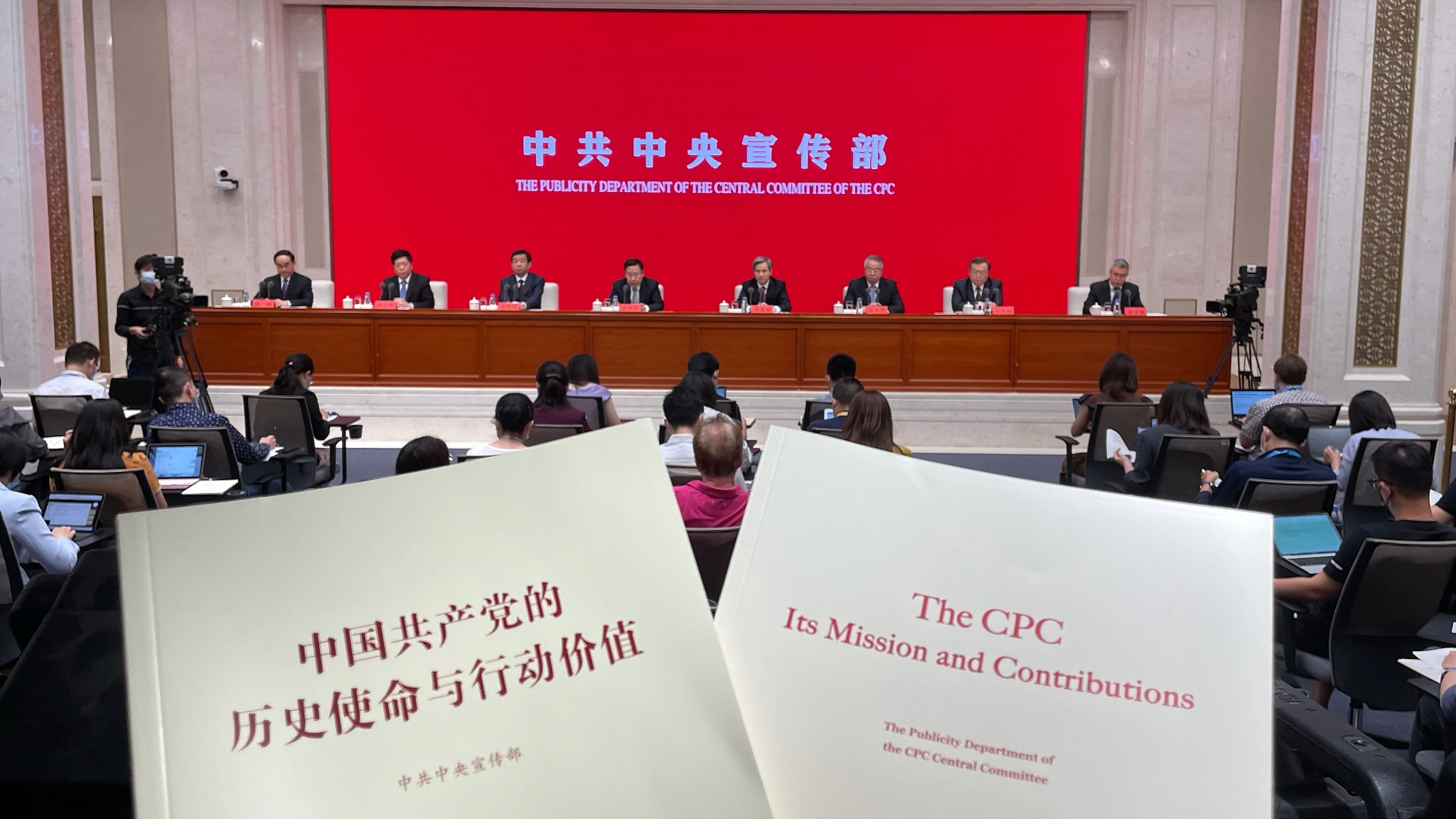
The Publicity Department of the Communist Party of China (CPC) Central Committee releases a document titled "The CPC: Its Mission and Contributions" at a press conference in Beijing, China, Aug 26, 2021. /CFP
Editor's note: Timothy Kerswell is a research fellow at the Chinese University of Hong Kong (Shenzhen). He lived in Macao for seven years, working as an assistant professor at the University of Macao. The article reflects the author's opinions and not necessarily the views of CGTN.
In its recent report commemorating the 100th year of the Communist Party of China (CPC), "The CPC: Its Mission and Contributions" is a fascinating read for anyone interested in China. Whether supporters or critics, too few people study what the CPC has to say about itself and this contributes a lot to misunderstandings about the way the CPC thinks and acts. Hence, the report provides a valuable resource against misinformation.
Maybe it's the long revolutionary tradition of humility and discipline. Still, I actually think the CPC doesn't talk enough about itself and its accomplishments and the relationship they have with the Party's system and ideology. In a Western country, political leaders call press conferences for even the most minor event and use terms like 'gamechanger' to describe even the smallest of accomplishments.
Thankfully, we were spared this kind of language, but it was refreshing to see the Party owning its achievements. For me, the key takeaway from this document is the philosophy of putting people first. I can reflect on a few examples of how this philosophy has been put into practice in a way that shows leadership to the rest of the world about what is possible.
No political party is perfect, but one of the reasons the CPC inspires me is its ability to make profound statements and take bold steps that most other political parties simply aren't capable of taking.
For example, most of the world struggles with the issue of housing affordability. Most governments are beholden in some way to the combined interests of property developers and the financial system. These forces, which represent a tiny minority of any population, assume huge influence and even de facto control of the economy and politics of many countries.
The statement "housing is for living in, not for speculation," which we find in the CPC's report, should not be a revolutionary statement. But in the world we live in, it is just that. Unfortunately, there are few political parties of major significance other than the CPC who are willing to remind us that the economy exists to serve human purposes.
There are also few political parties with the capability and resolve to guide and control the economy to ensure it doesn't just serve narrow interest groups, even if this requires paying a political and economic price from time to time. There's a reason China has greater than 90 percent homeownership, one of the highest rates in the world.
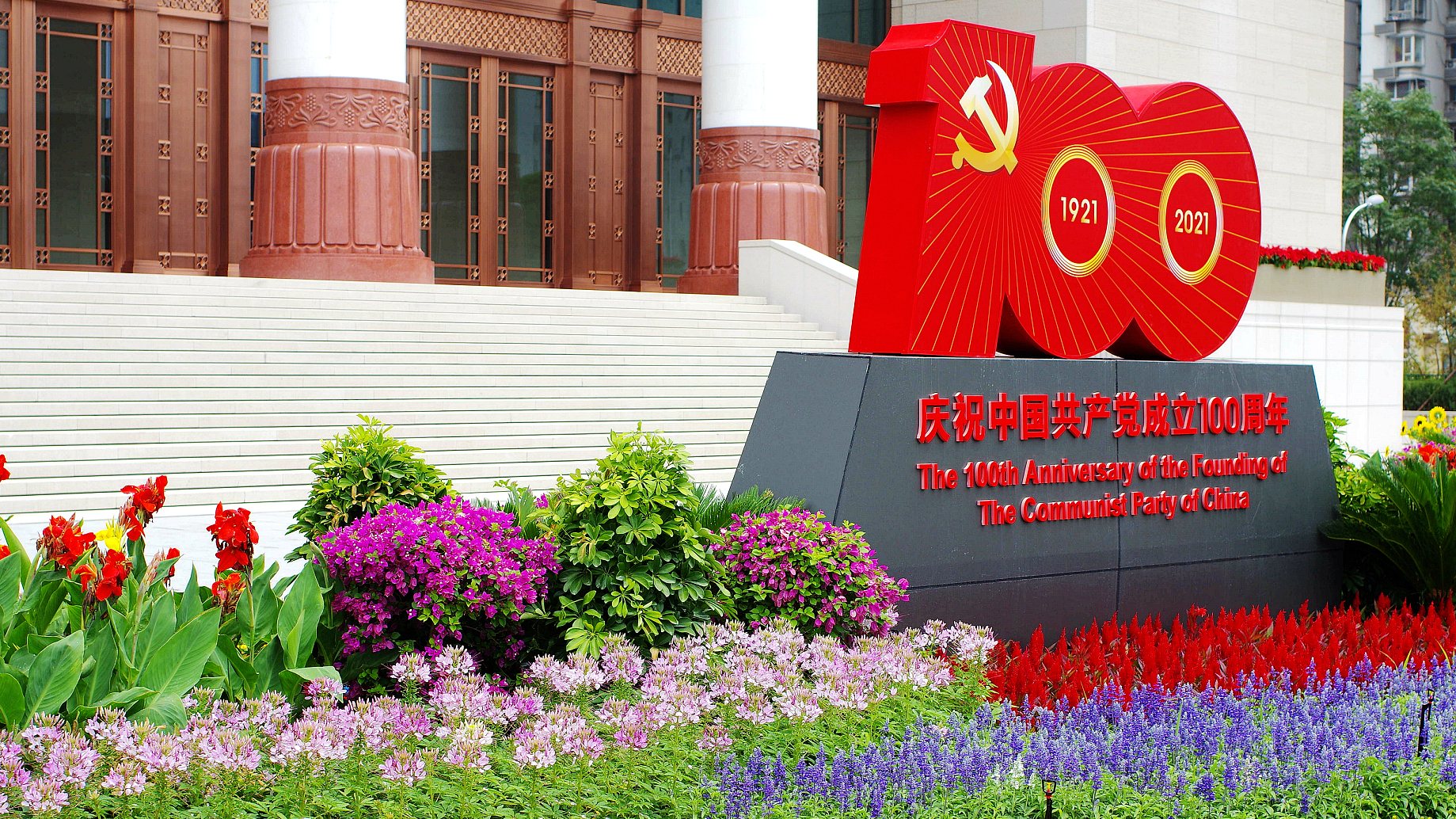
A tributary display outside the Museum of the Communist Party of China in Beijing, China, June 23, 2021. /CFP
Another issue discussed recently is China's reforms to its education industry, which revolved around private tutoring. Before the reforms, this industry was estimated to be worth about $100 billion. Many Western observers were shocked at the idea that the CPC would implement policy which reduces the profitability of the education industry like preventing companies who teach the school curriculum from making profits or raising capital, and enforcing the observance of weekends and vacations.
But you'd only be shocked about that if your worldview includes the idea of putting profits before people at all times. Instead of chasing economic growth for the sake of economic growth, there was a clear attempt in these policy reforms to reduce workload burdens on students and reduce economic burdens on parents. There just aren't a lot of political parties willing to take these types of courageous steps.
During the COVID-19 pandemic, the philosophy of putting people first faced a stern test, but the results of China's approach are now clear for everyone to see. To the Western liberal, China's system of governance looks like control for the sake of control. Their fear of power is a mental blind that prevents them from acknowledging China's achievements.
China, under the leadership of the CPC, acted decisively and took the risk of shutting down much of its economy, again putting the needs of the people first. When the Western world described China's anti-pandemic measures as "draconian," China – though justifiably offended – celebrated its success. Recently, the Western media were certain that same CPC would tumble in the face of the Delta variant of COVID-19. And then to their dismay, it didn't.
You only have to compare these actions to those of many major Western political parties to understand the differences.
You see figures like Texas Lt. Governor Dan Patrick in the United States saying the elderly should be sacrificed to save the economy. You see figures like Scott Morrison, the Australian Prime Minister, facing record numbers of COVID-19 cases and still pushing a message of going back to normal before Australia is anywhere near ready, and prioritizing anything but the safety of the population. Such leaders are happy to back almost any sectional interest, other than the interest of public health.
China rightly places a lot of emphasis on development, but it's a development with a centrally human purpose. The CPC highlights the importance of Marxism in this report, and it's a reminder that Marx's concept of a socialist society is a society that is both highly developed but also where that development is shared across the population.
The final takeaway from this report is its emphasis on the concept of common prosperity, the idea that development is for everyone, and the importance this idea is going to have for future policy directions in China. This signals that the CPC believes China has reached the necessary level of development where many new and exciting human challenges can be addressed with the idea of common prosperity firmly in mind.
(If you want to contribute and have specific expertise, please contact us at opinions@cgtn.com.)
