- Home
- China
- World
- Asia-Pacific
- Americas
- Europe
- Middle-East and Africa
- Politics
- Business
- Opinions
- Tech & Sci
- Culture
- Sports
- Travel
- Nature
- Picture
- Video
- Live
- TV
- Specials
- Learn Chinese


Share







Copied
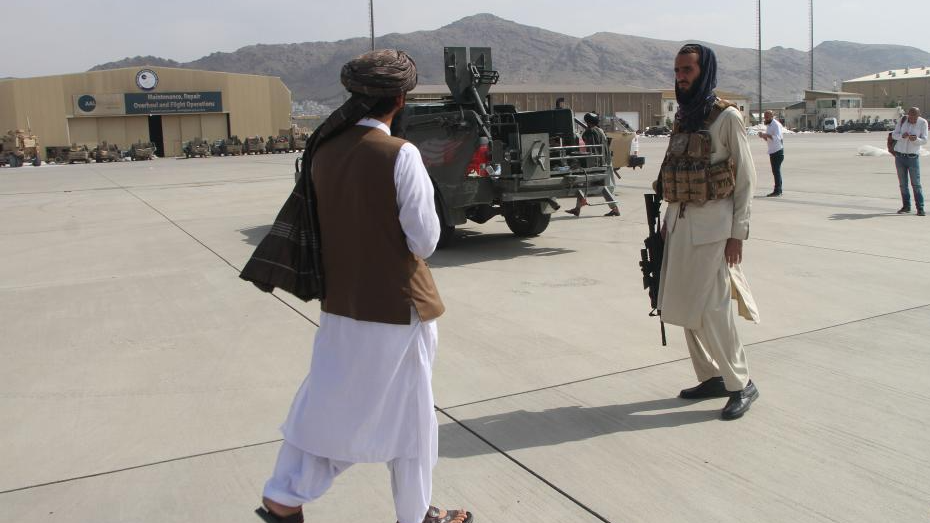
Taliban members are seen at Kabul airport in Kabul, capital of Afghanistan, August 31, 2021. /Xinhua
Editor's note: Rehan Abeysekera is a freelance political commentator and activist based in London. The article reflects the author's views and not necessarily those of CGTN.
The Pentagon has announced that the withdrawal of U.S. troops from Afghanistan has been completed, ending 20 years of U.S. military operations in the country. Despite U.S. President Joe Biden's assurances that the Afghan military and government would not collapse and that the Taliban would not overrun the country, the Taliban have successfully taken over Kabul.
Moral panic and hysteria swept over the Western world. Media and commentators were lamenting over the loss of women and minority rights as well proclaiming a new threat of instability and terrorism. This was followed by videos of Afghans falling from planes desperate to escape the clutches of the Taliban only to be accompanied with videos of U.S. soldiers carrying babies and distributing food and water.
However, this does not give us a realistic and accurate picture, nor does it lend us any practical way forward in dealing with the domestic and international challenges that the situation in Afghanistan entails.
Firstly, we must call the U.S. presence in Afghanistan for the last 20 years for what is – an imperial occupation. During the last 20 years, close to a quarter of a million people lost their lives, 47,245 of which were Afghan civilians.
The government installed by the U.S. was both corrupt and incompetent, continually harassing and exploiting its own people. As much as 90 percent of Afghan people lived below the poverty line and many had opium addiction. The only beneficiaries have been the U.S. arms companies, such as Lockheed Martin and Boeing, who profited in billions.
It is in this context that we should understand the Taliban's rapid takeover of the country. Whether Western democrats like it or not, the Taliban have popular support from the Afghan people; this is how they were able to take over key provinces often without meeting any resistance.
According to PEW Research Center, almost 99 percent of the Afghan population support the Sharia Law, and this includes women. It is particularly among the rural population, which comprise 74 percent of Afghanistan's total population, that the Taliban find most of their support.
Secular lifestyles can only flourish once a country has reached a certain level of urbanization and industrialization. A country's level of development and its own historical conditions must be kept in consideration when we see what political models are applicable to it – something that liberal universalists fail to appreciate.
While many in the West do not agree with their lifestyles and values, the Taliban have managed to gain the trust and confidence of a lot of Afghan people as compared to the U.S.-backed administration. The Afghan security forces were corrupt as well as ill-disciplined, which meant they would have never been able to hold off the Taliban without the U.S. support.
For many of the people of Afghanistan, the Taliban are a national liberation force that also offer them a form of security and stability that was not there in the previous administration.
For the international community, we ought to treat this as a new opportunity to offer stability and development to the people of Afghanistan.
In their press conferences, the Taliban have reiterated that they want an inclusive government. They said they will ensure women's rights and their access to work and education (albeit within the framework of the Sharia Law), amnesty for all their previous political opponents, protection of foreign embassies and press, an end to narcotic production in their country and Afghanistan will not be a base of operations for terrorism or attacks on neighboring countries. They said they respect territorial integrity of other sovereign nations and expressed desire for good relationships with all countries, including the United States.
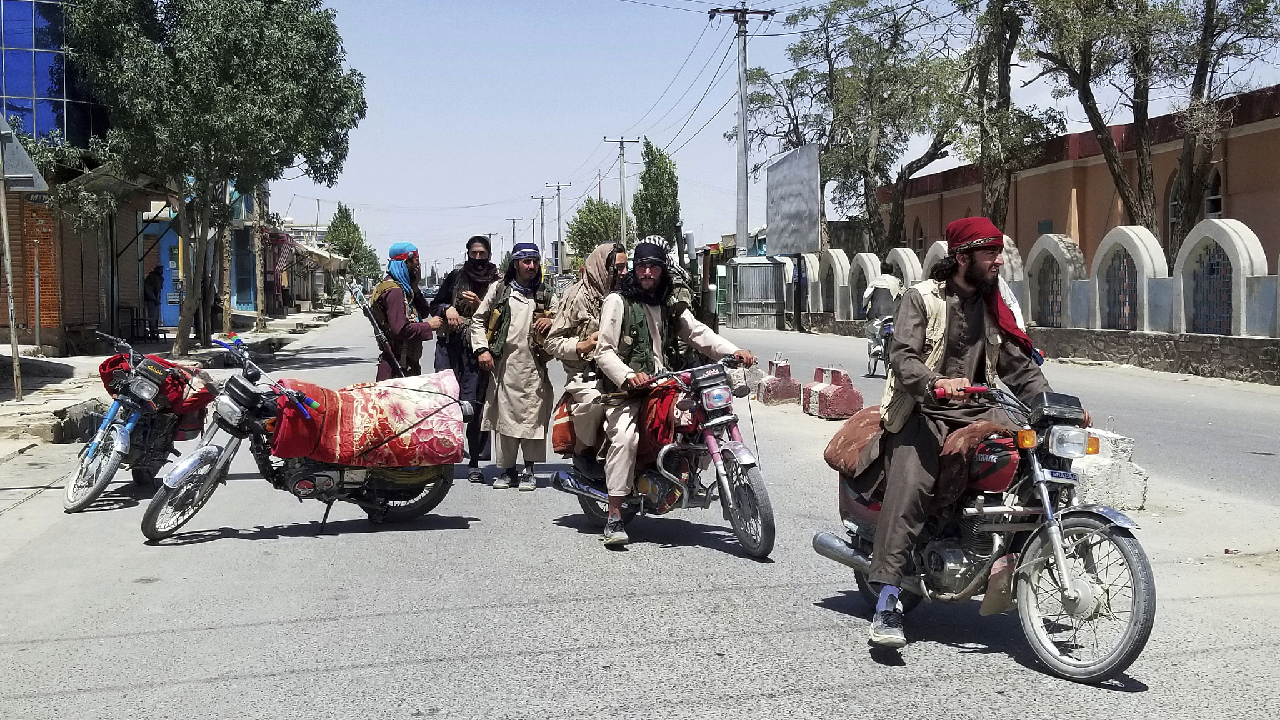
Taliban fighters patrol in the city of Ghazni, southwest of Kabul, Afghanistan, August 12, 2021. /CFP
While the Taliban may have been far from perfect in these areas in the past, they have evolved as a political organization. Part of this evolution has been due to its need to seek legitimacy from the international community. We have recently seen this with Taliban members visiting Dasht-e-Barchi Hazara neighborhood of Kabul and attending a mourning activity organized by Shias for Muharram.
The Taliban would like to keep in good graces with Iran as they are likely to be sympathetic to their cause and ideology plus they are a source of fuel and trade, thus they are more likely to ensure the rights of their Shia minority.
As much as 90 percent of the world's heroin production comes from Afghanistan; but in the year of 2000, under Taliban rule, opium production in the country was banned and dropped by 99 percent, which was one of the world's most successful anti-drugs campaigns.
However, when they were disposed of in 2001, this deadly narcotic was back in production, with many of the suspected traffickers becoming top officials in the Karzai government. With the Taliban back in power, the international community can coordinate with the Taliban to curb this illicit practice on a global level.
A Taliban victory also gives the international community the opportunity to bring stability to the region and fight terrorism. We know that since 2015, the Taliban have been in conflict with ISIL and have struck many victories against them. Their cooperation in fighting this terrorist network would be invaluable.
The Taliban can also be leveraged to curb extremism within their own ranks and prevent it from being spilled over into neighboring countries through trade, investment and giving them legitimacy. For example, the Taliban have already set up a commission to press the anti-Pakistan militants Tehrik-i-Taliban Pakistan to stop violence against the neighboring country and return to their homes across the border with their families.
We also cannot overstate how much the Taliban as well as the people of Afghanistan are tired of constant conflict and dire poverty. They need trade and investment in order to build up their country and the only way they can do so is by normalizing relationships with the international community. Thus it is imperative that the international community does not aggravate or isolate the Taliban.
After 20 years, the U.S. and its allies have failed to get rid of the Taliban and they will continue to fail to do so. Supporting proxy groups, conducting covert operations, enforcing sanctions and not sticking to agreements will only perpetuate the conflict and poverty that the people of Afghanistan find themselves in.
Concerns about human rights alongside the specific rights of women and minority groups are valid and constructive criticism should always be welcome, but an interventionist approach has consistently failed. Only through dialogue and development can the international community create a positive change in Afghanistan.
(If you want to contribute and have specific expertise, please contact us at opinions@cgtn.com.)
