- Home
- China
- World
- Asia-Pacific
- Americas
- Europe
- Middle-East and Africa
- Politics
- Business
- Opinions
- Tech & Sci
- Culture
- Sports
- Travel
- Nature
- Picture
- Video
- Live
- TV
- Specials
- Learn Chinese


Share







Copied
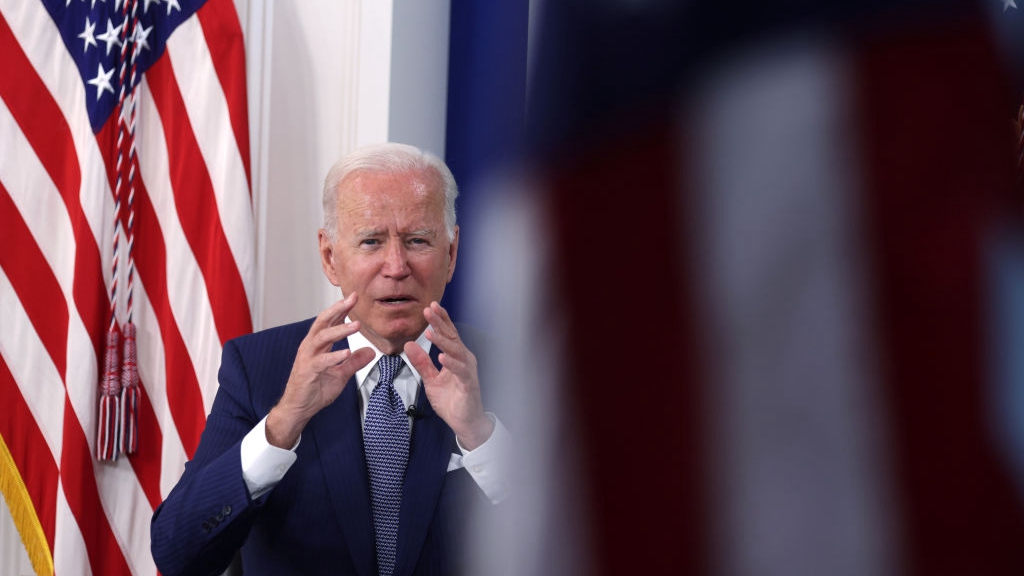
U.S. President Joe Biden speaks during a virtual COVID-19 summit of the United Nations General Assembly at the South Court Auditorium at Eisenhower Executive Office Building in Washington, D.C., September 22, 2021. /Getty
Editor's note: Xin Ping is a commentator on international affairs, writing regularly for CGTN, Global Times, China Daily, etc. He can be reached at xinping604@gmail.com. The article reflects the author's opinions and not necessarily the views of CGTN.
The trial on 20 suspects in November 13, 2015, terrorist attacks in the Paris region, which left 130 people dead and 350 injured, has recently opened. This largest trial in French history, involving survivors and family members of 1,800 victims, has sadly awakened those dreadful and agonizing memories of the serial terrorist attacks in 2015-2017, perpetrated by ISIS, targeting major cities in Europe like London, Berlin, Brussels and Barcelona.
The attacks claimed more than 300 innocent lives and injured about 1,700. Europe, once serene and peaceful, was clouded with panic and insecurity, but not just from its own citizens.
From 2015 to 2016, 1.3 million people, a record high since World War II, fled to Europe after their homes and lives were shattered by the wars in Syria and Iraq. That made things harder for economic recovery in Europe after the 10-year financial crisis and heavily burdened the social welfare system. The feeling of stagnation and regression led to the upheaval of Euroscepticism and populism, resulting in political polarization in many countries and a hindered European integration process.
Both symptoms troubling Europe can be attributed to the same root cause: the U.S.'s failure in global anti-terrorism strategy and its crappy Middle East policy. Years of airstrikes scorched the soil of Mesopotamia, disassembled the victim countries' governments, and sowed discord, even hatred, among factions and tribes. Endless war bred extremist ideology and prepared the hotbed of ISIS.
The U.S. opened the Pandora's Box, without regard for the fact that people in the invaded countries were deprived of their basic right to live free from fear and hunger, and stability and prosperity in Europe were compromised.
Has the U.S. ever thought of the negative impact before it launched any overseas military action? It doesn't need to. All the conflict zones since the beginning of last century were off North America shores, which enormously reduced direct damage and social unrest in the U.S. As long as its national interests are protected with collective actions, and possible harm is cut off by the Atlantic Ocean, the U.S. doesn't bother to consider what might happen to its allies.
Putting American interests first is always at the core of the U.S. foreign policy. This doctrine served it right then and serves it right now.
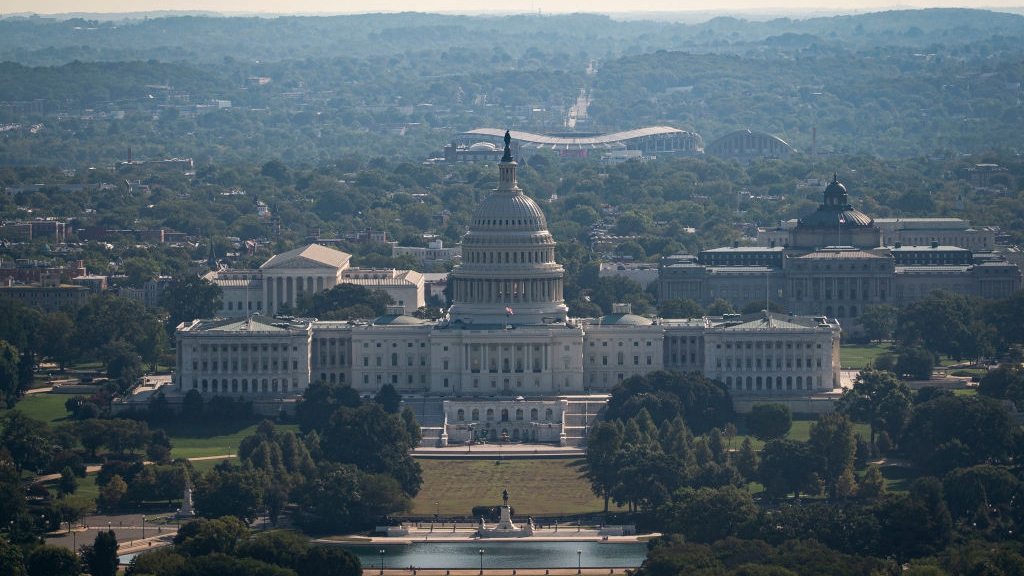
The U.S. Capitol, seen from atop the Washington Monument in Washington, D.C., September 19, 2021. /Getty
So what was there to be surprised about when Joe Biden strictly set the deadline for the final withdrawal from Afghanistan, even without discussion with America's "close" allies in Europe? The U.S. doesn't need consultation among partners; it just gives orders "from a position of strength."
What may happen to U.S. allies in Kabul should be resolved by themselves, and Afghan migrants and refugees will never reach U.S. coasts as long as their visas are denied. It goes without saying that Mr. Biden is not only a believer but also a practitioner of the "America First" creed.
The "Kabul Moment" should be fresh food for thought for Europe, which was and still toils in the spillover from man-made turmoil in Middle East and Central Asia.
Will the number "55,7000 vs. 2,000," pointing to the number of refugees hosted by European countries compared to the number hosted by the U.S. in 2020, and the fact that 3.5 million Afghans were stranded at their country's borders yet the U.S. was unwilling to accept any of them, worry the leaders of EU member states that the 2015 nightmare may come back?
The Australia-UK-U.S. (AUKUS) nuclear submarine deal, which replaced a previous one struck between France and Australia, blew up the last fig leaf over U.S.-Europe ruptures, and was described as "a stab in the back" by the French foreign minister, who saw it as a "betrayal of trust." Can it not serve as a great reminder for Europe that its transatlantic ally, pledging to do favors for each other, can be so heartlessly treacherous?
Having observed what the U.S. did in Kabul and to its ally France, will Europe come to realize that a calibration of transatlantic ties is rational and indispensable?
The recent events may finally stop Europe from being naive and consumed by its peer wrongly. But this takes courage and resolve. Is Europe ready?
(If you want to contribute and have specific expertise, please contact us at opinions@cgtn.com.)
