- Home
- China
- World
- Asia-Pacific
- Americas
- Europe
- Middle-East and Africa
- Politics
- Business
- Opinions
- Tech & Sci
- Culture
- Sports
- Travel
- Nature
- Picture
- Video
- Live
- TV
- Specials
- Learn Chinese


Share







Copied

China's top legislature, the National People's Congress, follows the principle of whole-process people's democracy in legislation. To that end, the NPC and its Standing Committee have set up 22 contact stations across the country to facilitate lawmaking.
Each week, Ni Xiaohong, director of the Working Committee of the Ciqikou Sub-district People's Congress in southwest China's Chongqing, drops by a bookstore in the area. As a staff member of the local People's Congress, she's here to collect the latest feedback to improve lawmaking.
"This one suggests improving the supervision mechanism of online peer-to-peer lending, work out reasonable laws and regulations, and promote young people's employment. From a legislative point of view, this feedback, once adopted, will be more effective in management," Ni told CGTN in an interview.
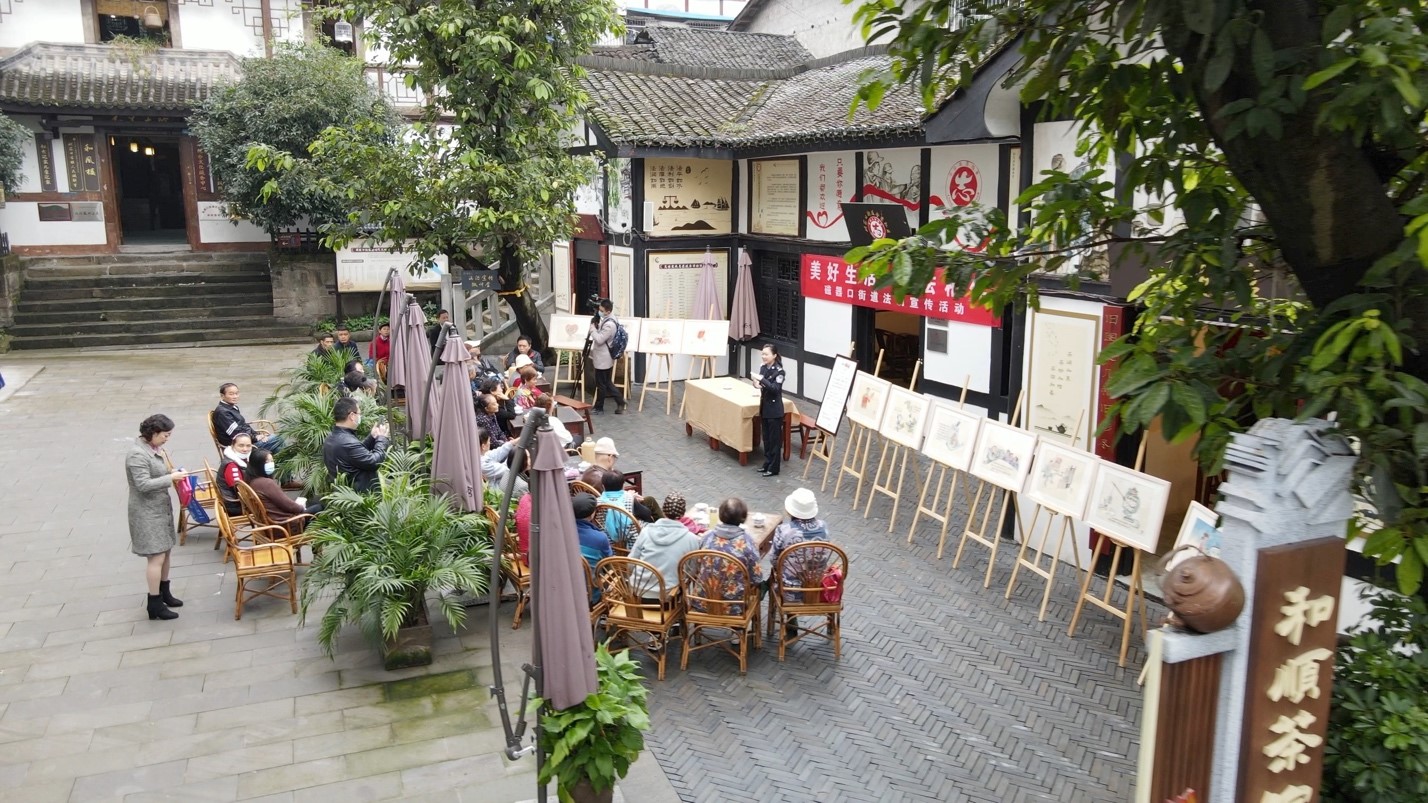
Known as Heshun Teahouse, this community center is a place where local residents gather to express their expectations for future laws, and offer relevant suggestions. /CGTN
In late September, the NPC designated Chongqing's Shapingba District as one of the country's 22 grassroots contact stations. Ciqikou is one of the region's major sources where public opinions are collected.
"During lawmaking, like when we propose laws and regulations, and solicit the public's opinions, we would fully reflect the people's will, their urgent needs and hopes, and their well-being. We should base our decisions on the public's feedback. The people will be the judge of the final outcome of legislative work," said Lai Mingcai, director of the Standing Committee of the Shapingba District People's Congress.
Whole-process people's democracy is based on the full participation of the people, and the standardization of the participation process. It's designed to better reflect the people's will, protect their rights and interests, and boost their creativity.
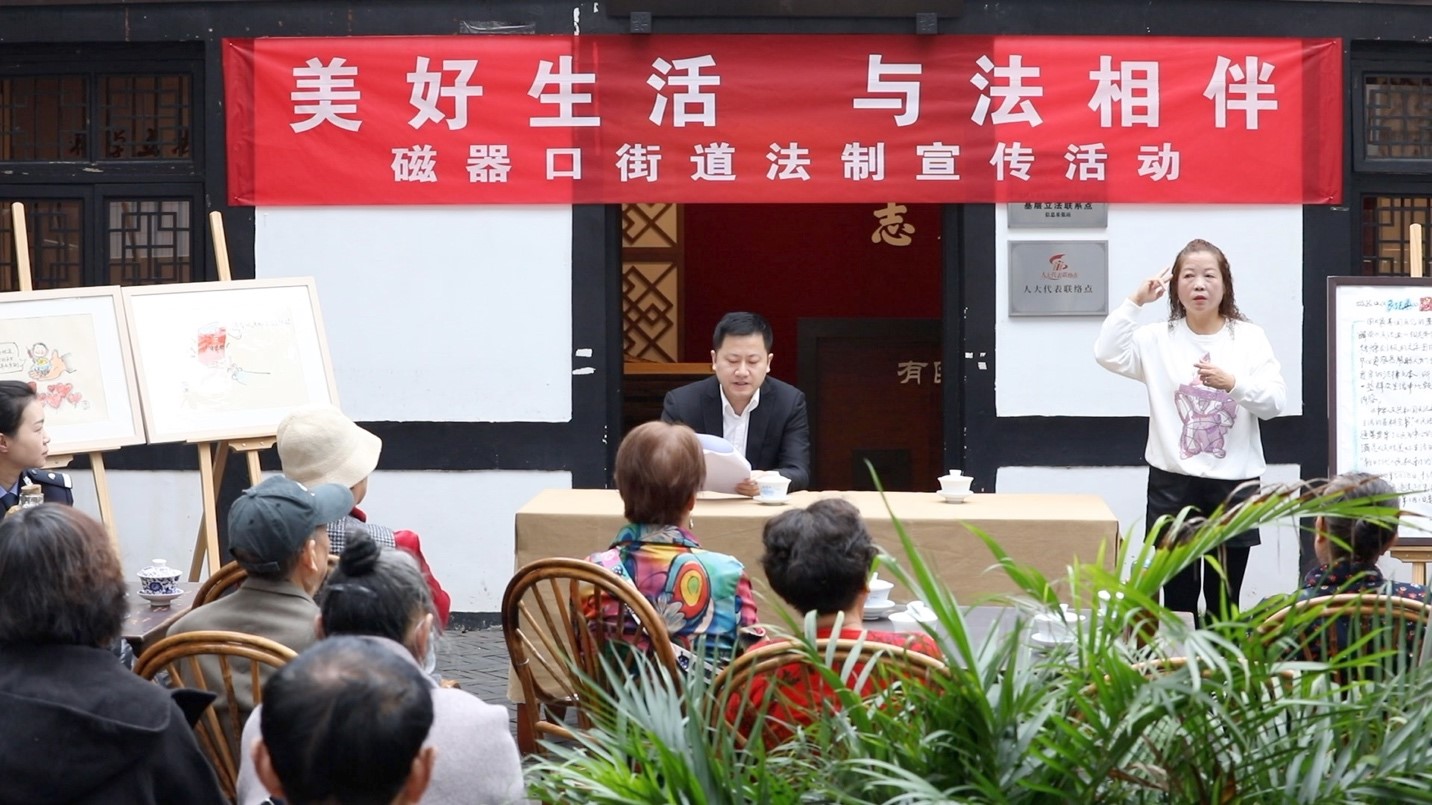
Chen Qiang, deputy to the Shapingba District People's Congress, briefs local residents on the principle of whole-process people's democracy in legislation. /CGTN
In Ciqikou, a group of residents with hearing loss gathered to share their expectations on future lawmaking and community management. Shi Changqun, a local resident, shared with CGTN using sign language, "I suggest that TV stations could be equipped with sign language interpreters so that we can understand the shows better. In addition, when we go to the hospital, we usually communicate with doctors by handwriting. It's a bit difficult for me. I hope there are sign language interpreters, too."
In a recent move, the sub-district submitted feedback on noise pollution to China's top legislature. However, there are other concerns to address. "The residents are generally more concerned about the issues surrounding their daily life. Many of them are not very professional in terms of legislation, so their opinions may not meet actual demands," explained Ni Xiaohong.
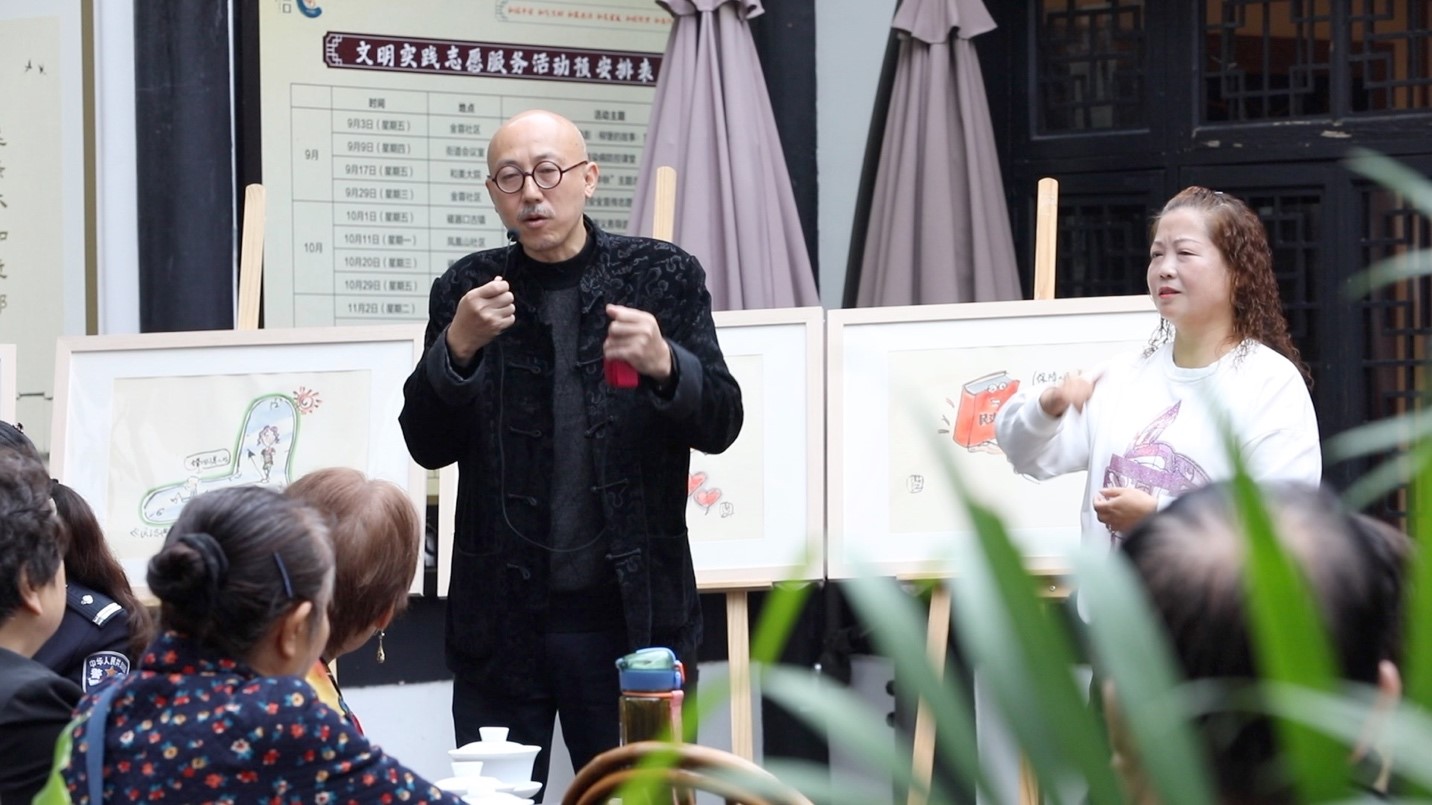
You Jiang explains articles of the Civil Code using cartoon pictures. /CGTN
The community has involved legislative experts and illustrators to keep the public better informed about China's legislative process. "The cartoons involve a humorous and illustrated way to present the content of legal provisions. My comments, along with detailed descriptions, will help attract their attention to legislative matters," cartoonist You Jiang told CGTN.
As of October this year, the country's top legislature had gathered more than 7,800 public opinions on 126 draft laws and annual legislative plans, and incorporated more than 2,200 opinions into the lawmaking process.
For Ni Xiaohong, to fully implement a whole-process people's democracy, she says she has to engage more people in the neighborhood, and make their voices heard on a wider range of issues.
(Cover: Residents of the Ciqikou Sub-district gather at a community center to discuss future laws and offer suggestions on community management. /CGTN)
