- Home
- China
- World
- Asia-Pacific
- Americas
- Europe
- Middle-East and Africa
- Politics
- Business
- Opinions
- Tech & Sci
- Culture
- Sports
- Travel
- Nature
- Picture
- Video
- Live
- TV
- Specials
- Learn Chinese


Share







Copied
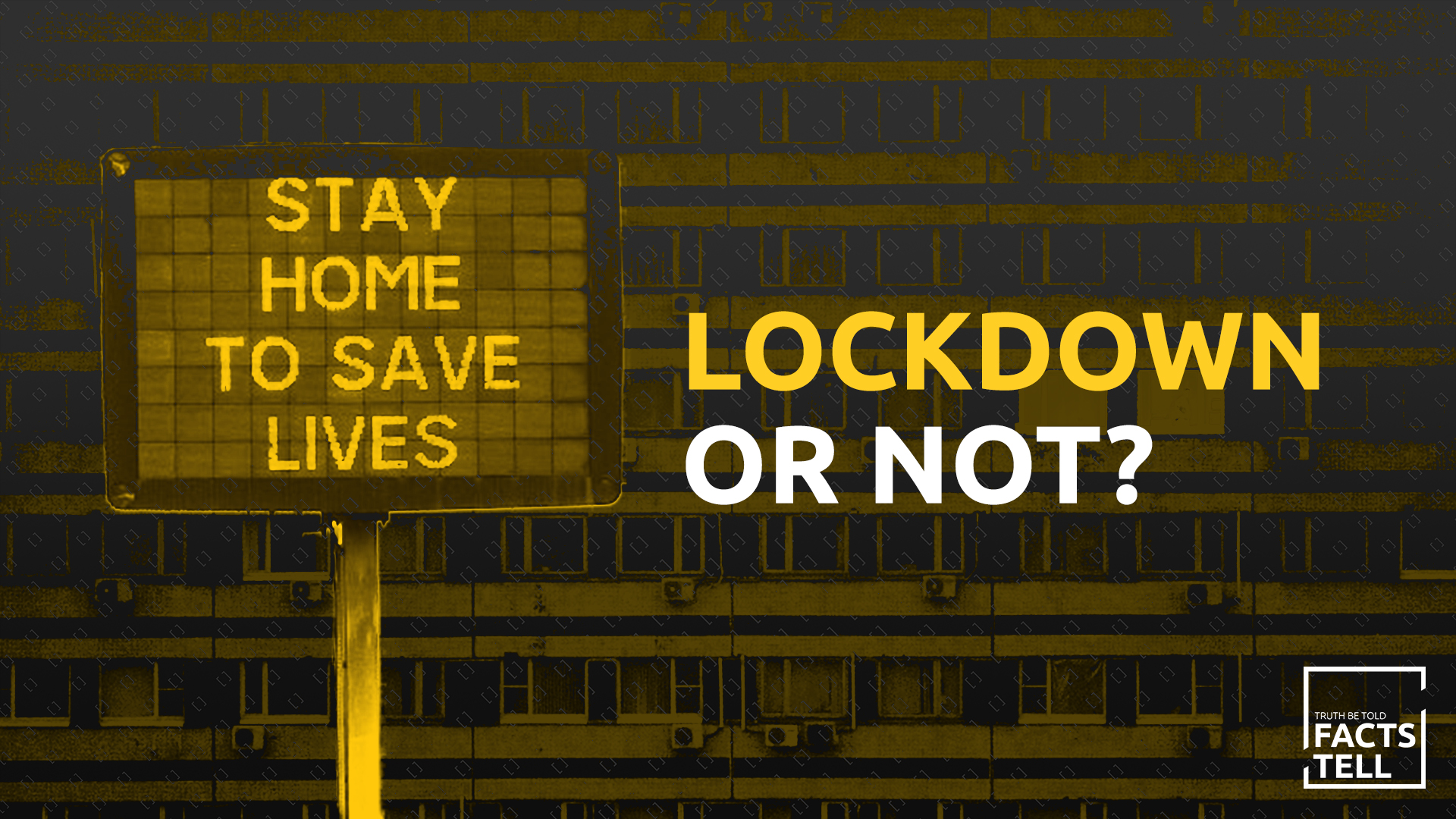
To lock down or not to lock down? This is a question governments around the world are, again, struggling with.
Some believe it's inevitable that Omicron drags the world back into difficulties, with countries and cities having to return to lockdowns. Others, however, now opine that lockdowns at the end of the year would mean not only restrictions, but also the ruin of a much-anticipated Christmas, without a festive atmosphere. Protests against lockdowns have broken out again, with subsequent clashes on the streets.
Since this kind of lockdown controversy was already on the table when the coronavirus first hit, and Omicron probably won't be the last variant to reignite it, now is the time to talk about one thing: at this stage of the pandemic, is it still necessary to choose this controversial method?
What is a "lockdown?"
First, one thing must be made clear: a lockdown is not one specific outbreak control measure, but rather a series of government interventions, including travel restrictions, social distancing and institutional closures.
When a city or country adopts multiple highly restrictive interventions, then we say it's in "lockdown."
That's why we've seen France announce that it will close nightclubs and tighten social distancing measures while at the same time saying it will avoid lockdowns. And when Austria declared a lockdown, what it entailed was that people would not be allowed to leave their houses except for essential tasks, such as buying food.
Therefore, the degree of restrictions adopted is the crux. Our question can then be further refined: is this kind of strict multifaceted intervention effective in controlling the pandemic?
How effective are lockdowns?
According to the World Health Organization (WHO), the aim of a lockdown is to "slow COVID-19 transmission by limiting contact between people."
The effect of the recent lockdown in Austria has proven this point.
Austria is among several European countries that have imposed the strictest restrictions in the latest wave of the outbreak and went into a nationwide lockdown on November 22.
And it worked. As of December 7, the lockdown had significantly reduced the number of seven-day infections in Austria.
At the same time, academic studies have confirmed that lockdown measures do help reduce transmission and lower infection rates, although some studies suggest that the effect may be mild in some countries.
The negative impacts of lockdowns
No matter how useful lockdowns are, we must admit that when many people took to the streets to protest against it, they shouted "freedom" not simply to make life difficult for governments, but because the negative impacts of lockdowns were real.
The WHO has acknowledged this, warning that lockdowns can "have a profound negative impact on individuals, communities, and societies," and "disproportionately affect disadvantaged groups."
The lockdown has forced businesses to slash hours, and layoffs have followed. Employment in Australia fell sharply in August because of lockdowns in Sydney and Melbourne, and more people gave up looking for jobs, distorting the jobless rate.
In addition to unemployment, lockdowns have increased the risk of business closures; school shutdowns have made children fall behind in their learning; and mental issues caused by lockdowns are also of serious concern.
The downside of lockdowns is even greater when you consider broader dimensions, such as global supply chains.
How should a lockdown be done?
Lockdowns can effectively reduce the transmission of coronavirus, but they can have negative effects on production and living.
In the early days of the pandemic, many countries and cities had to focus on the former, because there was no vaccine and the world was facing a concentrated outbreak. A decisive lockdown was one of the few, quickest ways to contain the situation. Now that vaccines are being distributed around the world, and outbreaks are not as sudden as they were then, we should also see the latter – that lockdowns are not a perfect answer.
How can we balance these two sides? The WHO emphasizes a few rules.
No. 1: Choose interventions in line with local realities.
Different countries have different geographical conditions, economic levels and cultural backgrounds, and also face different levels of pandemic severity. The fundamental principle is to choose interventions that suit each individual situation.
No. 2: Utilize the extra time granted by lockdowns to move fast.
By temporarily slowing or even halting society, lockdowns can buy time for other more essential problem-solving measures. During this time, countries should strengthen their detection, tracking and isolation capabilities to allow them to effectively combat the coronavirus.
No. 3: Do it all.
The WHO is yelling at the world that using all appropriate measures together does work to combat the outbreak.
This means that the lockdown should not be an isolated measure, but should be used in conjunction with others. One of the most important is vaccination.
Austria, for example, has continued to introduce policies to encourage vaccination even as it has imposed a lockdown. And it is pushing people to get vaccinated by allowing the vaccinated to be free of lockdown, but keeping the lockdown for those not inoculated. A combination of measures like this works better.
A lockdown is not a disaster, but it is no panacea either.
Today, things have changed since the beginning of the pandemic. It's feared that Omicron will lead to more infections, but vaccines are being distributed and the global economy needs a boost.
At this point, it is indeed necessary for countries to think more carefully about whether to adopt lockdowns or not. Only a more precise analysis of a country or a city's situation and the effects of various measures can effectively balance the fight against the pandemic and the pace of life.
