- Home
- China
- World
- Asia-Pacific
- Americas
- Europe
- Middle-East and Africa
- Politics
- Business
- Opinions
- Tech & Sci
- Culture
- Sports
- Travel
- Nature
- Picture
- Video
- Live
- TV
- Radio
- Specials
- Learn Chinese


Share







Copied
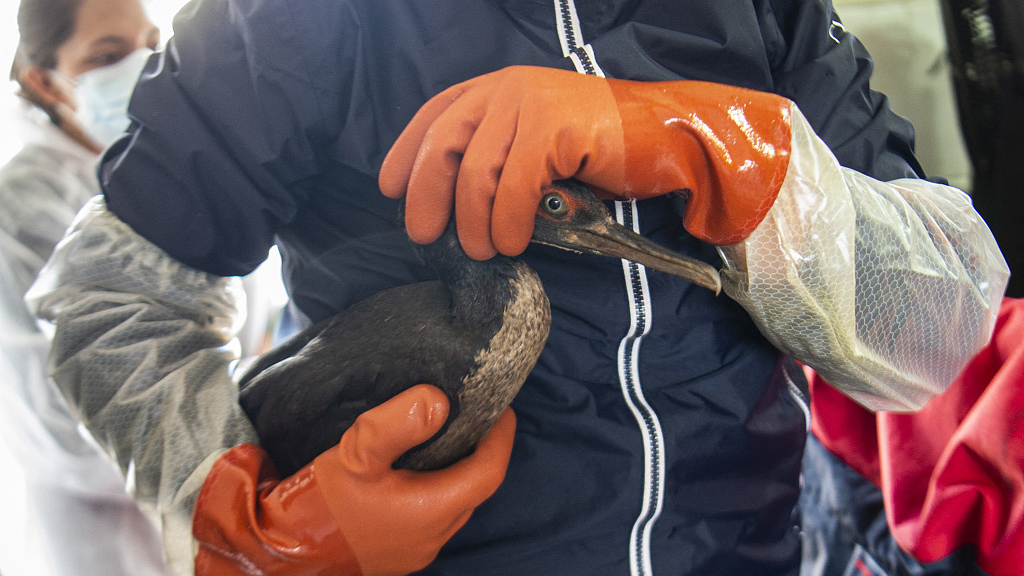
Hand fed fish and given gentle yet rigorous baths, penguins and other sea birds are slowly regaining their strength at a Peruvian zoo after a major oil spill that claimed many of their friends.
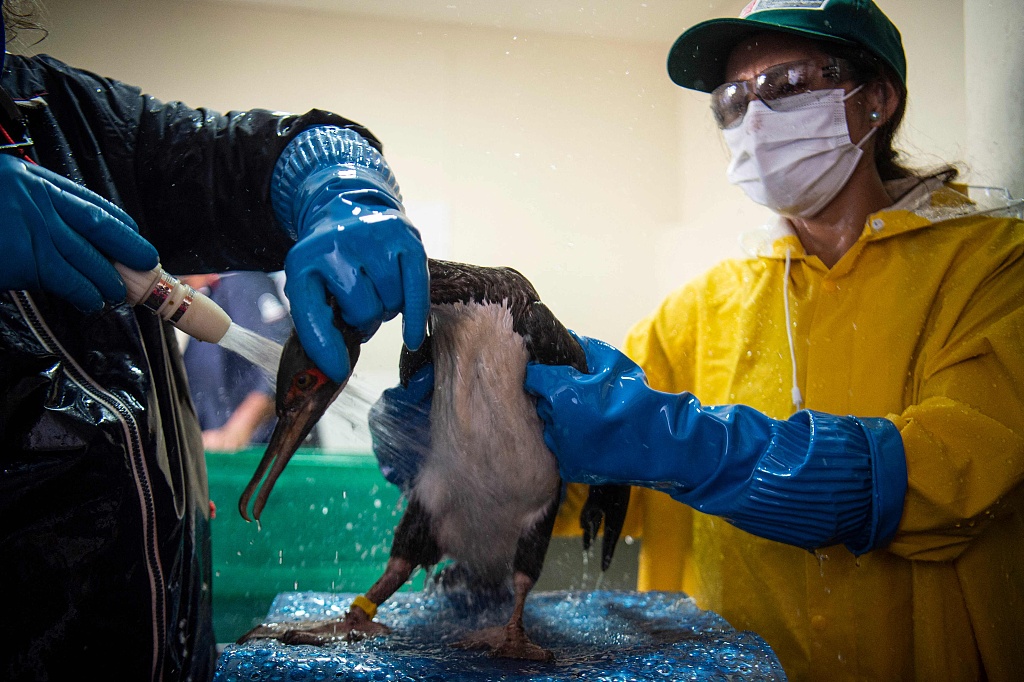
Specialists work to remove the oil from a cormorant affected by the oil spill that happened when an Italian-flagged tanker, the Mare Doricum, was unloading oil at the La Pampilla refinery, at the Parque de las Leyendas Zoo in Lima, Peru, February 02, 2022. /VCG
Of about the 150 oil-stained birds rescued after the January 15 spill of some 12,000 barrels of oil, half later died.
The survivors -- penguins, cormorants and pelicans -- are being nursed back to health and independence at the Parque de Las Leyendas zoo in Lima, Peru.
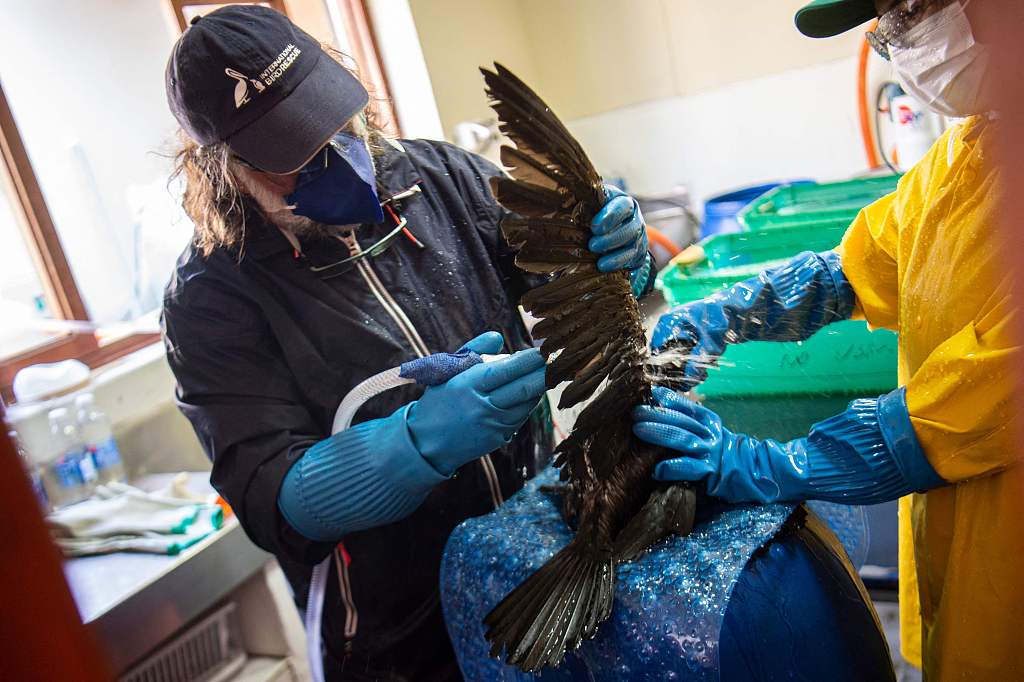
Specialists work to remove the oil from a cormorant at the Parque de las Leyendas Zoo in Lima, Peru, February 02, 2022. /VCG
With oil on their wings, birds cannot fly or feed, and they lose the insulation they need to keep warm. Even birds not directly contaminated fell ill or died after eating fish that were.
"Many of them arrived in very bad condition, which makes it difficult for us to handle them," said Giovanna Yepez, one of the rescuers at the zoo.
"The animals were very contaminated... were very stressed," she added. "It is a very hard job."
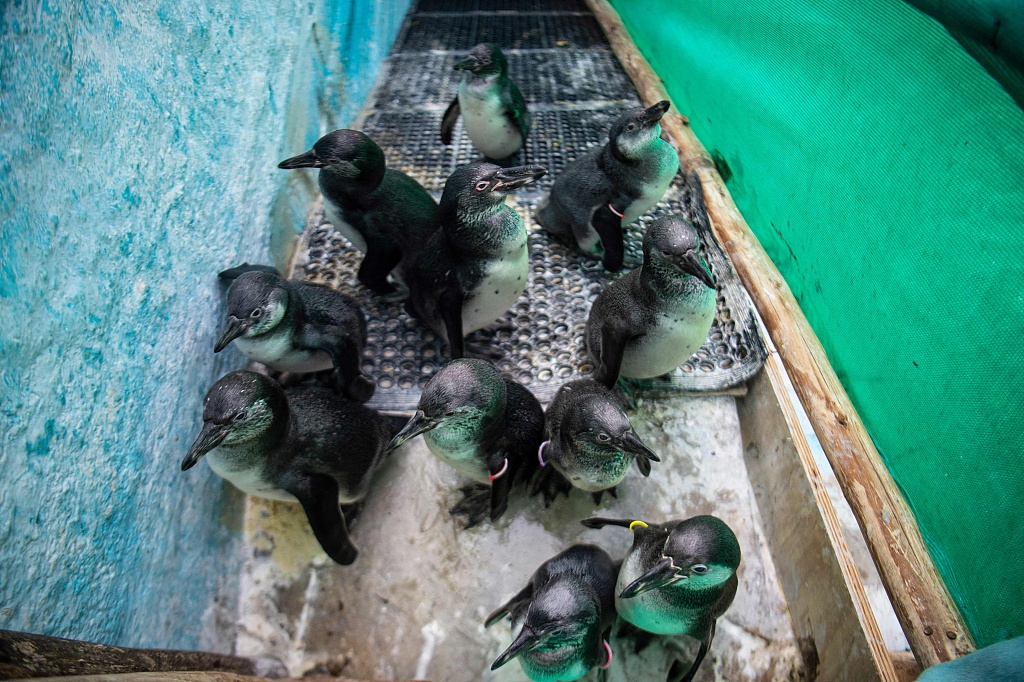
A group of Humboldt penguins are seen after being cleaned by specialists at the Parque de las Leyendas Zoo in Lima, Peru, February 02, 2022. /VCG
But after two weeks of intensive care, the penguins at least "have tripled their food consumption," said Yepez.
The Humboldt penguin is classified as "vulnerable" by the International Union for Conservation of Nature. The species lives in colonies on the Peruvian and Chilean coasts, feeding in the cold, nutrient-rich waters of the Humboldt Current which flows north from Antarctica.
"I believe the penguins are on the right track, they are clean and waiting for the impermeability of their feathers to return so they can be released."
Even when the feathers appear clean, the slightest vestige of crude inside the beak "can affect (the bird) through the digestive system, the liver," added veterinarian Giancarlo Inga Diaz, hence the need for patience and thoroughness.
(If you want to contribute and have specific expertise, please contact us at nature@cgtn.com.)
