- Home
- China
- World
- Asia-Pacific
- Americas
- Europe
- Middle-East and Africa
- Politics
- Business
- Opinions
- Tech & Sci
- Culture
- Sports
- Travel
- Nature
- Picture
- Video
- Live
- TV
- Radio
- Specials
- Learn Chinese


Share







Copied
Thousands of national lawmakers and political advisors have gathered in Beijing for the important political sessions that cover every aspect of China's development and people's well-being. For lawmakers, one main focus of work is to collect public opinions at the grassroots level, and make the public's voices heard during the meetings.
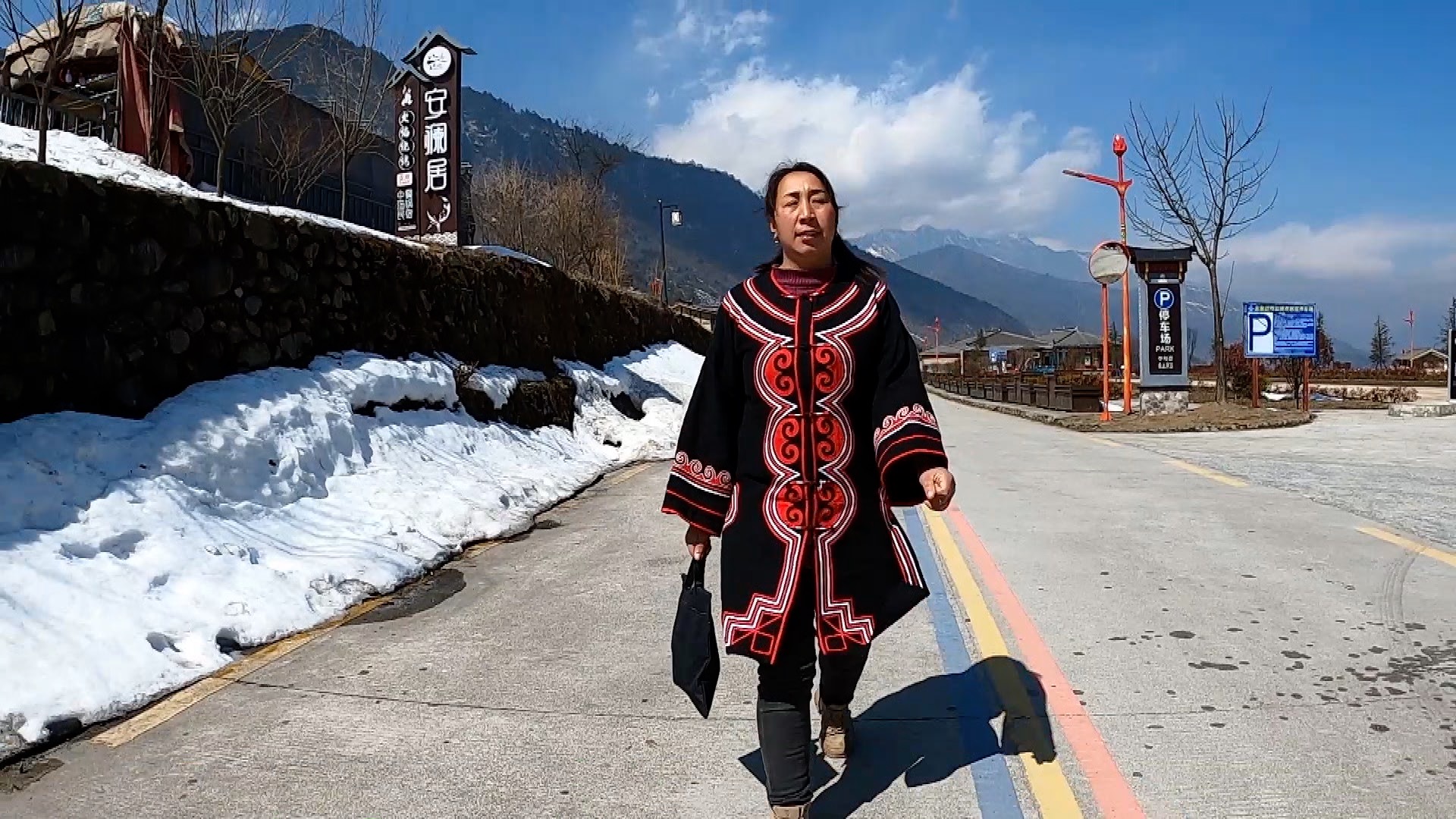
Just days ahead of the key political season, Mao Zhenfang, a deputy to the 13th National People's Congress, paid a routine visit to local communities in southwest China's Sichuan Province, where most of the residents are Yi people, one of the largest minority groups in the country.
What concerns her most is to find new ways to boost rural growth, and promote rural vitalization. "I think the key to promoting rural revitalization here is to develop a collective economy. And we're exploring business models most suitable to mountainous areas, like the cultivation of medicinal herbs, vegetables, as well as promoting eco-tourism," the national lawmaker told CGTN in an interview.
This community, known as Menghuo New Village, was rebuilt following the deadly Lushan earthquake of April, 2013. Now, it has been developed into a scenic spot, featuring cultural elements, and panda conservation. Local resident Wang Qiongying commented after Mao's visit, "Earlier, there was no transportation and people lived in thatched huts. Now, as you can see, we're all living in houses built by the government. And I've opened a family inn here, a major source of family income. That has brought new changes to our way of living."
At Mao's proposal, China's top legislature designated Ya'an City as one of the country's grassroots contact stations last year. Right there, public opinions are collected on a regular basis.
"What I've done is to engage more people in the legislative process. Through this contact station, people here are able to directly connect with the National People's Congress. It's a platform for us to collect their feedback, allowing the legislation process to better reflect their needs," Mao explained to CGTN.
Mao said her job as a national lawmaker serves as a bridge connecting local communities with the top legislature. And the feedback she's collected are key to formulating policies benefiting rural development.
She recalled her tenure as a lawmaker.
"Since I became a deputy in 2018, I've submitted more than 30 proposals. Most of them are closely related to grassroots communities, like their livelihoods, infrastructure, and ways to achieve the rural revitalization strategy. I think it's more about bringing policies to the general public, and letting them participate in the legislation process."
Mao Zhenfang is mulling over suggestions that she would make in Beijing during the key meetings. Foremost in her mind, a policy for locals to continue prospering, even after China's victory over extreme poverty.
