- Home
- China
- World
- Asia-Pacific
- Americas
- Europe
- Middle-East and Africa
- Politics
- Business
- Opinions
- Tech & Sci
- Culture
- Sports
- Travel
- Nature
- Picture
- Video
- Live
- TV
- Radio
- Specials
- Learn Chinese


Share







Copied
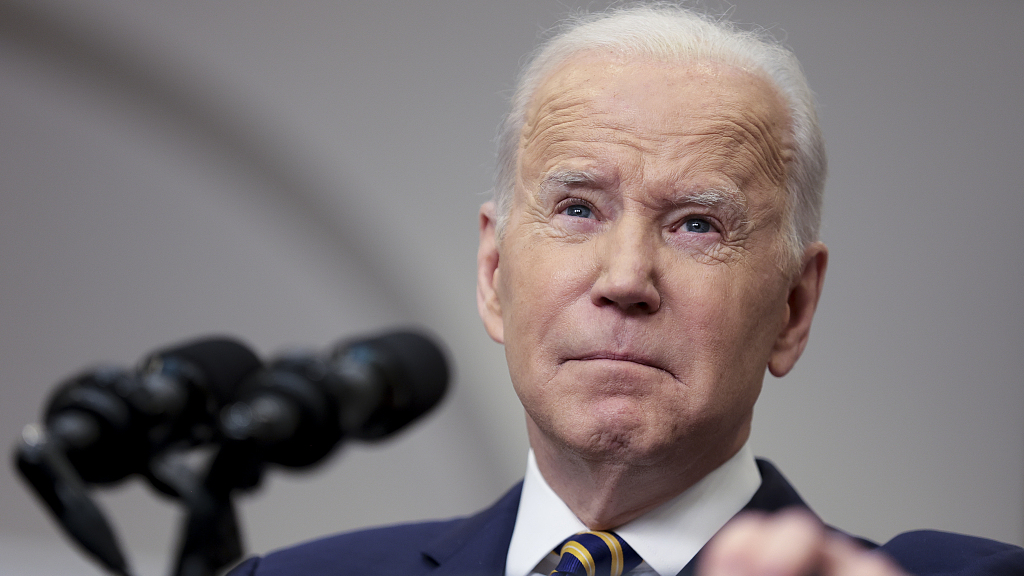
U.S. President Joe Biden speaks in the Roosevelt Room of the White House in Washington, D.C., U.S., March 8, 2022. /CFP
Editor's note: Hannan Hussain is a foreign affairs commentator and author. He is a Fulbright recipient at the University of Maryland, the U.S., and a former assistant researcher at Islamabad Policy Research Institute. The article reflects the author's opinions and not necessarily the views of CGTN.
On March 8, U.S. President Joe Biden announced a ban on Russian oil and other energy imports to the United States. "This announcement builds on unprecedented economic costs the United States and our Allies and partners have imposed on Russia. As a result of our historic, multilateral coordination, Russia has become a global economic and financial pariah," read a White House fact sheet.
There is no doubt that the Russia-Ukraine situation has once again been used as a launchpad by the U.S. for further escalation, this time in the form of a counterproductive oil import ban. Yet it is increasingly clear that such an aggressive, provocative action fails to make any meaningful contribution to the same situation's settlement.
In a sign that the measure has little to do with resolving the crisis, and much to do with personally opposing Moscow, look to Biden's remarks from the White House. He confirmed that the move is "targeting the main artery of Russia's economy," and that his chief focus has been "a united response" to Russian President Vladimir Putin's alleged aggression. This line of argument is synonymous with the same provocative U.S. rhetoric that has seen it veer away from peacemaking diplomacy, and instead, exacerbate fears of global energy market disruptions. "The U.S. has no plans to intentionally disrupt energy flows from Russia," said a White House official last month, according to an S&P Global report. Fast forward to present, the Biden administration has walked back on its word and done precisely that.
On a so-called "united" response, several European partners are clearly not in agreement with the U.S. on its oil ban rationale. Germany and Netherlands have both refused to join Washington's move, with Berlin mincing no words in pointing to the futility of such a ban vis-à-vis the Russia-Ukraine crisis. The Netherlands has rejected the possibility on the back of "enormous consequences." Even Bulgaria is content to follow Berlin's stance at present. "It is a conscious decision on our part to continue the activities of business enterprises in the area of energy supply with Russia," said German Chancellor Olaf Scholz.
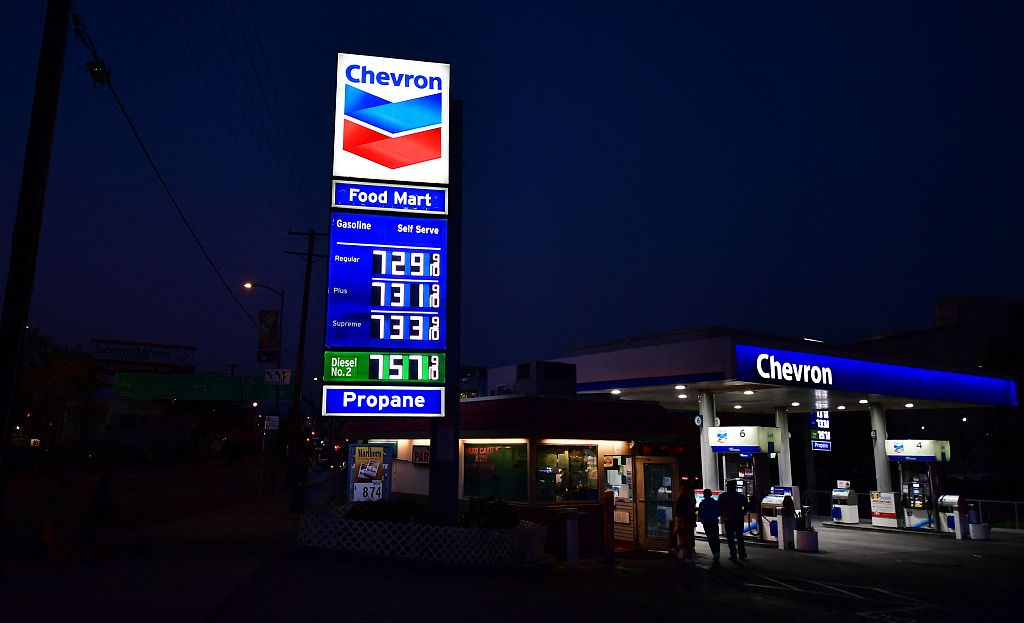
Gas prices of more than $7.00 per gallon are posted at a downtown Los Angeles gas station, March 9, 2022. /CFP
All this blows a hole into Washington's talked-up coordination on the oil ban with European allies. More deeply, it underlines the limits of conflating the Ukraine situation with the U.S. goal of taking down Moscow on any desired front.
Interestingly, American consumers have been warned: it is the Biden administration that is responsible for a surge in domestic fuel prices and certain upticks in rapid inflation. Consider the fact that as retail gasoline prices soared in the U.S. to record levels on the day of the ban, Biden's instinct was to sell a rise in prices as a consequence of what he called "Putin's war."
"Record levels" of U.S. oil and gas production have also been signaled as a message of assurance to increasingly dissatisfied masses. What Biden refuses to recognize is Washington's waning leverage when it comes to exercising control over oil prices beyond its borders. The latest reminder comes from the Persian Gulf: Riyadh and Abu Dhabi have declined to heed U.S. calls on easing prices. It helps to remember that U.S.-led sanctions against Moscow were a key trigger to sending oil prices surging.
"The United States produces far more oil domestically than all the European countries combined," explained Biden. "So we can take this step [banning Russian oil imports] when others cannot." Underneath that confidence is a reluctance to disclose the complete picture to the public: that U.S. oil production does not translate into American leverage over energy prices and supplies. Ordinary American citizens – caught in the throes of rampant inflation – are denied full transparency.
All this is to say that Moscow was right to warn that the West's rejection of Russian oil will open the gates for "catastrophic consequences" in the global market. Though the "West" hasn't come through as a whole, it can be said with some confidence that U.S. allies are tied to the same global market, and thus, are in no way exempt from the consequences.
(If you want to contribute and have specific expertise, please contact us at opinions@cgtn.com. Follow @thouse_opinions on Twitter to discover the latest commentaries in the CGTN Opinion Section.)
