- Home
- China
- World
- Asia-Pacific
- Americas
- Europe
- Middle-East and Africa
- Politics
- Business
- Opinions
- Tech & Sci
- Culture
- Sports
- Travel
- Nature
- Picture
- Video
- Live
- TV
- Radio
- Specials
- Learn Chinese


Share







Copied
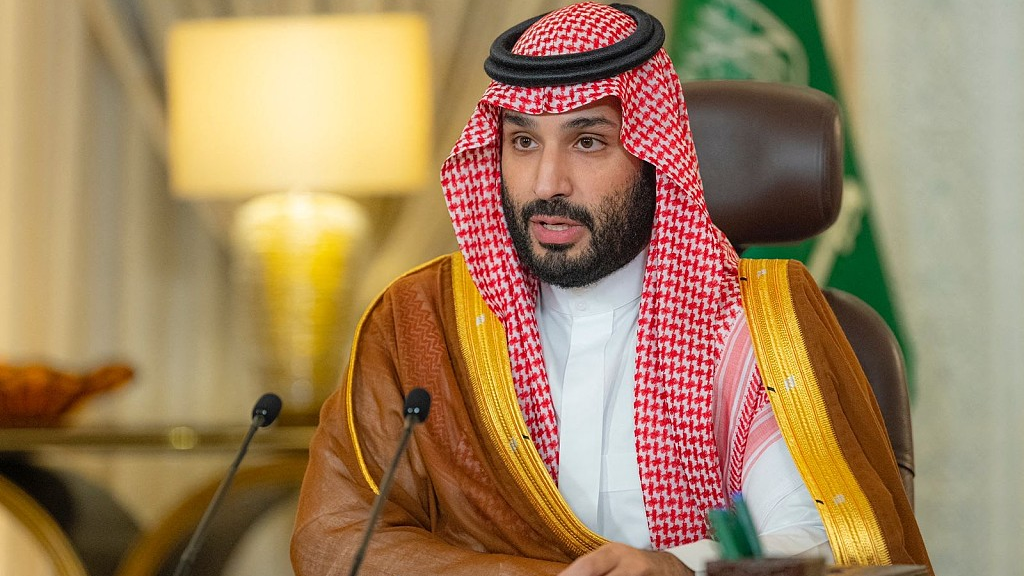
Saudi Crown Prince Mohammed bin Salman delivers a speech addressing the Saudi Green Initiative opening ceremony in Riyadh, Saudi Arabia, October 23, 2021. /VCG
Editor's note: Hannan Hussain is a foreign affairs commentator and author. He is a Fulbright recipient at the University of Maryland, the U.S., and a former assistant researcher at Islamabad Policy Research Institute. The article reflects the author's opinions and not necessarily the views of CGTN.
On his campaign trail, Joe Biden denounced Saudi Arabia as a "pariah" state, played up ideology, and vilified the kingdom's ruling government. Now as the crisis in Ukraine sends shockwaves through the global petroleum market, exposing Western panic, Riyadh is suddenly on the map as an emerging priority for Washington and some of its allies. "We have to make sure other [oil] producers are doing what they can," said British Prime Minister Boris Johnson, on a planned trip to Saudi Arabia. "[The price rise has to be dealt with] in any way we can."
It is only after Riyadh declined U.S. calls on driving down oil prices, that the follow-up goal is to get London to do the bidding for American interests.
As a sovereign nation with considerable economic heft, is the overriding goal of Saudi foreign policy to satisfy U.S. energy interests? That is the question to ask the Biden administration, given its bare minimum investment in ties with a Middle East heavyweight. For instance, Biden's so-called decision to "recalibrate" Saudi ties last year came with the assumption that the U.S. will maintain support for the kingdom's self-defense needs. "They [Saudi Arabia] have critical self-defense needs, and we will continue to work with them on those," said White House press secretary Jen Psaki last February.
But a rise in cross-border attacks from Yemen points to a big hole in that commitment, especially when Saudi Arabia sees such cross-border threats as vital to alerting its stakes in the U.S. relationship. Biden's investment in the energy contours of the relationship are equally disappointing. Disputed human rights allegations have dominated official narrative far more than pathways for expanding Saudi-U.S. energy cooperation. Despite oil imports into the U.S. witnessing historic interruption, course correction by the current administration was never at the top of the policy agenda.
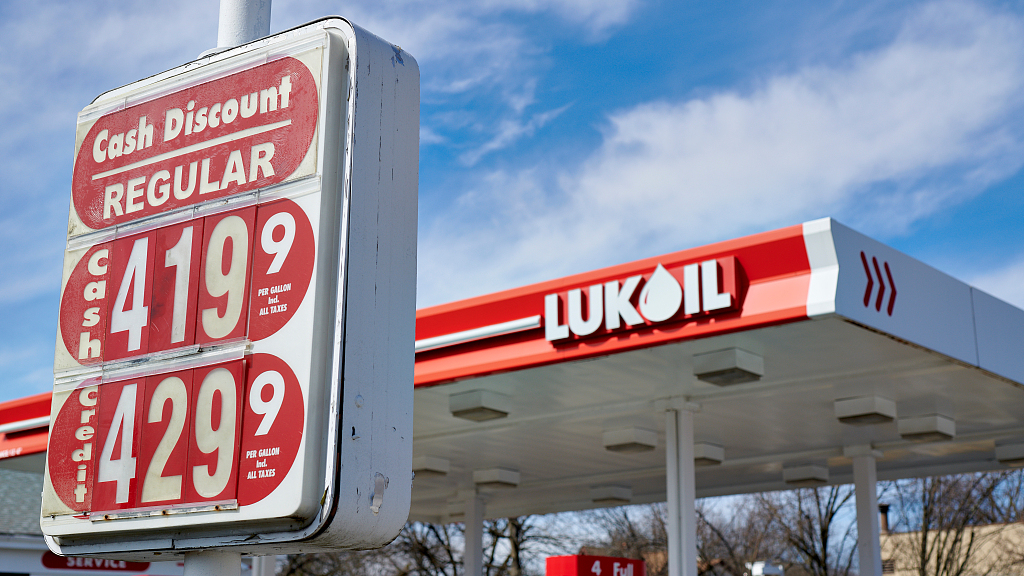
Fuel prices on display at a LukOil gas station in Bloomfield, New Jersey, U.S., as the cost for a gallon of gas in the U.S. continues to reach all-time highs, March 13, 2022. /VCG
These realities don't escape Riyadh at all. The kingdom recognizes that an event external to the Saudi-U.S. relationship – the Ukraine situation – is at the heart of Washington's courtship, and is driving U.S. immediacy on oil assistance. Riyadh has previously suggested that any U.S. attempt to alienate the government will also backfire for Biden. Together, these realizations offer a compromising look into Washington's transactional diplomacy with Riyadh, and makes clear that such in-direct engagement dawns on it during crisis season.
U.S. neglect also lays bare the intent behind Johnson's planned trip to the kingdom. The visit hopes to accomplish what Washington simply couldn't: force Saudi Arabia into an oil deal that caters to Western priorities. From a Saudi perspective, the timing and circumstances of Johnson's visit are more political than energy-centric, and it is U.S.-led sanctions that have wreaked havoc on global oil markets. None of this is of Riyadh's own making.
Further weakening the Biden administration's case is its discourse of denial. On Riyadh, it can't even publicly acknowledge that top Biden advisers have been considering an in-person trip to the Gulf state. Detailed reporting has been dismissed by the White House as outright inaccurate.
The underlying fear is clear. By giving any indication of an outreach toward Saudi Arabia, Biden risks angering Washington and contradicting his approach to opposing the kingdom's de facto leader, Crown Prince Mohammed bin Salman. Understand, that this is the extent to which anti-Saudi sentiment has come to drive Washington's growing indifference toward the oil-rich Gulf state. On the energy front, such resistance further strips the U.S. of any tangible leverage in oil supply talks. "It's up to him [Biden] to think about the interests of America," said Mohammed bin Salman in an interview with The Atlantic Monthly. "Go for it."
And so, Washington's castigation of the Saudi government, and waning resolve to invest in the relationship's strengths, have collectively empowered Riyadh for some hard oil bargaining.
Perhaps it is wiser to think of consequences first before putting ideological clothing on a relationship of vast potential.
(If you want to contribute and have specific expertise, please contact us at opinions@cgtn.com. Follow @thouse_opinions on Twitter to discover the latest commentaries in the CGTN Opinion Section.)
