- Home
- China
- World
- Asia-Pacific
- Americas
- Europe
- Middle-East and Africa
- Politics
- Business
- Opinions
- Tech & Sci
- Culture
- Sports
- Travel
- Nature
- Picture
- Video
- Live
- TV
- Radio
- Specials
- Learn Chinese


Share







Copied
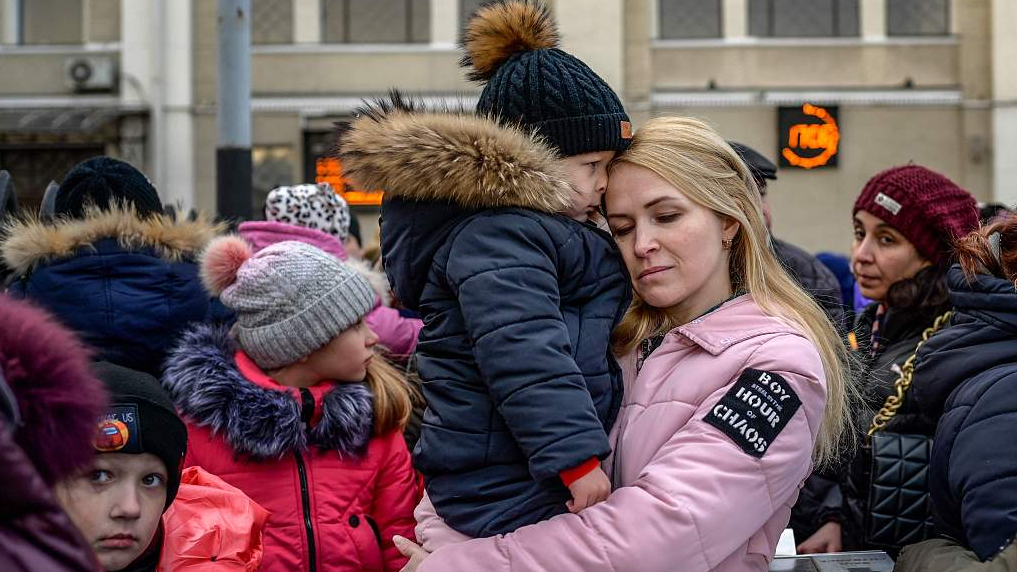
Women and children on a platform to evacuate the city at the central train station in Odessa, Ukraine, March 9, 2022. /CFP
Editor's note: Haider Rifaat is a features writer for OK! Pakistan, the international edition of OK! Magazine. He is also a writer for Arabian Moda and Flanelle magazine and is the creator and host of "Conversations with Haider Rifaat" on YouTube. Rifaat is currently pursuing a master's degree in communication at the University of Hawaii at Manoa. The article reflects the author's opinions and not necessarily the views of CGTN.
As tensions escalate in Ukraine following Russia's "special military operation," another grim reality is gripping the country. According to the United Nations Population Fund, an estimated 240,000 Ukrainian women are pregnant amidst the ongoing conflict. A reported 80,000 of them will give birth in the next three months. This places extreme pressure on families torn between violence and personal struggles.
In the wake of military operations on Ukrainian soil, healthcare and physical challenges continue to burden frontline workers and families alike. Recently, a pregnant woman and her baby died following an airstrike targeting a hospital in Mariupol.
Nineteen surrogate newborns were put in a Kyiv basement for protection. Parents are growing desperate to try and reunite with their newborns. Maternity hospital basements are being turned into medical wards to safeguard pregnant women, further burdening Ukraine's healthcare system.
Oxygen and medical supplies that support pregnant women are gradually running out, according to the World Health Organization. Ukrainian families are fleeing the scene as refugees and are at the mercy of neighboring countries. However, the future of pregnant women and newborns remains uncertain in light of the intense conflict in Ukraine. They are twice as vulnerable as they are taking care of not one, but two lives.
If the military operations continue, Ukrainian parents would be forced to make tough decisions. Family members witnessing violence unfold in the coming months may be forced to consider abortions. This move could potentially increase infanticides across Ukraine. Abortions also increase the risk of mothers dying.
What is important to factor in is the long-term ramifications of losing a baby. Families could fall apart if mental and physical burdens intensify.
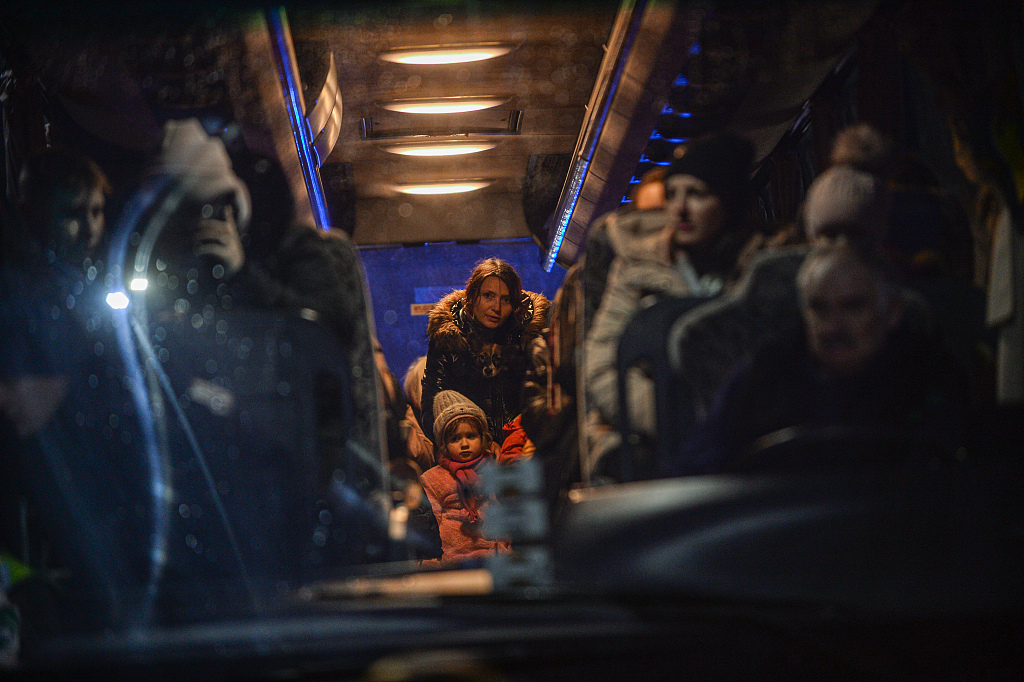
A bus to relocate Ukranians to another Polish city after crossing the Polish-Ukrainian border in Kroscienko, Poland, March 9, 2022. /CFP
Displaced, pregnant women with no physical support, especially those in their last trimester, are most vulnerable in Ukraine right now. It is difficult for them to travel long distances, and therefore, they are dependent on others for physical and emotional support. Pregnant women who decide to give birth in a conflict zone have to consider other factors that can potentially affect their pregnancies, including violence that can put them and their babies in harm's way.
Not to forget other unintended consequences that can affect them physically and mentally, including stillbirth, miscarriages, premature birth and abnormalities. It is a major challenge for a pregnant woman to manage personal stress while navigating conflict.
This begs the question; how can the world help pregnant women pull through the conflict in Ukraine? It is critical to first recognize marginalized groups in the conflict, including children, aging adults and pregnant women. Recognizing these groups as vulnerable will keep the conversation focused on individuals that matter.
Second, it is important that international organizations, specializing in children and women's issues, such as the United Nations Population Fund, The United Nations Children's Fund, CARE and The National Partner for Women and Families, form an alliance or work independently to meet immediate needs of pregnant women in Ukraine. These nonprofits work at the forefront of fostering women's health. Hence, the onus rests with them to counter impending danger and violence targeting Ukrainian women.
At this time, the Ukrainian government can deploy doctors and caregivers from numerous hospitals and NGOs to support women in both, physical and emotional capacities. On-field duty matters the most. Hence, local Ukrainian NGOs and nonprofits need to synergize to achieve the goal of helping women pull through this personal crisis.
It is critical to underline the importance of psychological first aid during this time of military conflict. Soon-to-be mothers are navigating numerous roles at once. They are making conscious efforts to keep themselves and their babies safe while trying to flee the country. Hence, the group needs some form of mental health support that psychologists and psychiatrists can provide. Healthcare providers can even train family members to offer mental health relief to pregnant women. Being surrounded by supportive people is critical, especially at a time when pregnant women feel isolated and depressed.
(If you want to contribute and have specific expertise, please contact us at opinions@cgtn.com. Follow @thouse_opinions on Twitter to discover the latest commentaries on CGTN Opinion Section.)
