- Home
- China
- World
- Asia-Pacific
- Americas
- Europe
- Middle-East and Africa
- Politics
- Business
- Opinions
- Tech & Sci
- Culture
- Sports
- Travel
- Nature
- Picture
- Video
- Live
- TV
- Radio
- Specials
- Learn Chinese


Share







Copied
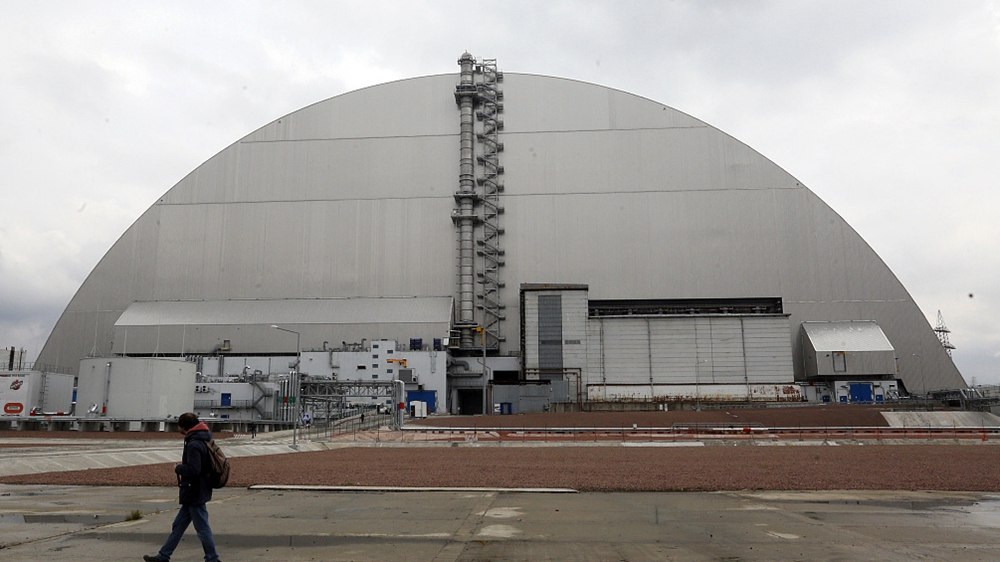
A cone sheltering the explosion-damaged reactor unit of the Chernobyl nuclear plant in Chernobyl, northern Ukraine, April 15, 2021. /CFP
Editor's note: Andrian Prokip is an energy analyst at the Ukrainian Institute for the Future, an independent think tank in Kyiv and serves as a senior associate at the Kennan Institute of Woodrow Wilson International Center in Washington, D.C. The article reflects the author's opinions and not necessarily the views of CGTN.
In modern society, energy is the most critical resource. No service in our everyday life can be provided without a reliable and timely energy supply. This complexity defines how sophisticated and widespread energy infrastructure is. So, when Russia started a special military operation on Ukraine, that was clear that energy infrastructure would be affected. But the other side-effect is a change in Ukraine's energy policy towards Russia and its ally Belarus, which were closely tied in energy in the past.
Before the war, it was clear that the most significant threat may come from nuclear and hydro-power plants if they were attacked intentionally or accidentally. Ukraine is among the key nuclear power producers in Europe, having 15 nuclear power units under operation, and the Chornobyl nuclear plant, which is under decommission, is notorious for the nuclear disaster of 1986. In the case of the attack on the nuclear power plant, the nuclear disaster may have a place affecting not only Ukraine but many other states in Europe and Asia.
During the warfare, Russian army took control over Chornobyl NPP and Zaporizhzhia NPP – the biggest in Europe. Russians shelled the Zaporizhzhia NPP itself, followed by shelling other facilities across the country which contain radioactive materials. Now, all these facilities are under the control of Ukraine, and the radioactive situation is stable. But still, that was a massive risk of a new nuclear disaster in the world.
Hydropower plants were shelled by Russians as well. And these pose a huge threat as well. Massive reservoir basins bind more power than ten big hydropower and pump storage stations with dams on big rivers. If these are damaged during the war, water flows will destroy settlements beneath the dams and other infrastructure.
Ukraine had experienced this already during World War II when the destruction of the Dniproges dam in Zaporizhzhia provoked a highly damaging, murderous flood. Fortunately, the Ukrainian army and other specialists prevented any disasters from the hydropower infrastructure.
But still, some vital infrastructure was damaged and cannot be repaired. Electricity grids and natural gas pipelines are under attack every day. This disrupts the energy supply to final consumers.
Part of solar and wind power plants are damaged or destroyed now. Last year these were responsible for 13 percent of electricity, and only a third of these facilities operate now. Nuclear power plants, traditionally accountable for about half of the electricity production, are currently working normally.
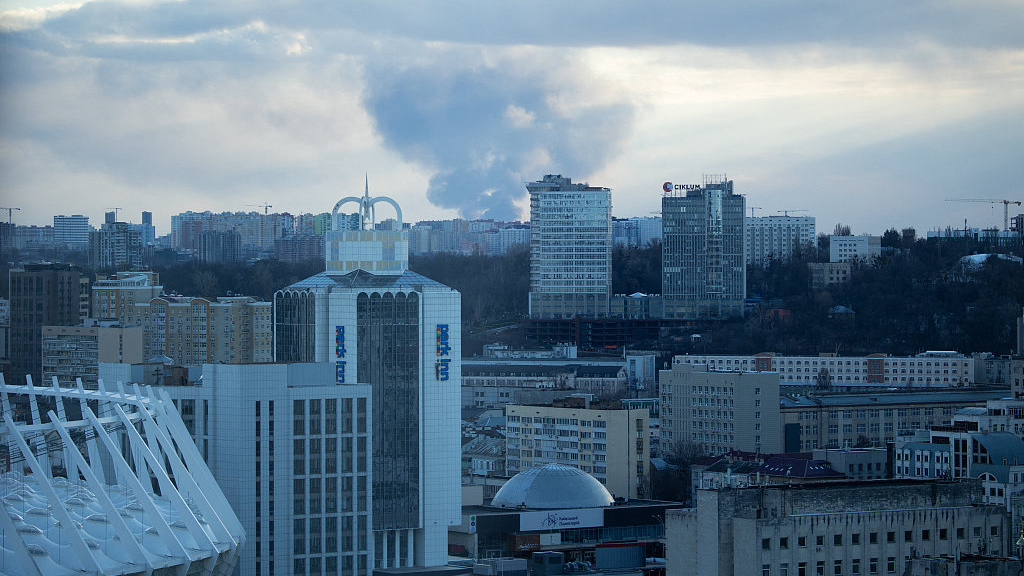
A fire broke out at an oil storage facility in the city of Vasilkov near Ukraine capital, February 27, 2022. /CFP
Some coal mines were destroyed and flooded with water which means these cannot be recovered – most of the mines are located in the east of Ukraine, which now are the hottest areas of warfare. And domestic gas production has fallen by 10-15 percent.
But still, in general, that is enough energy to cover the country's needs. However, energy demand has fallen because of warfare and a corresponding fall in industrial production. For instance, in the case of electricity, demand has fallen by 30 percent in a year-to-year comparison.
And more than 300,000 consumers are without gas supplies because of damage to infrastructure. Despite the risk to their lives, energy companies, and personnel maintain and repair infrastructure every day, but still strikes and shelling cause new damage.
Russian airstrikes destroyed the only operating oil refinery and more than a dozen big reservoirs containing oil and petroleum.
Energy infrastructure can be rebuilt in the future and probably will be much more modern. But the warfare will affect Ukraine's energy policy, and first of all, towards Belarus and Russia. In recent 15 years, Ukraine has been deeply dependent on diesel and gasoline supplies from Russia and Belarus.
And many analysts considered this factor as a considerable threat. As the warfare started, Ukrainian companies had to reorient supplies from European states. During the warfare, Ukraine has also disconnected its power system from Russian and Belarus and has synchronized with the European system – ENTSO-E. This process was started years ago but was facilitated by Russia's special military operation. And Ukraine will refuse nuclear fuel from Russian supplies.
Since 2014, Ukraine was taking steps to integrate its energy into the European systems and to introduce the European model of energy regulation. The current events will only push Ukraine further towards self-sufficiency and deeper integration with European energy markets.
(If you want to contribute and have specific expertise, please contact us at opinions@cgtn.com. Follow @thouse_opinions on Twitter to discover the latest commentaries on CGTN Opinion Section.)
