- Home
- China
- World
- Asia-Pacific
- Americas
- Europe
- Middle-East and Africa
- Politics
- Business
- Opinions
- Tech & Sci
- Culture
- Sports
- Travel
- Nature
- Picture
- Video
- Live
- TV
- Radio
- Specials
- Learn Chinese


Share







Copied
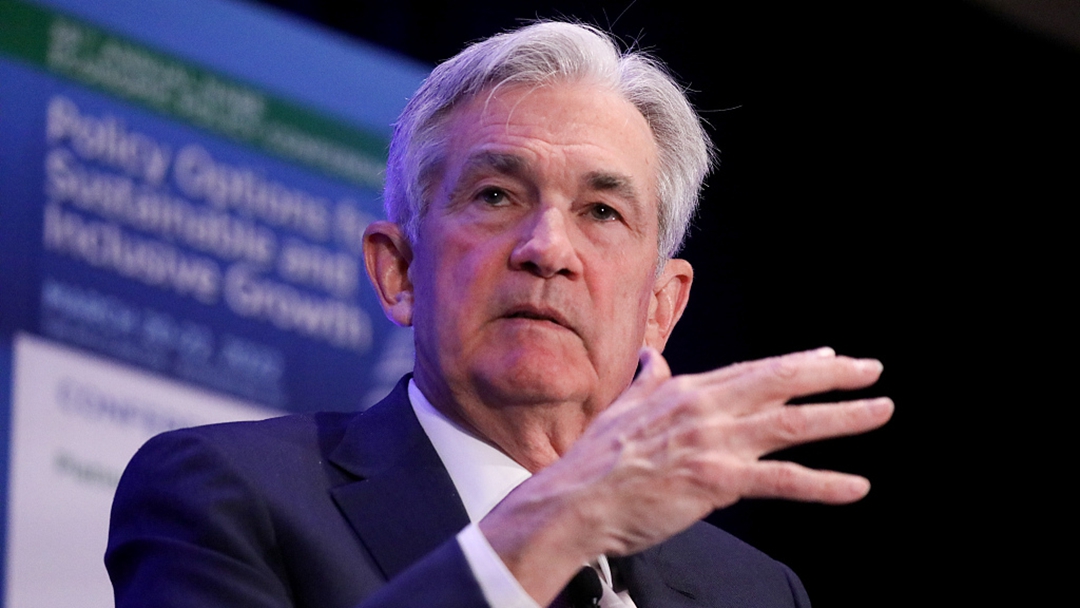
Jerome Powell, chairman of the U.S. Federal Reserve, speaks at a conference in Washington, D.C., U.S., March 21, 2022. /CFP
U.S. Federal Reserve Chair Jerome Powell said Thursday that the central bank needs to take more aggressive action to fight high inflation and indicated that a half percentage point rate hike is possible at the Fed's meeting next month.
With inflation running roughly three times the Fed's 2 percent target, "it is appropriate to be moving a little more quickly," Powell said in a discussion of the global economy at the meetings of the International Monetary Fund. "Fifty basis points will be on the table for the May meeting."
His comments appeared to pin down an expected rate path much steeper than projected at the Fed's March meeting.
The potential speed of the Fed's action has led some economists to warn a recession may now be more likely if businesses and households cut back spending more than anticipated as borrowing costs rise, or stock and other assets prices drop in value and eat into household wealth.
"I would put the probability that we enter into a recession over the next 12 months of about one in three, and that is rising," Moody's Analytics' chief economist Mark Zandi said earlier Thursday at a session on inflation that Powell also addressed.
With aggressive rate hikes and balance sheet reductions ahead, "it's raised the risks that the Fed navigating things gracefully, and landing...the economic plane on the tarmac, is going to be much more difficult."
Powell acknowledged the Fed was walking a sensitive line between taming inflation and pushing the economy into a downturn.
"Our goal is to use our tools to get demand and supply back in synch…and do so without a slowdown that amounts to a recession," Powell said. "It is going to be very challenging."
Powell said the Fed will count on tighter monetary policy to curb demand for goods and services and prompt businesses to reduce demand for workers in an "unsustainably hot" job market.
(With input from agencies)
