- Home
- China
- World
- Asia-Pacific
- Americas
- Europe
- Middle-East and Africa
- Politics
- Business
- Opinions
- Tech & Sci
- Culture
- Sports
- Travel
- Nature
- Picture
- Video
- Live
- TV
- Documentary
- Radio
- Specials
- Learn Chinese


Share







Copied
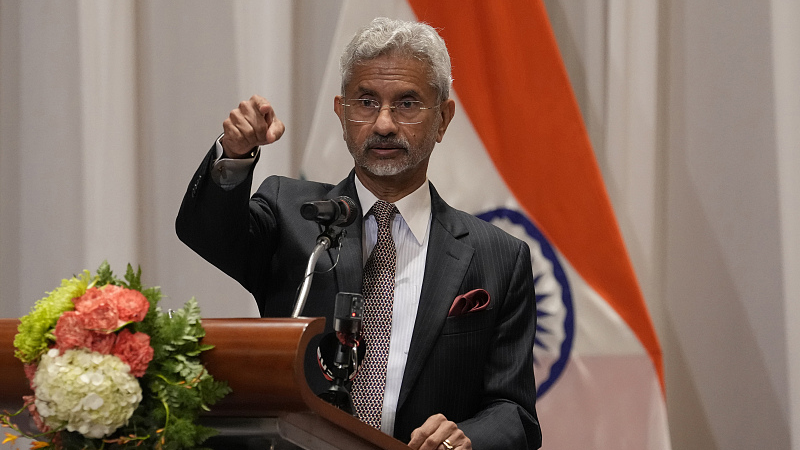
India's Foreign Minister Subrahmanyam Jaishankar answers a question during a press conference in Bangkok, Thailand, August 17, 2022. /CFP
Editor's note: Oktay Kucukdegirmenci is a PhD candidate at the department of international politics, Shandong University, China, and a science consultant at the Turkish think tank "21. Yuzyil Turkiye Enstitusu." The article reflects the author's opinions and not necessarily the views of CGTN.
Indian Foreign Minister Subrahmanyam Jaishankar said at a conference on "India's Indo-Pacific Vision" at Chulalongkorn University in Thailand on August 18, that bilateral relations between Beijing and Delhi are going through an "extremely difficult phase" and that if the two countries do not cooperate, he stressed that there would be no "Asian Century." Jaishankar said that when China and India come together, it will be the Asian Century, but if the two nations cannot cooperate, the Asian Century will be difficult to come by. Relations between the two countries are confronting long-standing border tensions in the eastern Ladakh. Although there have been 16 rounds of meetings at the level of the corps command between the parties, the problem has not been resolved.
Nevertheless, it is necessary to consider Jaishankar's discourse on the scale of the larger regional and global implications of the relations between the two countries since the emphasis on "Asian Century" makes this inevitable. Moreover, it should not be forgotten that the relationship between the two countries also affects expectations of the "Asian Century" in terms of relations with regional actors other than the two actors. Accordingly, India will still position itself in the Indo-Pacific emphasis, which reflects the containment strategy of the United States against China, which it considers to be its biggest rival in the global system in recent years.
If Delhi hopes to fulfill its expectations of the Asian Century, the most logical strategy would be not to position itself on the U.S. side against China. Cooperation, dialogue and close relations with China remain vital for the economic development and modernization process that India requires. Since taking a side in the rivalry between the U.S. and China would be to pursue a camp policy, it would mean seeing one side as a friend or ally, while seeing the other side as an enemy. This could slow down and disrupt India's economic development and modernization process.
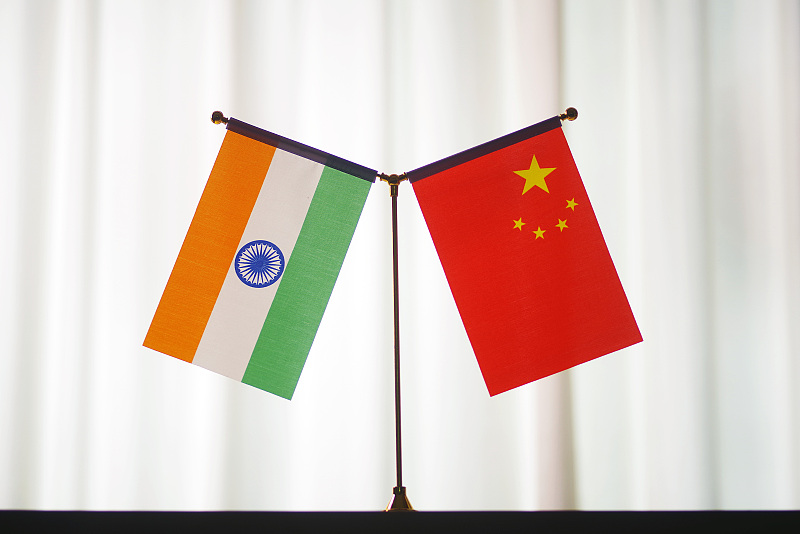
CFP
Therefore, instead of turning to the camp policy, becoming a country in the position of a balancer between China and the U.S. is a more appropriate option for India. Moreover, India has been one of the leading countries of the non-aligned movement since the Bandung Conference was held in Bandung, Indonesia in 1955 and has not entered into an alliance in the international system. Delhi is inexperienced at the point of forming alliances. At this point, entering into an alliance and turning to bloc policy is both unrealistic and not a suitable option for India. The biggest strategic mistake for Delhi would be to join Washington's Indo-Pacific strategy and slide into an anti-Chinese bloc. Especially in India, there are many experts and academics who argue that India should cooperate with North Atlantic Treaty Organization (NATO). But, this would be a strategic mistake since no NATO member country would take China against it for India. Why should India face China for NATO? India's future should not be positioned against the East with the Western alliance because India's future lies in Asia. What is also important in this will determine how it will be positioned in the competition between the U.S. and China, as well as China and Japan.
Experts and analysts studying the Asia-Pacific have focused on the U.S.-China rivalry and emphasized that relations between the two countries are the most important relations issue of this century. Additionally, studies on East Asia have focused on the Sino-Japanese rivalry, emphasizing that for the first moment in history, China and Japan are great powers at the same time. But when we look at the Asia-Pacific region as a whole, we should say that for the first time in history, China, India and Japan are becoming great powers at the same time. From this perspective, India's future lies neither in the West nor in the U.S. Indo-Pacific strategy but in how Delhi positions itself in the China-U.S. and China-Japan competitions in the Asia-Pacific. It will either be in the right place and use its geostrategic importance in these relations and become the third largest power after the U.S. and China, or it will stop its rise with a very wrong strategy.
(If you want to contribute and have specific expertise, please contact us at opinions@cgtn.com. Follow @thouse_opinions on Twitter to discover the latest commentaries in the CGTN Opinion Section.)

Search Trends
Copyright © 2020 CGTN. 京ICP备16065310号

Disinformation report hotline: 010-85061466
Copyright © 2020 CGTN. 京ICP备16065310号
Disinformation report hotline: 010-85061466
Copyright © 2020 CGTN. 京ICP备16065310号
Disinformation report hotline: 010-85061466