
Share







Copied
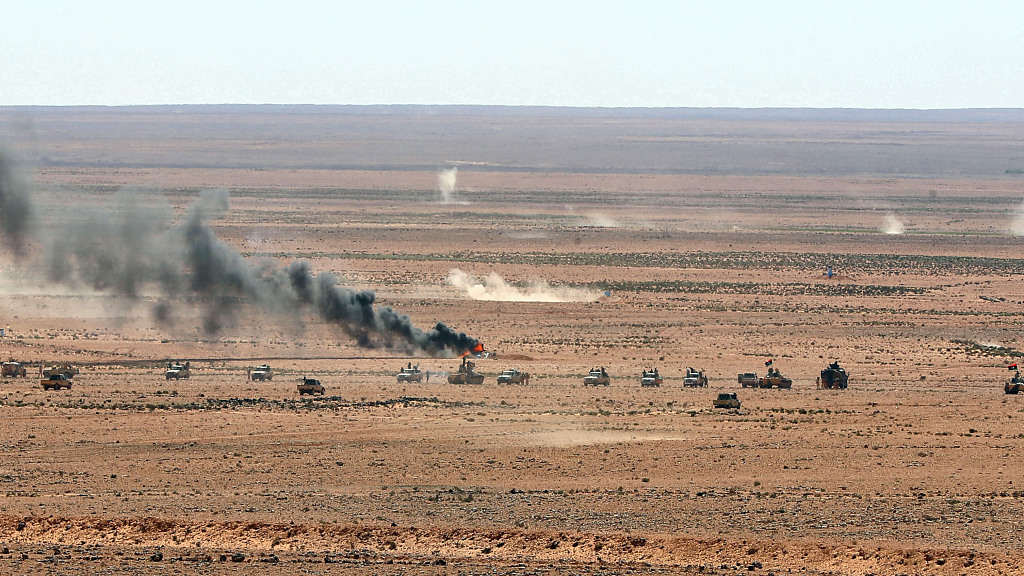
Members of the Libyan Army firing live ammunition during a drill under the command of the internationally recognized Government of National Unity, in western town of Tarhunah, Libya, March 6, 2023. /CFP
The UN nuclear agency said on Wednesday that approximately 2.5 tonnes of natural uranium had gone missing from a site in Libya.
International Atomic Energy Agency (IAEA) chief Rafael Grossi told the organization's member states that inspectors on Tuesday found that ten drums containing uranium ore concentrate "were not present as previously declared" at the location in Libya.
The finding results from an inspection originally planned for last year that "had to be postponed because of the security situation in the region" and was finally carried out on Tuesday, according to the confidential statement by IAEA chief Rafael Grossi.
The agency would carry out further activities to determine the circumstances of the uranium's removal from the site, which it did not name, and where it is now, the one-page statement said.
"The loss of knowledge about the present location of nuclear material may present a radiological risk, as well as nuclear security concerns," the statement addressed, adding that reaching the site required "complex logistics."
In 2003 Libya under then-leader Muammar Gaddafi renounced its nuclear weapons programme, which had obtained centrifuges that can enrich uranium as well as design information for a nuclear bomb, though it made little progress towards a bomb.
Libya has had little peace since a 2011 NATO-backed uprising ousted Gaddafi. Since 2014, political control has been split between rival eastern and western factions, with the last major bout of conflict ending in 2020.
Search Trends
SITEMAP
Copyright © 2023 CGTN. 京ICP备16065310号

Disinformation report hotline: 010-85061466
SITEMAP
Copyright © 2023 CGTN. 京ICP备16065310号
Disinformation report hotline: 010-85061466