
Share







Copied
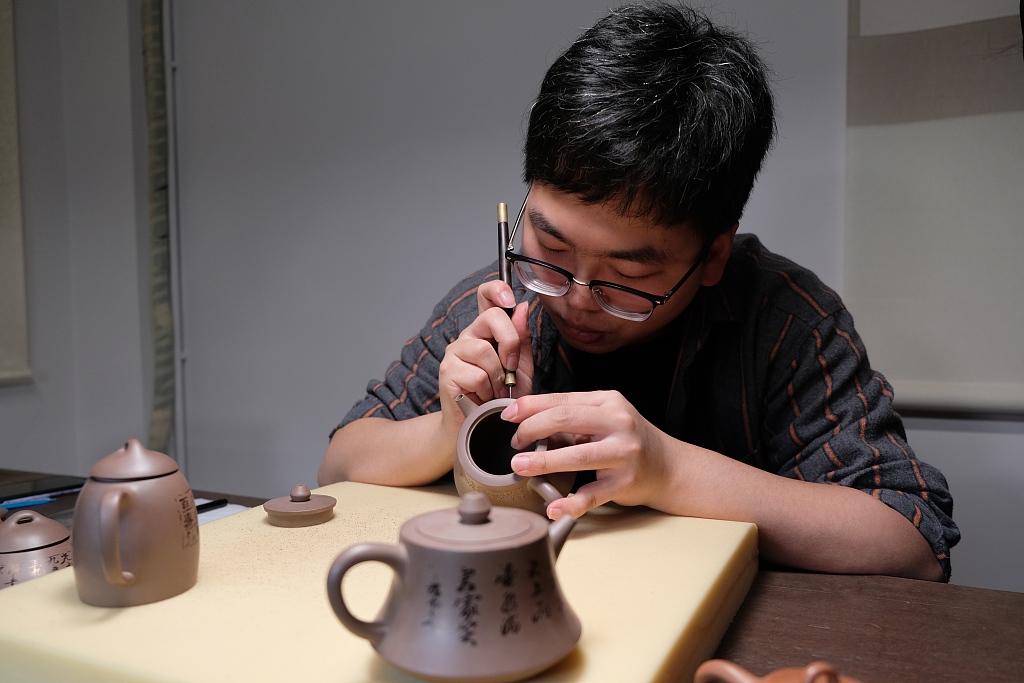
A young man carves poems onto a purple clay teapot at the Yucheng Kiln Cultural Research Institute in Ningbo, Zhejiang. /CFP
The Yucheng kiln was founded in the late Qing Dynasty during the reign of the Guangxu Emperor (1871-1908). To continue the ancient practice and ensure its heritage lives on, a cultural research institute has opened in Ningbo, Zhejiang Province.
Founded by a slew of prominent scholars a hundred years ago, the Yucheng kiln was not just a workshop that produces purple clay teapots but it also served as a forum for scholars to meet and exchange ideas. Together, they put art like Chinese paintings, calligraphy and poems on these finely made pots and cups, successfully elevating Chinese tea ware to new artistic heights.
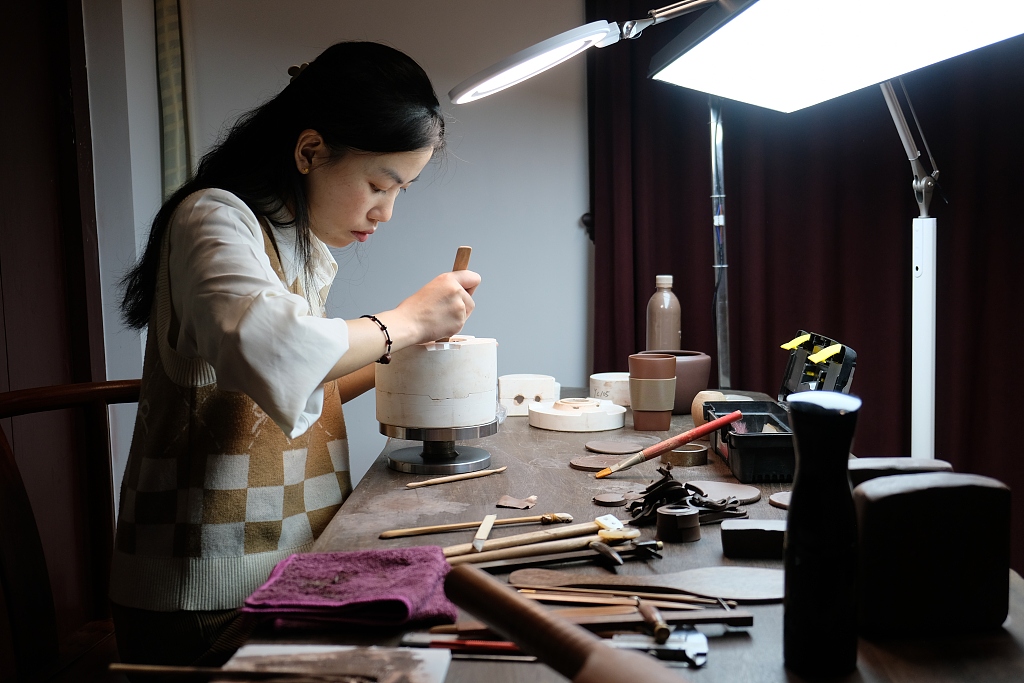
A young artist concentrates on making a purple clay teapot at the Yucheng Kiln Cultural Research Institute in Ningbo, Zhejiang. /CFP
The name Yucheng comes with auspicious meanings in Chinese: jade and triumph, which also extends good fortune from the tea ware to the users.
The craftsmanship behind Yucheng purple clay teapots was included in Zhejiang’s provincial-level intangible cultural heritage list earlier this year.
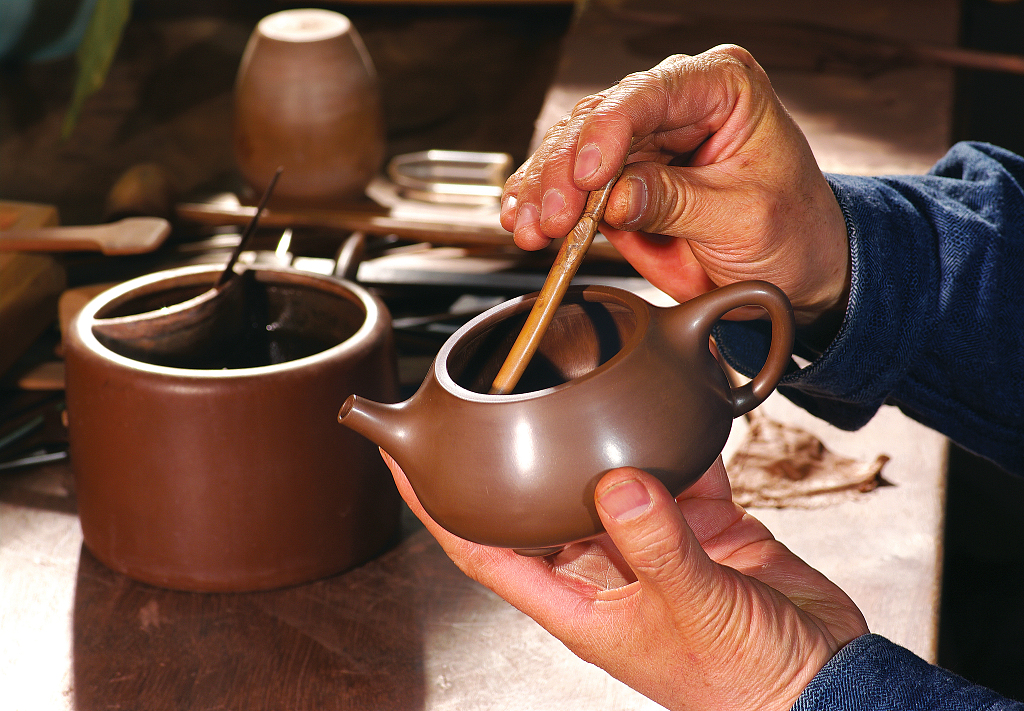
A file photo shows the molding of a purple clay teapot. /CFP
Yucheng kiln tea ware holds an important position in Chinese purple clay teapot culture. Yucheng products – from ancient times right up to the present day – are still considered high-end tea ware for noble families to show off their taste and elegance.
Many collectors are proud to own a piece of Yucheng kiln tea ware, and this has led more enthusiasts to admire and aspire to the possession of one of these teapots.
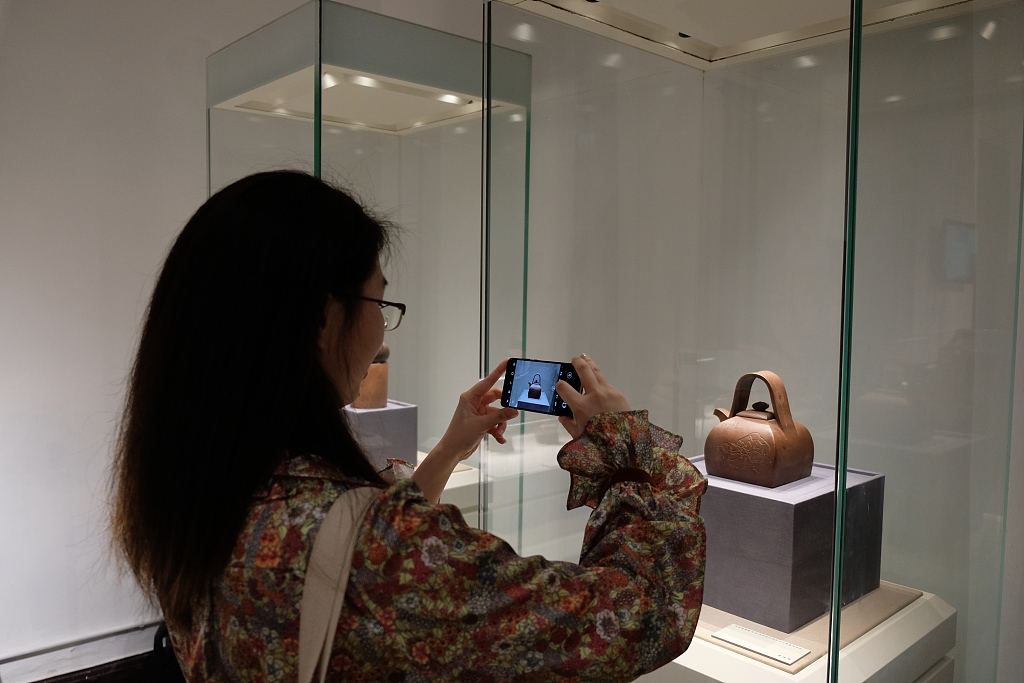
A visitor takes a photo of a square-shaped purple clay teapot at the Yucheng Kiln Cultural Research Institute in Ningbo, Zhejiang. /CFP
From processing the raw materials, molding and engraving down to the final firing process, the Yucheng Kiln Cultural Research Institute aims to cultivate pottery artists, enthusiasts and communicators in Yucheng kiln ware.
Some experts believe that it is difficult for intangible cultural heritage projects to be sustained solely on their own and that support must come from other areas of society. The establishment of the institute is good news for the Yucheng kiln and looks set to expand its inheritance and development in the future.
Search Trends
SITEMAP
Copyright © 2023 CGTN. 京ICP备16065310号

Disinformation report hotline: 010-85061466
SITEMAP
Copyright © 2023 CGTN. 京ICP备16065310号
Disinformation report hotline: 010-85061466