
Share







Copied
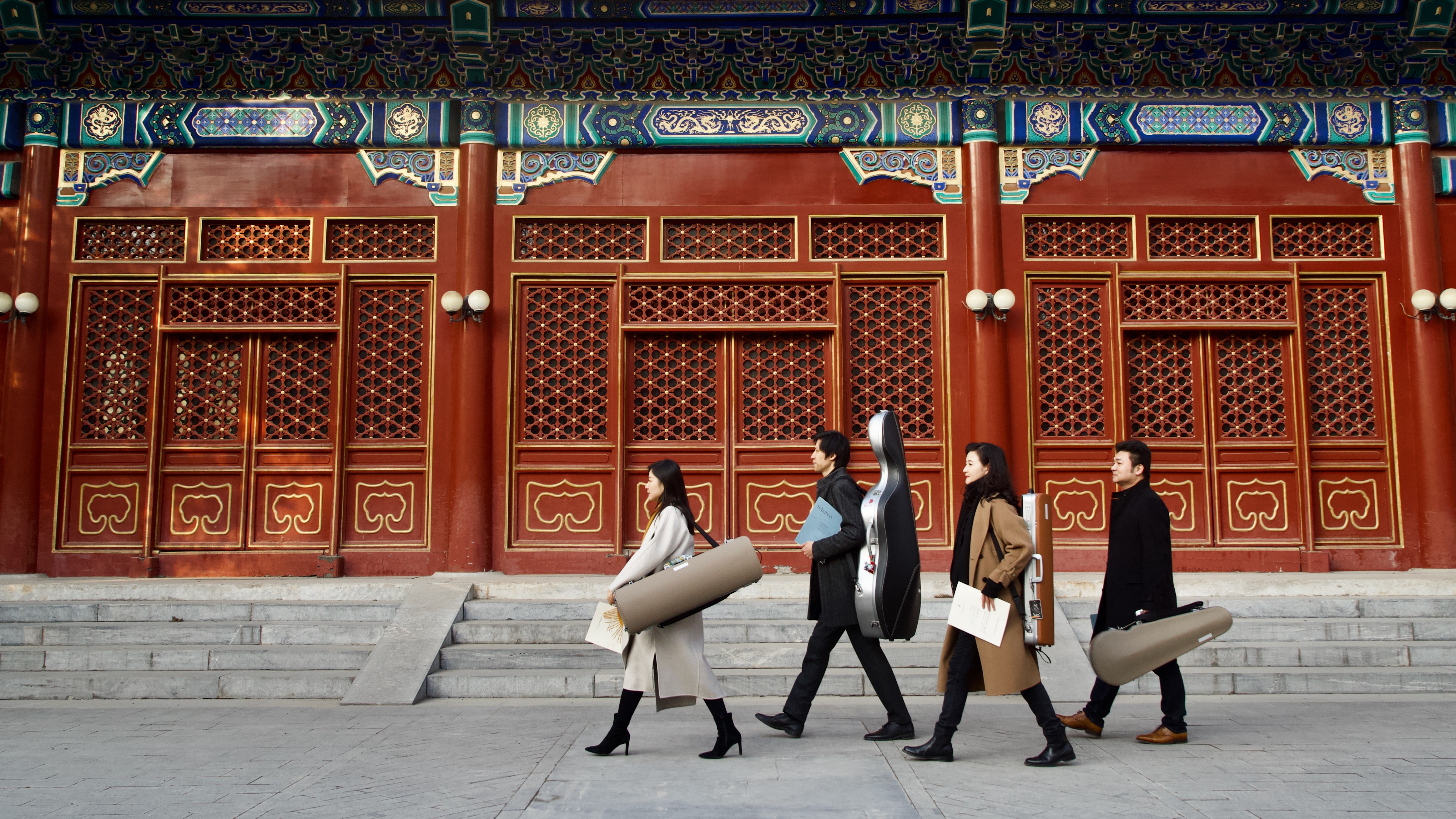
The classical string quartet, made up of two violins, a viola and a cello, has been around for nearly 400 years. It ranks among the most important forms of chamber music and remains cherished to this day as a sublime means of musical expression.
The Amber Quartet has served as a trailblazer, winning international awards and recording albums for Naxos Records, the world's leading classical music label. Now, the group are ambassadors for G. Henle Verlag, a German publisher of classical sheet music.
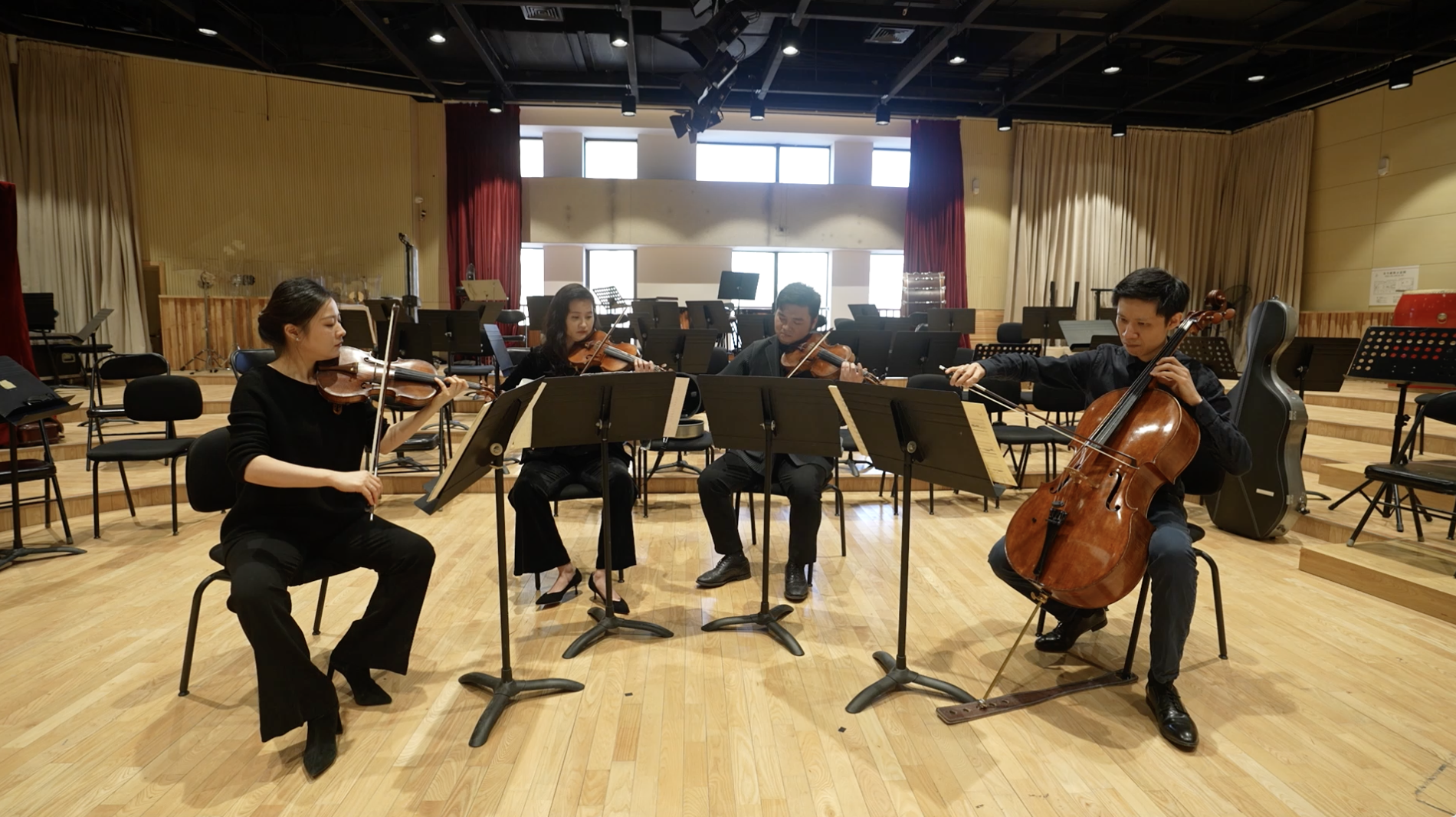
The Amber Quartet enjoys a rehearsal. / CGTN
The Amber Quartet was founded in one of China's top conservatories, the Central Conservatory of Music in Beijing, in 2005. In 2013, it won three major awards in the ASIA-PACIFIC Chamber Music Competition held in Melbourne, Australia, including the grand prize, the first prize for a string quartet, and the best interpretation and performance of a modern work.
“It’s kind of felt like a dream. It’s hard to put it into words. It’s not just we who were excited, the whole school was. On the night of the competition, we saw the magazine ‘The Strad,’ the world's biggest music magazine, published the news of our triumph,” said Yang Yichen, one of the quartet’s members.
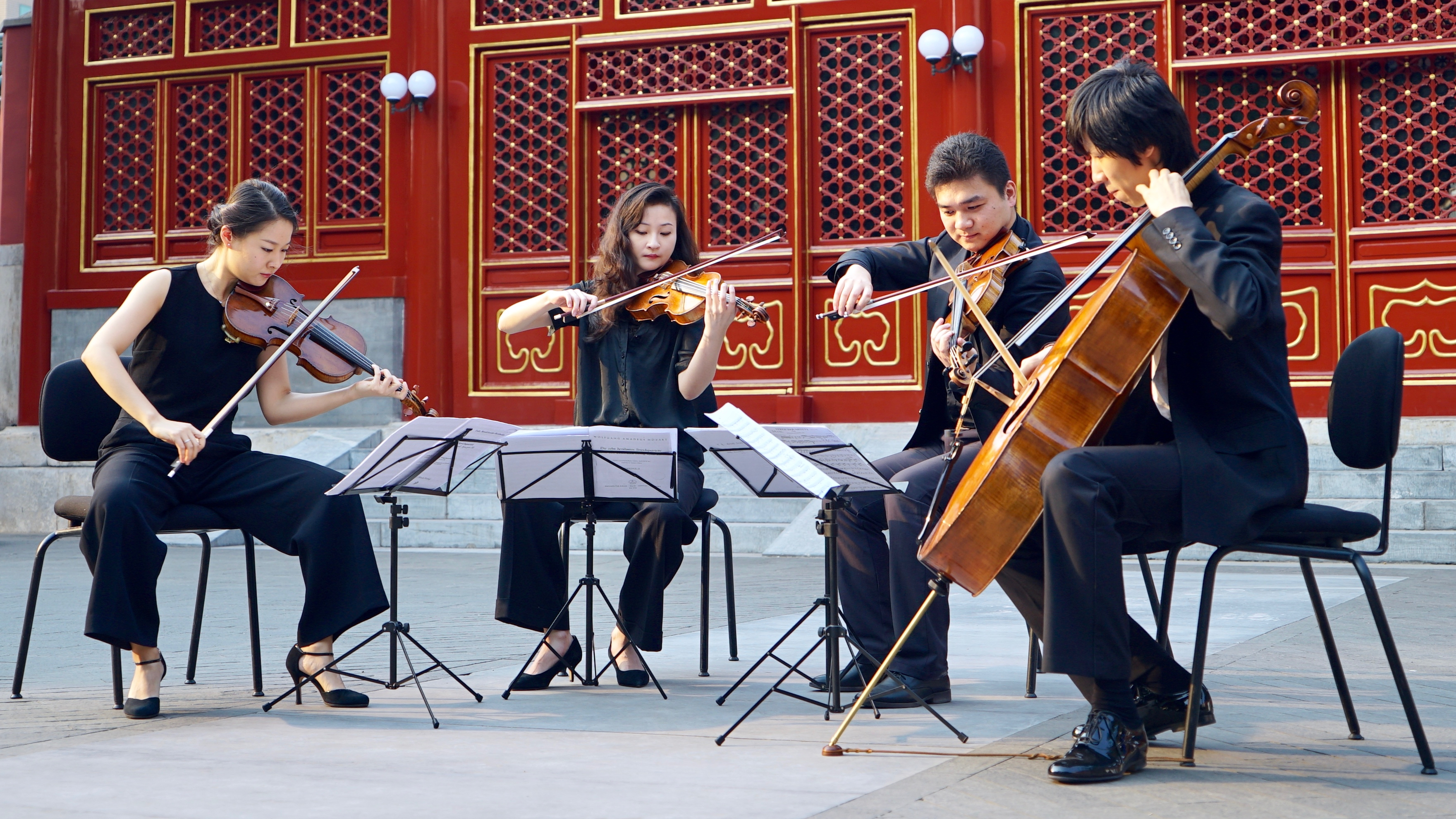
The Amber Quartet performs at the Central Conservatory of Music in Beijing in 2016. / Yang Yichen
It's not just Western classical music that the Amber Quartet interprets with the groups’ dazzling techniques. They also integrate the beauty of Chinese traditional music into this art form, bringing many original and adapted Chinese works to the world.
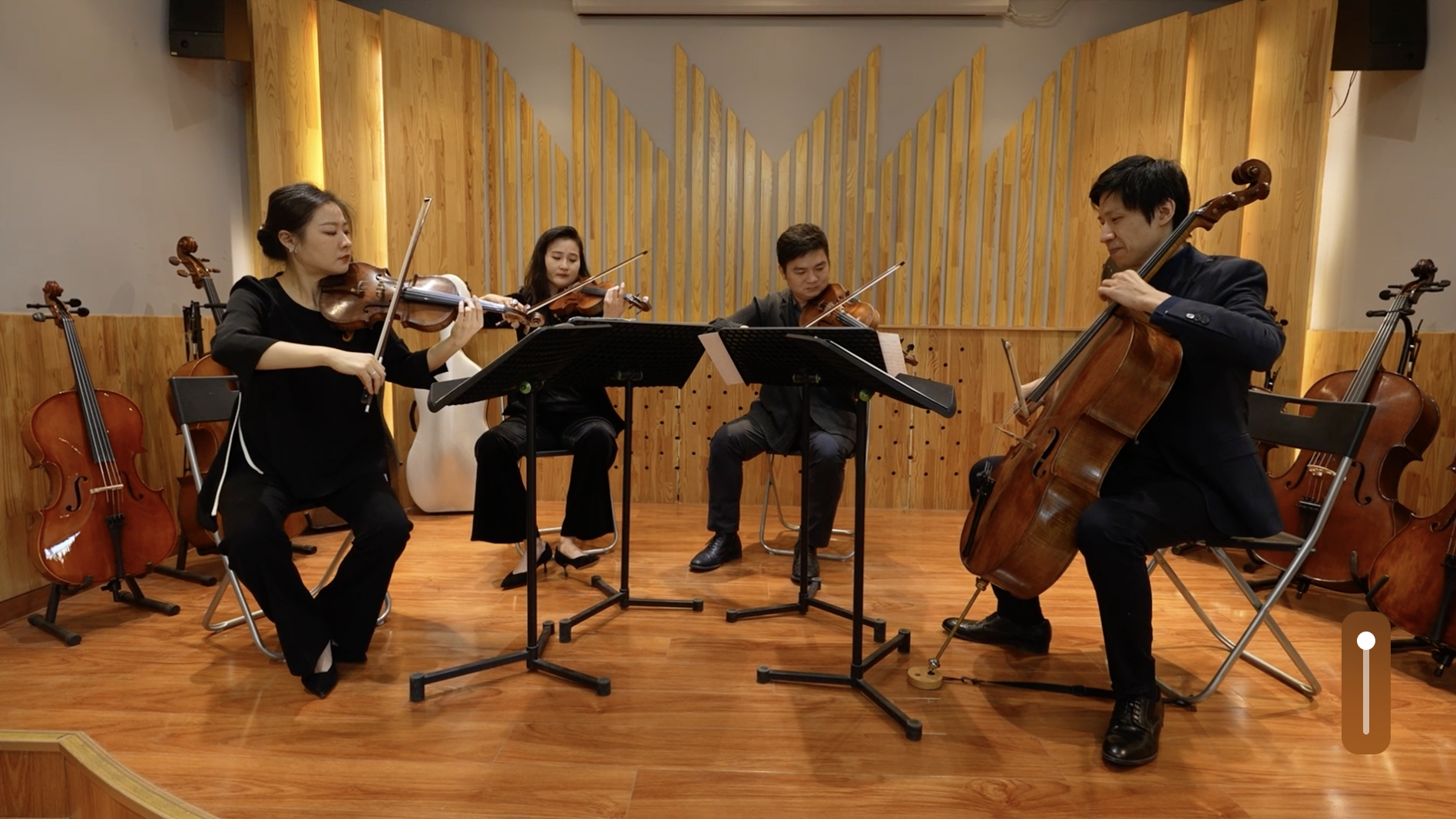
The Amber Quartet hard at work. / CGTN
Yang said when the quartet was in Melbourne competing, they performed a piece of music called “Totem”, which was created by Professor Zhang Zhao, a Chinese composer. Zhang deployed a series of creative methods to make the piece unique, for example, instructing the group to play the violin like a drum. “I remembered when we were playing like this in the competition, the judges were shocked,” said Yang.
Yang said that when Chinese composers use string quartets, they usually have Chinese characteristics. Moreover, each ethnic group has its own instruments, its own music language and its own living habits and customs. Now the quartet often take this piece by Zhang with them to perform abroad. They also played “Totem” at the Beethoven Music Festival in 2019.
Adapted works are also an important part of the Amber Quartet’s repertoire when it comes to Chinese works performed overseas.
“How can we show traditional Chinese music, the lingering charm of Chinese works, and the creative ideas found in Chinese music, such as the blank spaces or freehand art in Chinese painting, in the way of string quartet?” Yang asked.
“When we use Western musical instruments to perform Chinese works, foreigners can really understand the Chinese works better. This will make the instrument itself serve as a bridge, allowing anyone to enter the world of Chinese music.”
In 2013, the Amber Quartet became the first chamber group to gain sponsorship from the Chinese government to study abroad, at the International Chamber Music Academy of the Reina Sofía School of Music in Madrid, Spain. The quartet graduated with honors in 2015.
As one of the world's leading quartets, they had the chance to launch a promising career in Europe but declined. One of the members, Ning Fangliang, said they thought they should study this style of music from the best professors and musicians overseas, and then bring it back to China.
According to the four musicians, the key to their success comes from their high degree of understanding, and the balance of their respective personalities.
Behind each performance is their intimate friendship, moving audiences with the integrity and harmony of their music.
“The tacit understanding between us stems from the fact that we are always in sync. We can all depend on and appreciate each other. Our long-term cooperation has created a deep sense of trust. I think these three things are very important,” said Ning.
The quartet serves as the cornerstone of chamber music. It is the art of cooperation and mutual understanding.
Looking forward, Yang said the group hopes it can establish more contacts with foreign countries, and more international friends can hear the music played by string quartets from China.
Search Trends
SITEMAP
Copyright © 2023 CGTN. 京ICP备16065310号

Disinformation report hotline: 010-85061466
SITEMAP
Copyright © 2023 CGTN. 京ICP备16065310号
Disinformation report hotline: 010-85061466