
Share







Copied
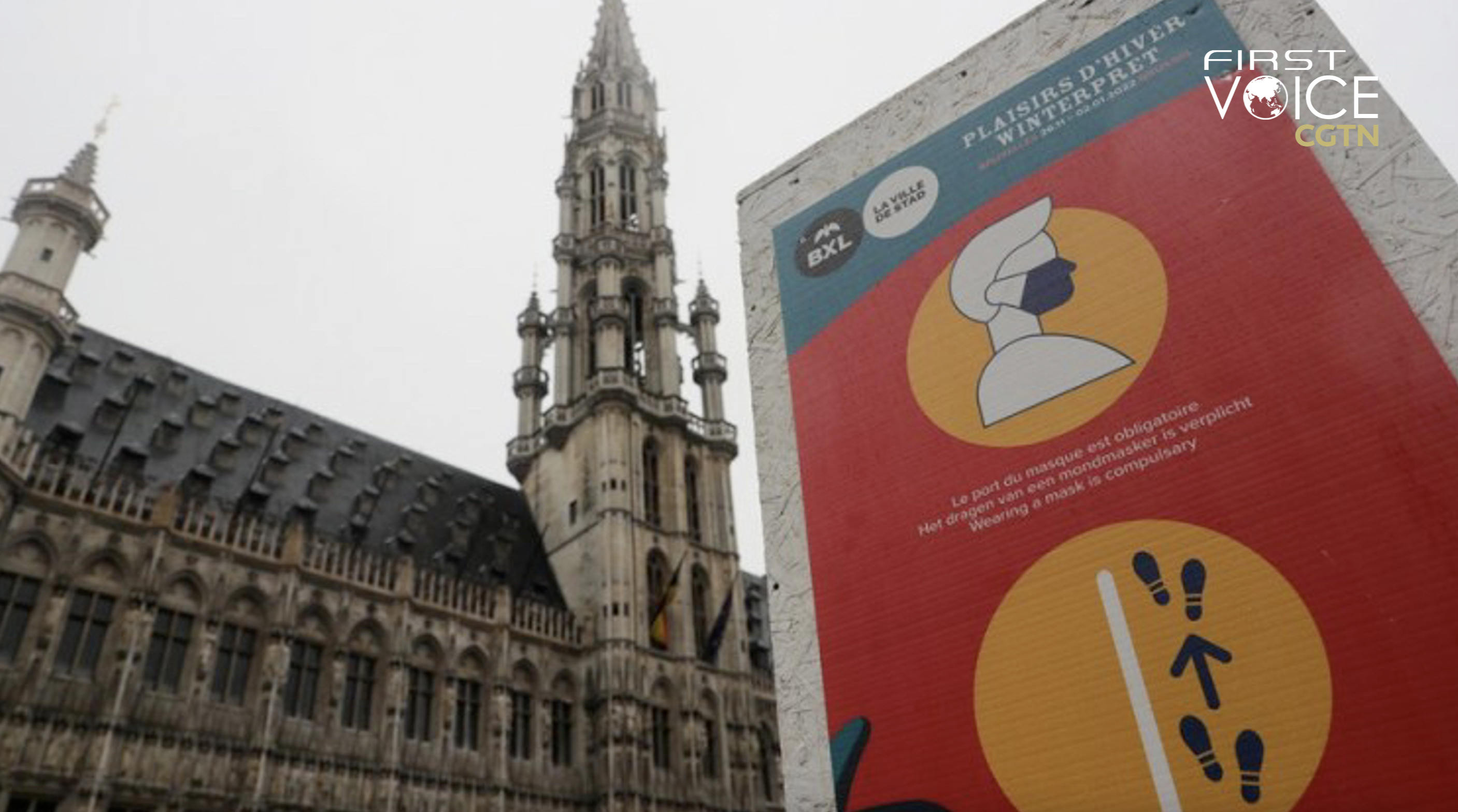
A poster showing measures against the COVID-19 is seen in the Grand Place in Brussels, Belgium, December 27, 2021. /Xinhua
Editor's note: CGTN's First Voice provides instant commentary on breaking stories. The column clarifies emerging issues and better defines the news agenda, offering a Chinese perspective on the latest global events. This First Voice article is written by CGTN Special Commentator Dr. Percy D.P. Akuetteh is a Ghanaian Ph.D. holder in General Surgery and a lecturer, an editor and commentator. He now works in a university in China. The article reflects the author's opinions and not necessarily the views of CGTN.
After almost three years, the World Health Organization (WHO) recently announced the end of the COVID-19 pandemic as a public health emergency of international concern on May 5. Throughout these turbulent years, all concerned stakeholders – government officials, scientists, healthcare practitioners, national regulators, pharmaceutical companies, and citizens – have made great efforts towards arriving at this restored state of health.
As a health professional, I ask myself these questions as I mull on the seismic shift we have all experienced; is this truly the end of this global pandemic, is it time for us to loosen our guard, and has COVID-19 prepared us for the next pandemic?
Coincidentally, the surge in COVID-19 cases alerted us all to the importance of good habits, such as washing hands regularly with soap and water, wearing masks, and social distancing. It is important to re-emphasize these points, according to the WHO even though there has been a drastic decrease in deaths, infections, and hospitalization in the past year.
As the saying goes "never let a crisis go to waste." As a medical professional, I witnessed first-hand how the pandemic helped to improve the health system with the use of some innovative technology and put us on a "ready to fight" alert for the next pandemic. Notably, the development of COVID-19 vaccines and therapeutics happened at record speed. This allowed countries to embark on mass immunization programs.
In addition, several health technology companies developed contact-tracing apps to help detect when people had been in close proximity to an infected person. Healthcare practitioners provided consultations on non-critical cases via telemedicine to limit the need to go to a healthcare facility, which reduced the risk of transmission. AI-enabled detection systems were used in the detection of anomalies in X-rays and CT scans to accurately diagnose COVID-19. As the world was faced with not only a shortage of medical health professionals but also the healthcare system was stretched beyond its limits with patient admissions skyrocketing through the roofs at levels never seen before in the history of mankind.
Logos of the World Health Organization (WHO) at the WHO headquarters in Geneva, Switzerland, January 30, 2023. /Xinhua
Currently, it is unimaginable to estimate the impact of COVID-19 on the world economy. As we turn over a new leaf into COVID-19 endemicity, it is the hope of all people that the world economy can pick up the scraps and rebuild. Narrowing into the medical sector many healthcare providers faced significant financial pressures due to high staffing costs, supply chain disruptions, and increased demand for personal protective equipment (PPE) and other medical supplies.
In addition, the laser focus attention and priority given to COVID-19 at the height of the pandemic by healthcare providers meant non-COVID-19 related procedures and appointments had either to be postponed or re-scheduled to a later date. At the time, this was the best course of action to curtail the COVID-19 menace, but in hindsight, the pandemic also exposed long-overlooked problems such as inadequate staffing, medical supplies, and equipment that resulted in a huge backlog.
Overall, governments had to spend excessively to provide emergency relief and, in some countries, even provided some financial support towards the development of COVID-19 vaccines and therapeutics. Moving forward, the healthcare system will still need assistance to upgrade its facilities to a level capable of providing adequate and life-saving services to the people.
It is an undeniable fact that throughout the existence of humans, we have had different outbreak encounters with viruses. The term "virus mutation" literally meaning the ability of some viruses to change and adapt to their hosts and environment - has now become a household lingo in most homes. All viruses naturally mutate over time, therefore proper surveillance and monitoring systems are necessary to ensure we keep track of any potential mutation of the virus so as not to be caught off guard by possible future variants considering our human history with pandemics. It is imperative that we aren't caught by future outbreaks.
As we turn on a new leaf into COVID-19 endemicity, the WHO has advised health facilities to be on high alert in their management of COVID-19 with other diseases. I do not dispute the hardships we all have encountered throughout the pandemic. However, the glimmer of hope that beckons, as the new dawn begins, is the perfect platform to build upon the success achieved in the healthcare sector thus far. Finally, we anticipate that the change in COVID-19 status would help boost the global economy that has been crawling on its knees to lift millions of people out of this looming recession.
(If you want to contribute and have specific expertise, please contact us at opinions@cgtn.com. Follow @thouse_opinions on Twitter to discover the latest commentaries in the CGTN Opinion Section.)
Search Trends
SITEMAP
Copyright © 2023 CGTN. 京ICP备16065310号

Disinformation report hotline: 010-85061466
SITEMAP
Copyright © 2023 CGTN. 京ICP备16065310号
Disinformation report hotline: 010-85061466