
Share







Copied
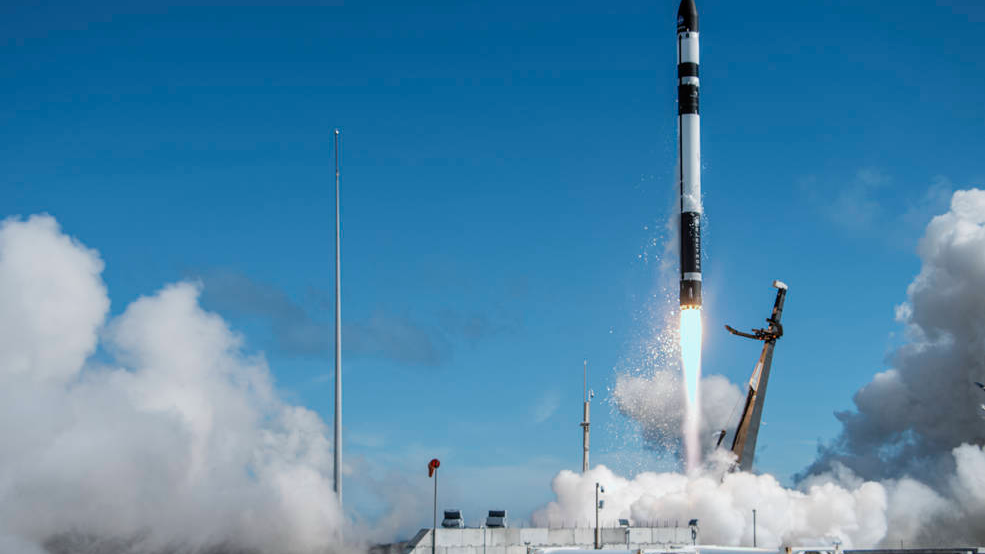
Rocket Lab's Electron rocket lifts off from Launch Complex 1, carrying two TROPICS CubeSats for NASA, in Māhia, New Zealand, May 7, 2023. /NASA
Two NASA CubeSats are in orbit to study tropical cyclones, including hurricanes and typhoons, marking the first pair of storm observing CubeSats, the agency said on Monday.
The pair of the agency's TROPICS (Time-Resolved Observations of Precipitation structure and storm Intensity with a Constellation of Smallsats) lifted off aboard an Electron rocket from launch service provider Rocket Lab's Launch Complex in Māhia, New Zealand on Sunday. Team members successfully established communications with the two CubeSats on Monday.
TROPICS is a constellation of four identical CubeSats designed to observe tropical cyclones in a unique, inclined low Earth orbit over Earth's tropics – an orbit that allows them to travel over any given storm about once an hour, according to NASA.
Providing more frequent imaging will help improve situational awareness when a hurricane forms, said Karen St. Germain, director of Earth Science Division at NASA Headquarters in Washington.
"The data will provide information to models that help us determine how a storm is changing over time, which in turn helps to improve forecasts from our partners like the National Hurricane Center and Joint Typhoon Warning Center."
(With input from Xinhua)
Search Trends
SITEMAP
Copyright © 2023 CGTN. 京ICP备16065310号

Disinformation report hotline: 010-85061466
SITEMAP
Copyright © 2023 CGTN. 京ICP备16065310号
Disinformation report hotline: 010-85061466