
Share







Copied
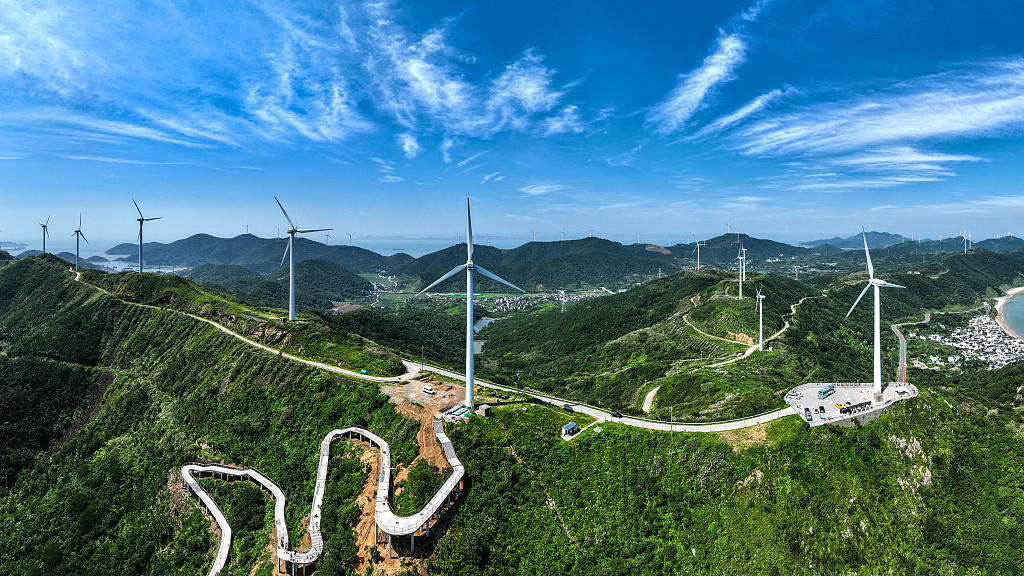
A view of wind turbines stand on mountain area in Zhoushan City, east China's Zhejiang province, July 2, 2023. /CFP
Editor's note: As climate change is making summers hotter, blackouts more frequent and illnesses deadlier, our conventional power systems with vulnerabilities are facing tremendous challenges. CGTN shares insights on the contribution of renewable energy in tackling heat waves.
Triggered by climate change and global warming, the world is witnessing a series of heat wave-related tragedies.
Scientists say extreme weather is rewriting climatic history in 2023, and heat waves, rise in sea levels, droughts, wildfires and hurricanes will continue to hit hard.
Why does the power grid matters?
The challenge of a heat wave is that a grid has to constantly balance its power supply and demand.
The demand for electricity rises with the temperature as more people turn on their air conditioners and other appliances to keep them cool. Consequently, a power shortfall occurs, which causes blackouts.
As blackouts cut off air-conditioning, heat is trapped in buildings that were not designed to deal with such situations, thereby increasing the incidence of heatstroke-related issues among its inhabitants. This phenomenon was observed in heat waves that hit the UK and Europe.
U.S. officials have warned that the effects of extreme weather on the grid may be seen throughout the summer if intense heat waves trigger energy demand spikes that test the limits of power infrastructures nationwide, Axios reported.
The grid operators estimate that such sweltering summer days can result in a doubling of peak electricity use compared with during spring, and the Department of Energy expects people will use more electricity for cooling, which also increases the chance of blackouts and other power disruptions.
In May, a nonprofit that oversees the reliability of the North American power grids, the North American Electric Reliability Corporation (NERC), also warned in an assessment that two-thirds of the continent may face an elevated risk of energy shortfalls this summer if extreme heat events occur, according to Axios.
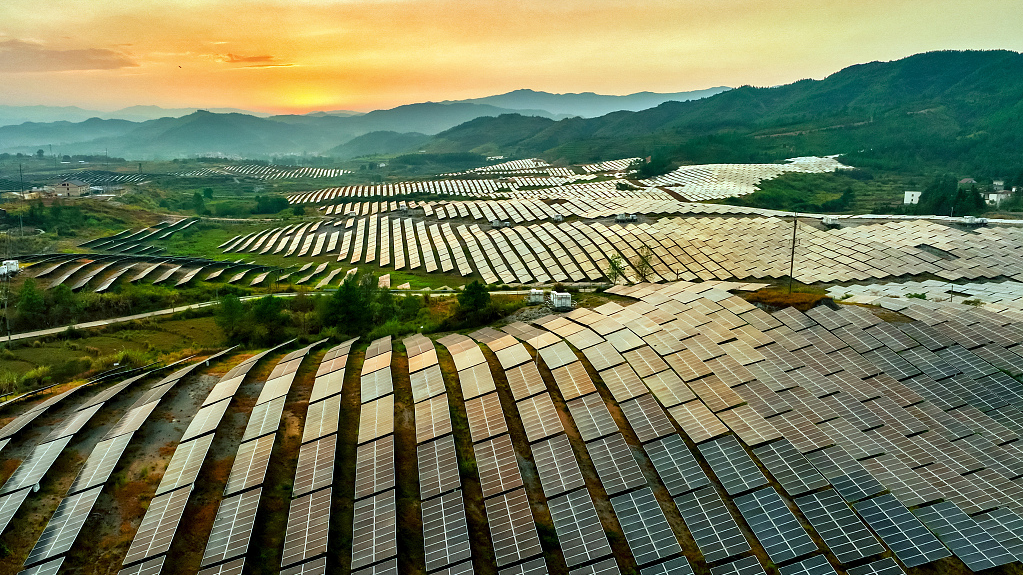
A view of West Tan Au photovoltaic power plant in Pingxiang City, east China's Jiangxi Province, October 4, 2022. /CFP
How it works?
Julie McNamara, deputy policy director with the Climate & Energy program at the Union of Concerned Scientists, said that first of all, the foundation of reliable grid operations is planning.
Serving for the Union of Concerned Scientist, a nonprofit science advocacy organization based in the United States, McNamara urged to estimate how much electricity people will need and whether there are enough resources around for that need to be met, including during heat waves, and including during heat waves when unexpected incidents occur.
To get through a heat wave, grid operators should employ a highly dynamic approach informed by careful planning, toggling switches and turning dials to modulate supply and demand, said the analyst.
And it turns out, this dynamic method of operations is in fact where the grid of the future is headed, as more variable renewable resources like wind and solar come online and technologies support far more flexibility and coordination in when and how electricity is consumed.
Secondly, making sure that all those power generating, power saving, and power transmitting resources can actually be used, McNamara added.
After all the planning and the operations and the forecasts, the power grids should be balanced with good offense and good defense, said McNamara.
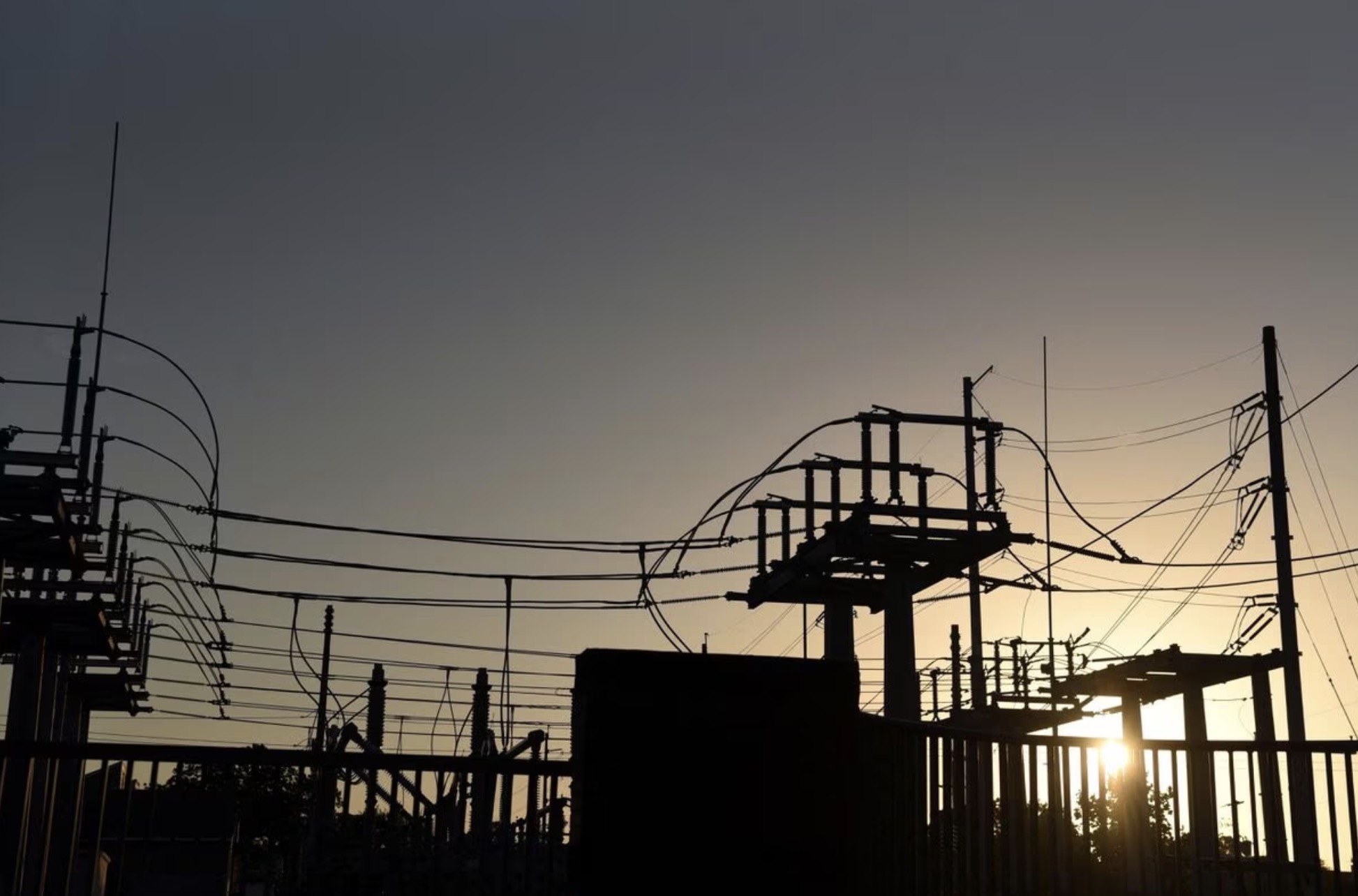
A general view of electric lines as demand for power surges during a period of hot weather in Houston, Texas, U.S., June 27, 2023. /Reuters
Are renewables helpful?
Parts of the U.S. federal government, including the United States Department of Energy (DOE), have said that the power grid is currently unprepared for the extreme weather of the future and resilience upgrades are needed alongside investments in renewable forms of energy, such as wind and solar, the Axios reported.
An electrical utility like Arizona Public Service, which operates in Phoenix, can tell heat waves coming with weather forecasts.
"We plan for 117-degree temperatures," said Justin Joiner, vice president of resource management at APS. "When you hit 117 degrees, and it goes to 118 or 119, it's all the same at that point, because at 117 every AC unit is already on."
As a deadly, record-breaking heatwave puts Texas's grid to the test, renewable power sources are helping the state maintain energy reliability, Reuters reported.
Even amid three-digit temperatures, the state has still managed to avoid rolling blackouts in June. Energy analysts contributed to the fact the state's supply of solar power which has doubled since early 2022.
"The additional solar that we've had, I think has likely been determinative in making a difference between outages and not having outages," said Doug Lewin, president of the Austin-based renewable power consulting firm Stoic Energy.
Solar performs exceptionally well on hot, sunny, summer days, and it accounts for upwards of 15 percent of the state's energy supply during the afternoons.
"The same sun that heats up buildings [and] triggers people to turn on their air conditioners, is the sun that can make electricity from solar panels," said Joshua Rhodes, research scientist at the University of Texas at Austin.
"So during this high amount of heat, we're also seeing a lot of electricity being produced by solar panels."
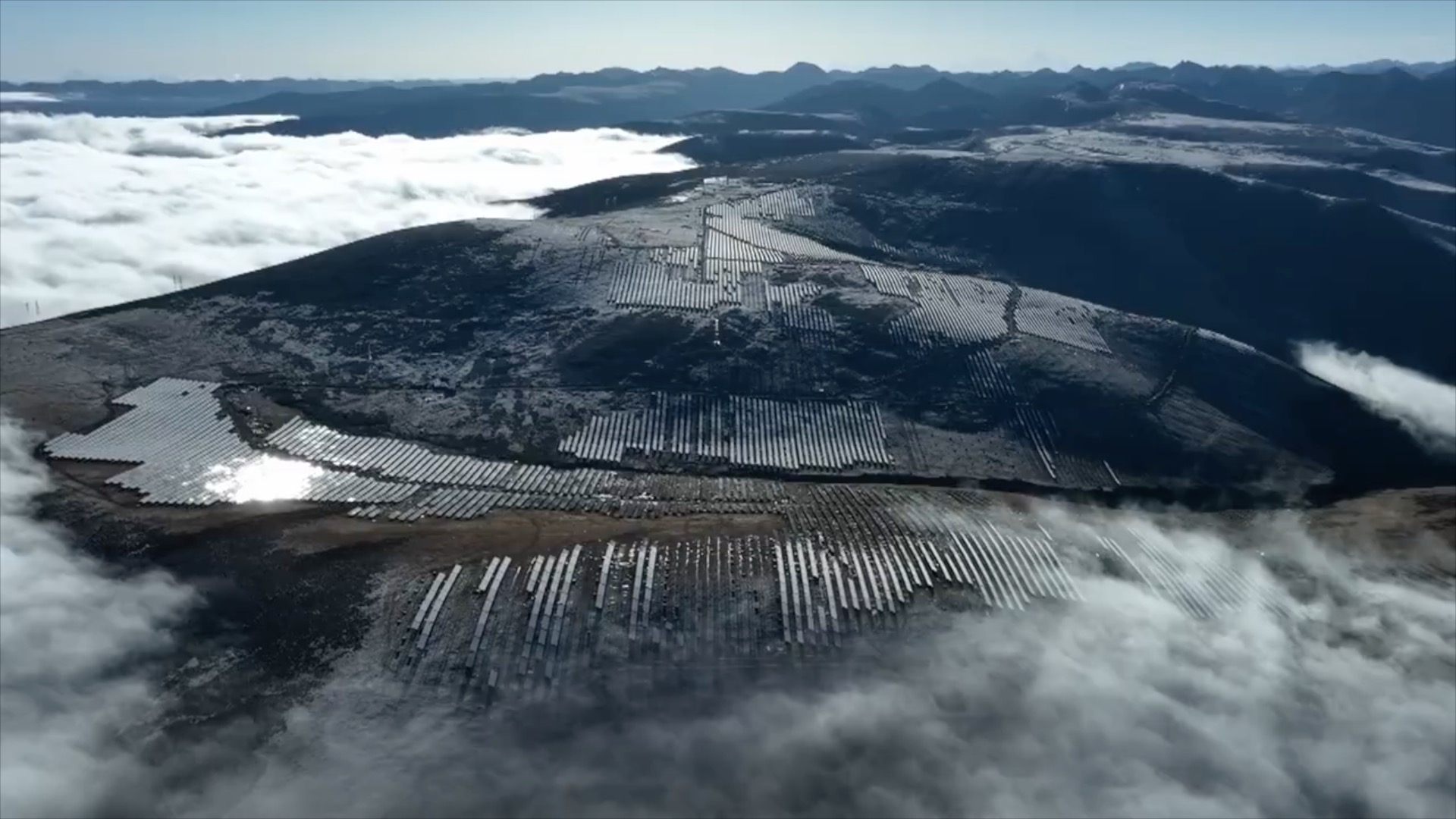
A bird's view of the Kela photovoltaic power station in the Yalong River Basin, Yajiang County, Tibetan Autonomous Prefecture of Garze, southwest China's Sichuan Province. /CMG
In China, people have also suffered from continuing high temperatures since June, triggering a sharp increase in power demand.
The peak period of national electricity consumption has arrived earlier due to overwhelming heat waves, and the recent maximum electrical load nationwide has exceeded 900 million kilowatts.
Particularly, 11 regions, including the Beijing-Tianjin-Hebei region and the Shandong and Henan provinces, have been experiencing continuous high temperatures recently. The state regulator urged all parties to make all-out efforts to secure power supply for this summer.
According to the data released by the National Energy Administration, the national electricity consumption was 722.2 billion kWhs, with a year-on-year increase of 7.4 percent in May.
The China Electricity Council predicts that under normal weather conditions, the country's highest electricity load in 2023 will reach about 1.37 billion kilowatts, an increase of about 80 million kilowatts over the previous year.
In the case of long-term and large-scale extreme weathers, China's highest electricity load may increase about 100 million kilowatts compared with 2022.
Meng Wei, spokesperson for the National Development and Reform Commission, urged all circles to promote construction of various power supply projects such as supporting power supplies and new energy sources, strengthening construction of the power grids to ensure that all parties are prepared for the 2023 summer peak.
Hydropower is an important part of China's domestic power supply, and its annual conventional hydropower generation covers 15 percent of the country's total power generation, with an installed capacity of 370 million kilowatts, accounting for 14 percent of national total installed capacity.
To tackle the severe summer heat waves, a plenty of mega renewable projects for power supply, including Kela, the world's largest hydro-solar power station, and Baihetan-Zhejiang UHVDC transmission project, are fully operational in China, generating electricity with clean energy and eco-friendly manners.
Read More:
Search Trends
SITEMAP
Copyright © 2023 CGTN. 京ICP备16065310号

Disinformation report hotline: 010-85061466
SITEMAP
Copyright © 2023 CGTN. 京ICP备16065310号
Disinformation report hotline: 010-85061466