
Share







Copied
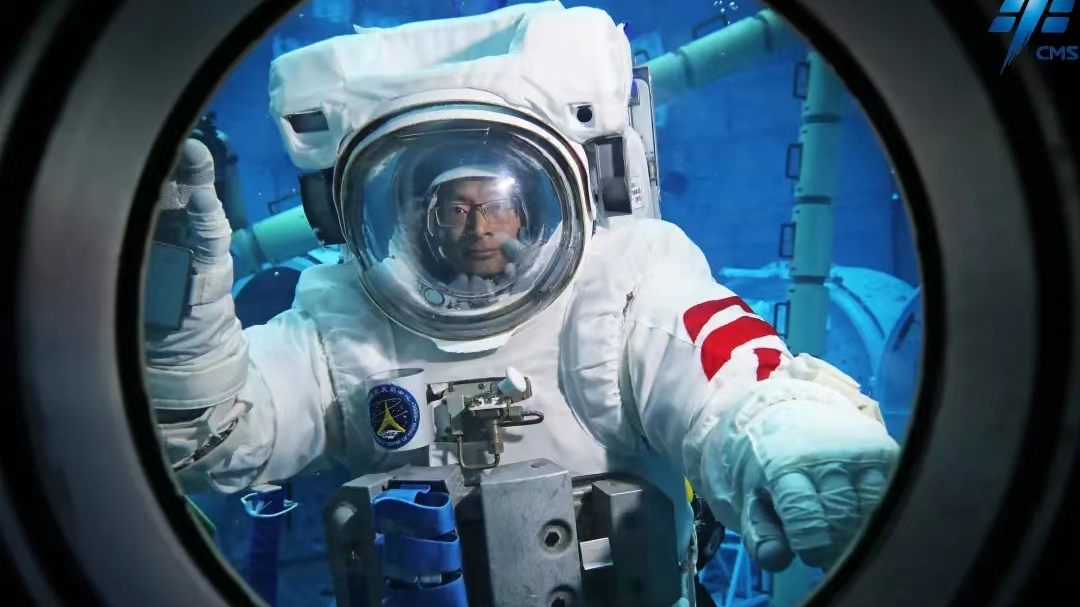
China's Shenzhou-16 astronaut Gui Haichao is in the training pool. /CMSA
When China's first civilian astronaut Gui Haichao entered the space station as the country's first payload expert, interest in him grew on social media.
Gui took off on the Shenzhou-16 spacecraft from the Jiuquan Satellite Launch Center in northwest China on May 30, accompanied by commander Jing Haipeng and flight engineer Zhu Yangzhu.
As an astronaut and a university professor with 10 postgraduate and doctoral students, seven of whom hadn't yet graduated when he blasted off for space, according to Beihang University, one of the questions Gui faced was how to continue guiding his students on their theses.
So, how does the professor help guide students' theses while 400 kilometers away from Earth? Gui's students revealed the "secret" in a China Media Group program, saying distance is not really a problem.
Read more: Shenzhou-16 mission: Meet Gui Haichao – first Chinese civilian astronaut to enter space
He calls them from the space station, but there is a catch. He calls them randomly.
To facilitate this, the students are asked not to mute their mobile phones; otherwise, they risk missing a call labeled "the China Space Station."
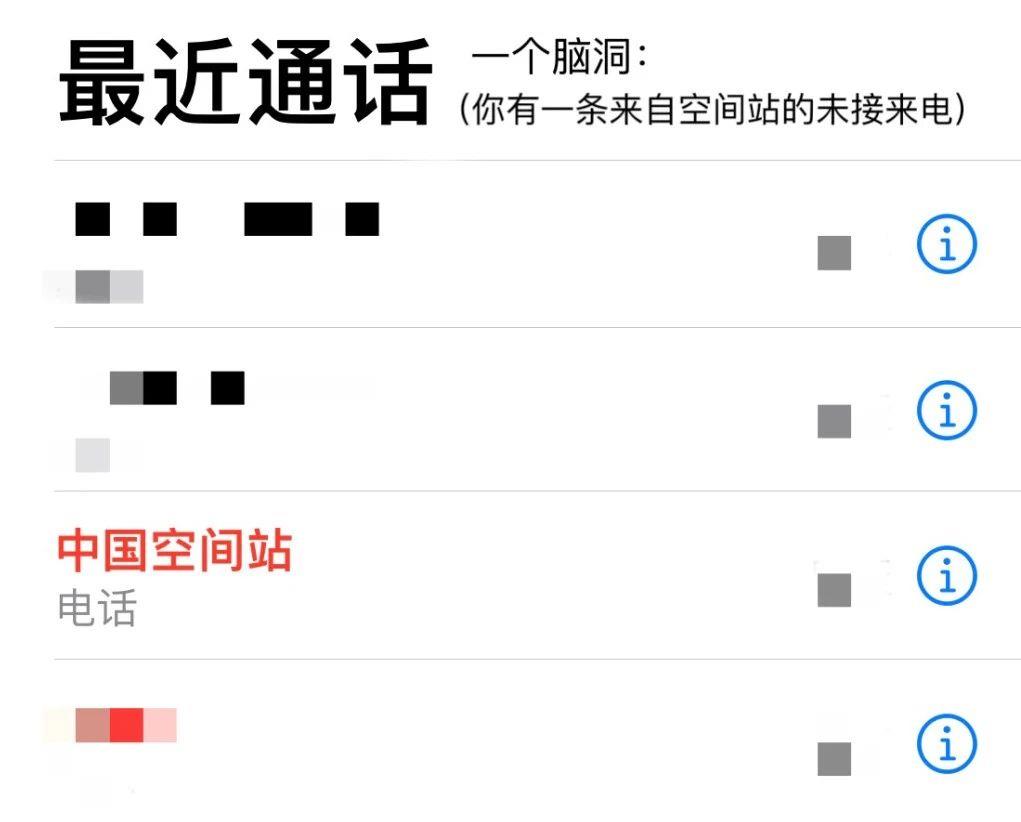
A missed call marked the China Space Station is displayed on phone. /CMSA
The students can also go to chat rooms at the China Astronaut Research and Training Center or the Beijing Aerospace Flight Control Center to communicate with their tutor via voice or video.
According to the China Manned Space Agency (CMSA), the chat is conducted based on the tutor's schedule, and the employees cannot hear the content.
Gui's students said face-to-face communication via video chat is similar to that on Earth.
Meanwhile, their theses can be sent to the space station after approval through email, with documents, pictures and even videos attached. Gui can then check the contents with a tablet or laptop computer after receiving them.
China's space communications
Communicating with people space is challenging.
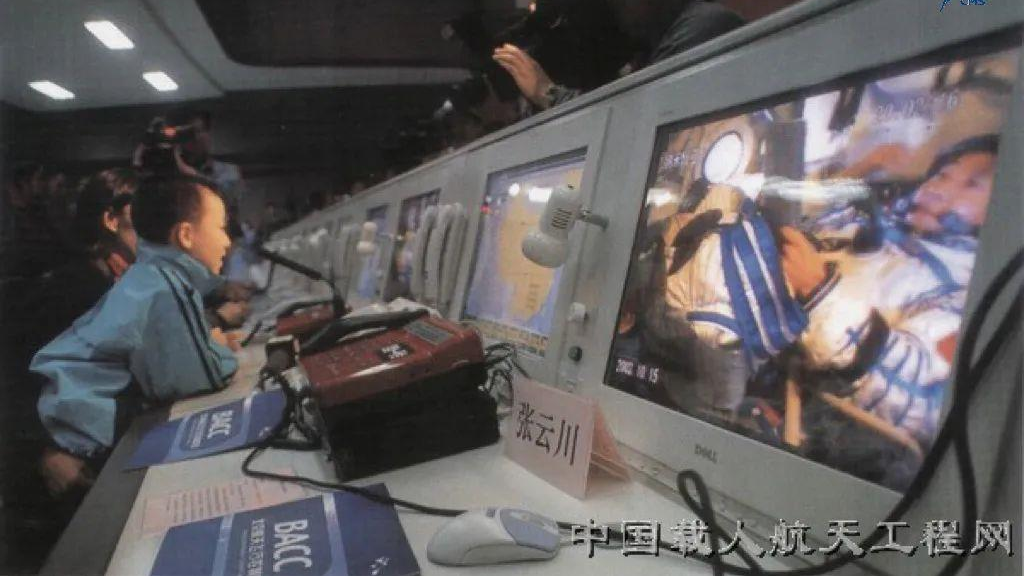
Yang Liwei, who carried out the Shenzhou-5 manned flight mission, communicates with his family. /CMSA
In 2003, Yang Liwei, the first Chinese astronaut to enter space, called the ground from aboard the Shenzhou-5 spacecraft several times.
But the bandwidth was low, and there were strict time limits, so Yang could only hear the sound from the ground but could not see the images. His images seen from the ground were also vague and often froze on the screen.
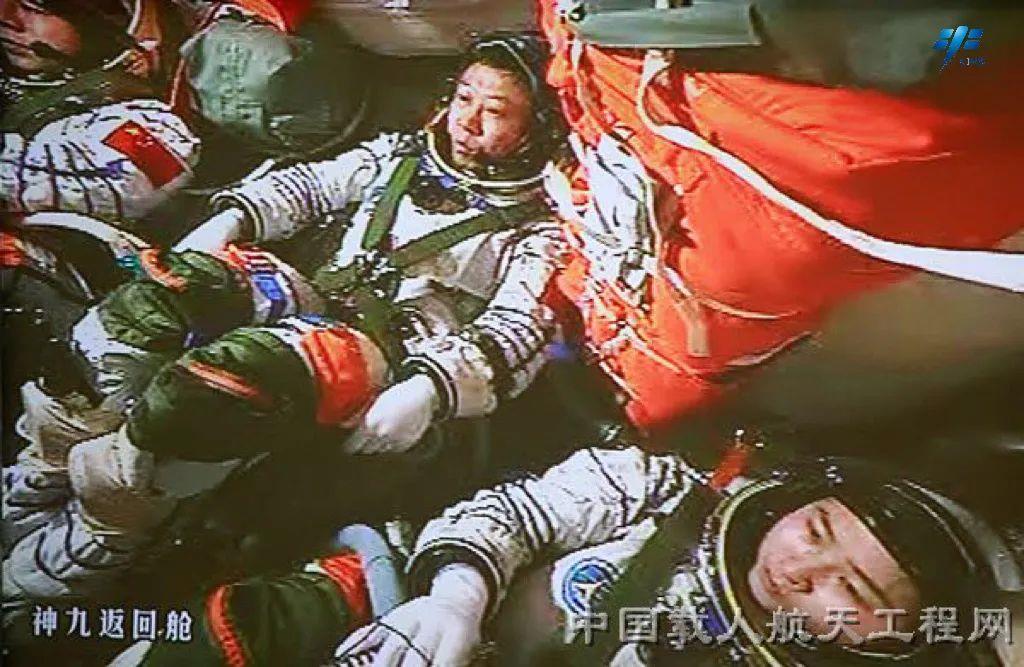
A frame from real-time footage of the Shenzhou-9 crew in orbit. /CMSA
Two-way visual communication was achieved in 2012 when the Shenzhou-9 mission trio entered the space station.
Due to higher bandwidth, the video resolution was clearer, and real-time footage of the three astronauts in space could be displayed on the ground.
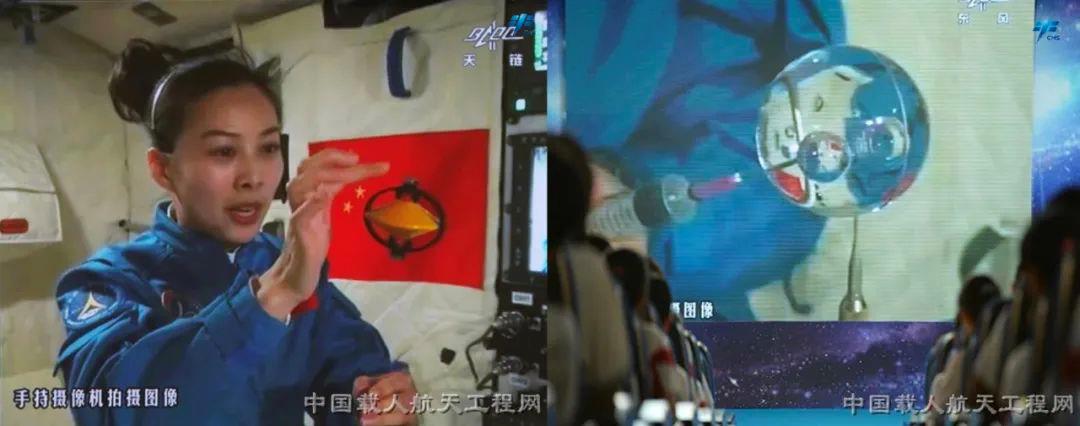
Wang Yaping gives a space lecture, June 20, 2013. /CMSA
With China's three Tianlian relay satellites forming a network, female taikonaut Wang Yaping, with the help of Nie Haisheng and Zhang Xiaoguang on the Shenzhou-10 spacecraft, delivered the first space lecture in 2013.
The Bluetooth communications used realized point-to-point data transmission, making the communication time between the trio and the ground longer, the images of the 40-minute lecture clearer and the signal more coherent.
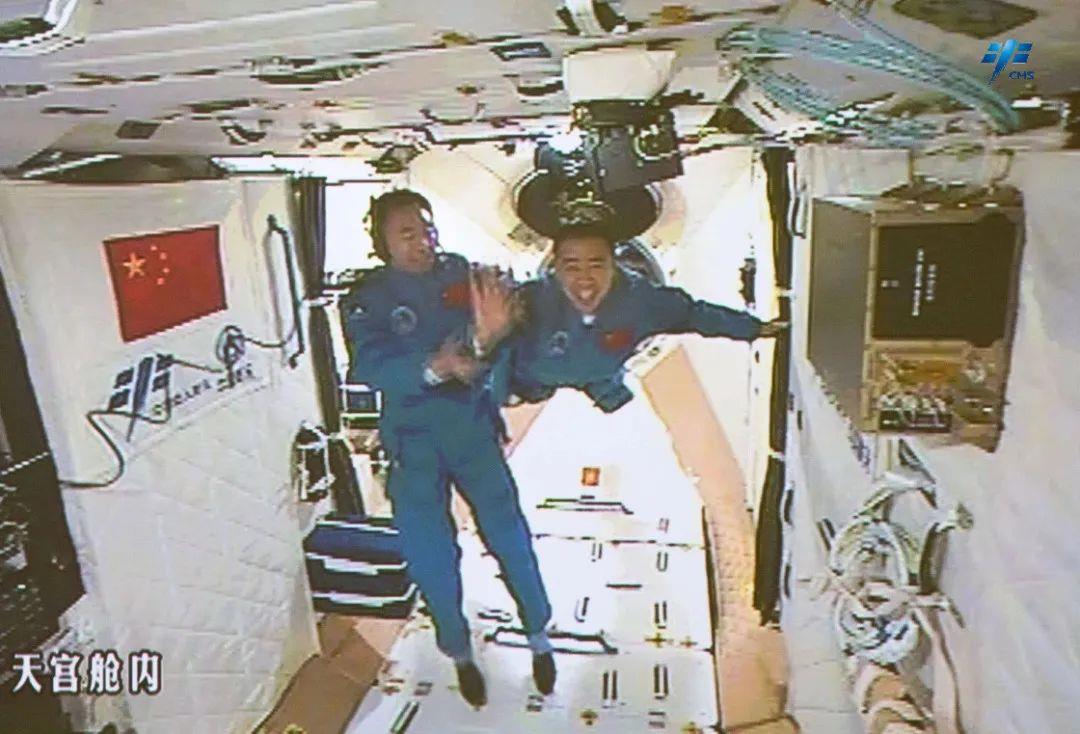
The Shenzhou-11 astronauts enter the Tiangong-2 space lab. /CMSA
In 2016, the Shenzhou-11 crew could communicate with the ground almost anytime, send and receive emails and connect with family members and friends via audio and video.
According to the CMSA, the voice transmission adopted an international advanced encoding and decoding scheme and realized high-quality voice communication in space's extreme physical condition.
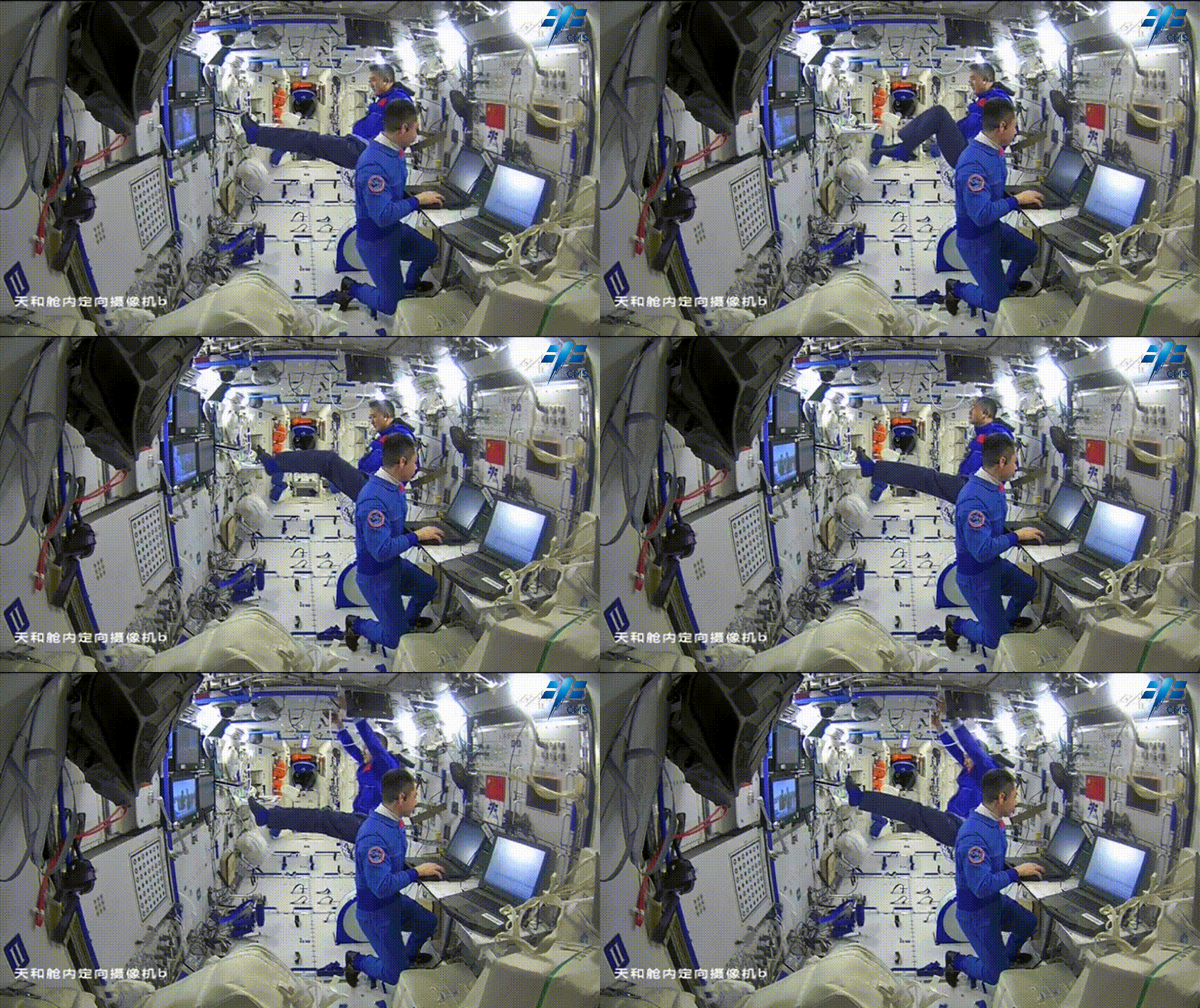
Real-time footage of the astronauts aboard the Shenzhou-13 mission as they work and live on the China Space Station. /CMSA
With the development of China's manned spaceflight, the taikonauts can talk with the ground at any time, and two-way transmissions of voice and videos have been achieved.
China's measurement, control and communication network not only meet the needs of high-definition transmission but also ensure the images captured from multiple views can be transmitted back to the ground clearly in real time and space lectures can be held anytime, said the CMSA.
Search Trends
SITEMAP
Copyright © 2023 CGTN. 京ICP备16065310号

Disinformation report hotline: 010-85061466
SITEMAP
Copyright © 2023 CGTN. 京ICP备16065310号
Disinformation report hotline: 010-85061466