
Share







Copied
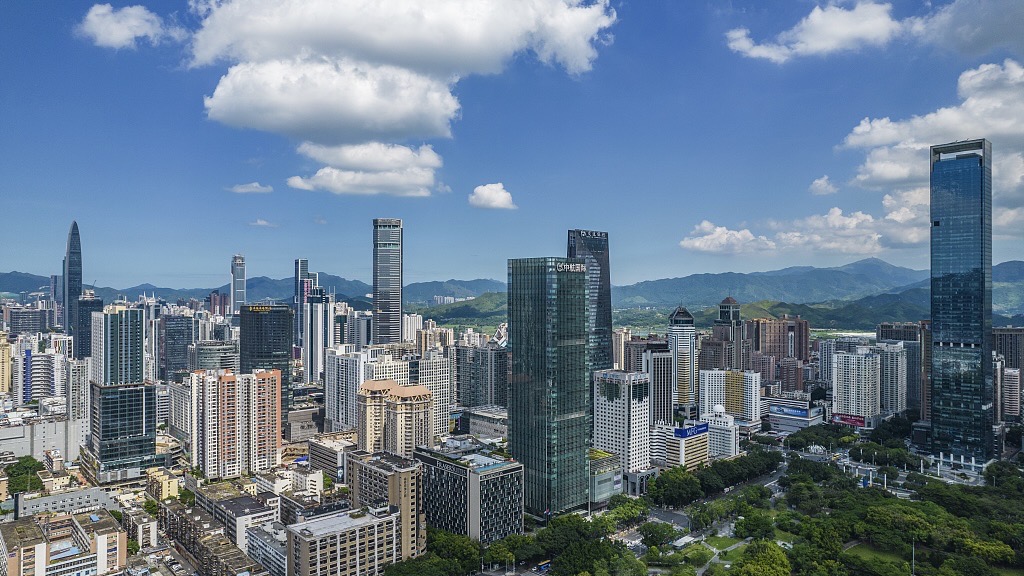
Huaqiangbei Commercial Area, Shenzhen, China. /CFP
Editor's note: Ma Xiaobai is a research fellow of Development Research Center of the State Council in China. The article reflects the author's opinion, and not necessarily the views of CGTN.
As China continues on its historic path of reform and opening-up, privately owned small and medium-sized enterprises (SMEs) have become indispensable pillars driving innovation, growth, and employment. Non-state SMEs account for over 50 percent of tax income, 60 percent of total GDP, and 70 percent of innovation. More importantly, they represent over 90 percent of all Chinese enterprises and provide nearly 80 percent of urban employment opportunities. With such an immense contribution, supporting and unleashing the dynamism and technical leadership of private SMEs is more crucial than ever amidst global economic uncertainties.
The Chinese government has implemented a raft of policies to nurture SME development over the past decades. Systematically reducing taxes, providing rental subsidies, directing bank lending, and establishing diverse financing platforms have alleviated financial burdens and aided growth across the SME sector. Preferential treatment in government procurement through set-aside quotas has assisted SMEs to continuously upgrade their capabilities. Building out technology business incubators, innovation clusters and SME service centers has also fostered vibrant entrepreneurship ecosystems. However, given their strategic value, high-tech "specialized and special new" SMEs warrant customized incentives and support. Targeted policies are critical for seizing new opportunities in advanced science and technology sectors.
The government plans to cultivate 100,000 provincial-level "specialized and special new" SMEs within three to five years by providing preferential tax treatment, financial subsidies, innovation support, and market access facilitation. This will help specialized SMEs rapidly scale up from niche pioneers to national champions that lead key technology domains. The government also aims to grow 10,000 "little giant" companies and 1,000 "single product champions" - "specialized and special new" SMEs with strong innovation capabilities, significant market share, and leadership in specialized sectors. Tax reductions, financing guarantees, intellectual property (IP) protection, and talent incentives will help these companies continuously move up the value chain.
Additionally, the government encourages "specialized and special new" SME clustering, which can reduce costs, improve efficiency, enhance competitiveness, and foster collaboration. Constructing specialized industrial parks, shared research centers, innovation incubators, and integrated service platforms will bolster key regional and sectoral clusters.
Shenzhen Huaqiang Electronic World Co., Ltd located in Huaqiangbei has become a major trading and distribution hub for electronic components and systems, with its revenue reaching 2.8 billion yuan in 2020. It has benefited from preferential policies to develop Huaqiangbei into a national pilot zone, including tax breaks, financial subsidies, infrastructure, and talent incentives. The company exemplifies how government-supported clustering empowers specialized SMEs to rapidly scale up and achieve global leadership.
Looking ahead, advanced equipment manufacturing, new materials, biotechnology, and information technology will be crucial for upgrading China's economic base. Specialized SMEs at the forefront of these sectors can rapidly turn laboratory research into commercialized products, processes and services. Their pioneering spirit and agility in developing smart solutions will be instrumental for building world-class manufacturing capabilities, upgrading traditional industries, and developing integrated digital ecosystems.
As China strives to become an innovation powerhouse and transition to high-quality development, specialized SMEs will be essential agents of change. By leveraging tailored government incentives and support, these innovative companies can cement China's global leadership in strategic technologies and drive an intelligent economy. In China's new era of reform, privately run SMEs, especially high-tech "specialized and special new" companies, will remain the most dynamic and indispensable engines that unlock immense economic potential.
Search Trends
SITEMAP
Copyright © 2023 CGTN. 京ICP备16065310号

Disinformation report hotline: 010-85061466
SITEMAP
Copyright © 2023 CGTN. 京ICP备16065310号
Disinformation report hotline: 010-85061466