
Share







Copied
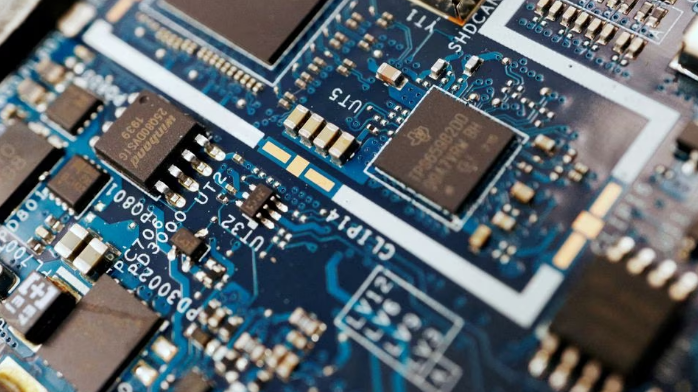
Semiconductor chips are seen on a circuit board of a computer in the illustration picture, February 25, 2022. /Reuters
The European Council on Tuesday approved the regulation to strengthen Europe's semiconductor ecosystem, better known as the 'Chips Act', according to a statement.
The European Council's ministers signed off on the EU's Chips Act, which will channel 43 billion euros ($47 billion) in public and private funds and allow state aid for the continent's semiconductor industry. EU leaders want to use the cash to kick-start massive investments for new chipmaking facilities, doubling the 27-nation bloc's share of global semiconductor production to 20 percent by 2030.
Germany also announced its plan to invest around 20 billion euros ($22.15 billion) in the semiconductor industry in the coming years. The country was able to attract global chipmakers to set up factories by offering subsidies under the EU Chips Act.
Asia accounts for most of the global production of semiconductors – a crucial role that was exposed during the COVID-19 pandemic, when supply chain disruptions resulted in extended shortages of autos, smartphones and medical devices.
Chips are integrated circuits embedded in a semiconductor, a material – notably silicon – that can manage the flow of electric current. The terms "chip" and "semiconductor" are often used interchangeably.
The EU Chips Act will take effect after it's published in the Official Journal of the European Union.
(With agency input)
Search Trends
SITEMAP
Copyright © 2023 CGTN. 京ICP备16065310号

Disinformation report hotline: 010-85061466
SITEMAP
Copyright © 2023 CGTN. 京ICP备16065310号
Disinformation report hotline: 010-85061466