
Share







Copied
"We used to have higher volumes of water. Now it is just a trickle. If another farmer starts irrigating tomorrow, the flow could easily stop," Alessandro Salmoiraghi said at his farm.
Salmoiraghi, 49, is the fourth generation of his family to farm Cascina San Donato, a 24-hectare plot of mainly grain, vegetables and fruit - primarily kiwi - on a normally lush plain just an hour's drive west of Milan, Italy.
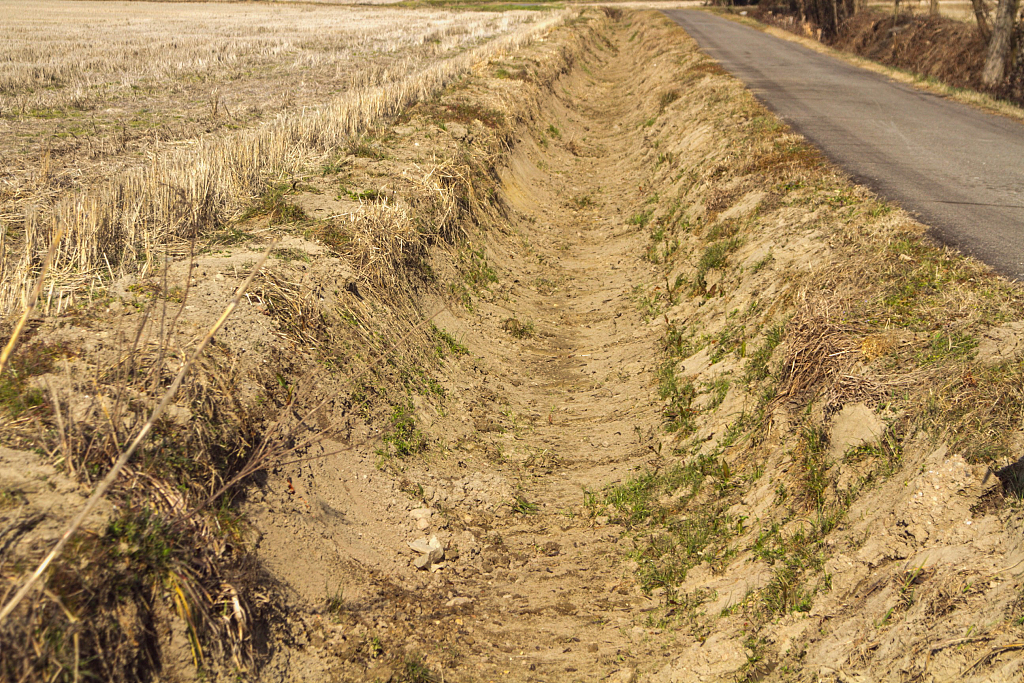
A view of dry crop field as Italy faces the new drought alert after last summer as emergency due to little winter rain and snowfall, Po Valley, Italy, February 24, 2023. /CFP
His farm is fed by the waters of Swiss Alpine glaciers that melt into the Ticino, one of the biggest tributaries of the Po, Italy's longest river.
But after poor winter rains and dismal Alpine snowfalls across northern Italy failed to replenish reserves, the arrival of spring has brought worries of more suffering following the drought of 2022, the worst in 70 years.
Across large parts of Europe, climate change is fueling more extreme weather, including longer droughts and harsher floods that can spur crop failures.
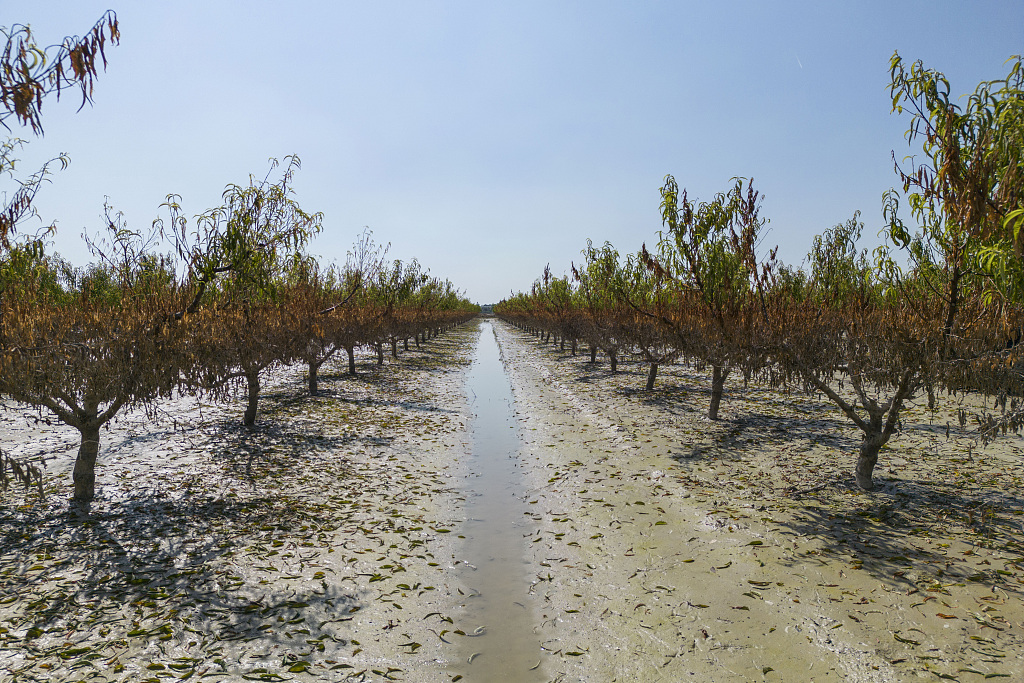
The high water mark from floods shows on pear trees at a farm in Mezzano, Emilia-Romagna region, Italy, June 1, 2023. /CFP
The downpour that occurred in the region of Emilia-Romagna this May worried 84-year-old farmer Giovanni Frega, whose peach and apricot trees and vines were sodden at that time.
"With all this water, the earth can't breathe," he told AFP in an interview. He was afraid that all fruit would go rotten.
According to estimates by Coldiretti, Italy's main farmers' association, more than 5,000 farms and tens of thousands of hectares of farmland were submerged. The extensive crop damage is expected to cost the government some $1.62 billion, as Coldiretti warns that stagnant water in fields risks rotting the roots of approximately 15 million fruit trees and destroying at least 400 million kilograms of wheat.
Also, Coldiretti said the sector of agriculture production had lost some $6.6 billion last year and predicted 300,000 businesses would lose more if the drought does not end.
The loss and damage in croplands is forcing Italy's government to take new steps to tackle climate change.
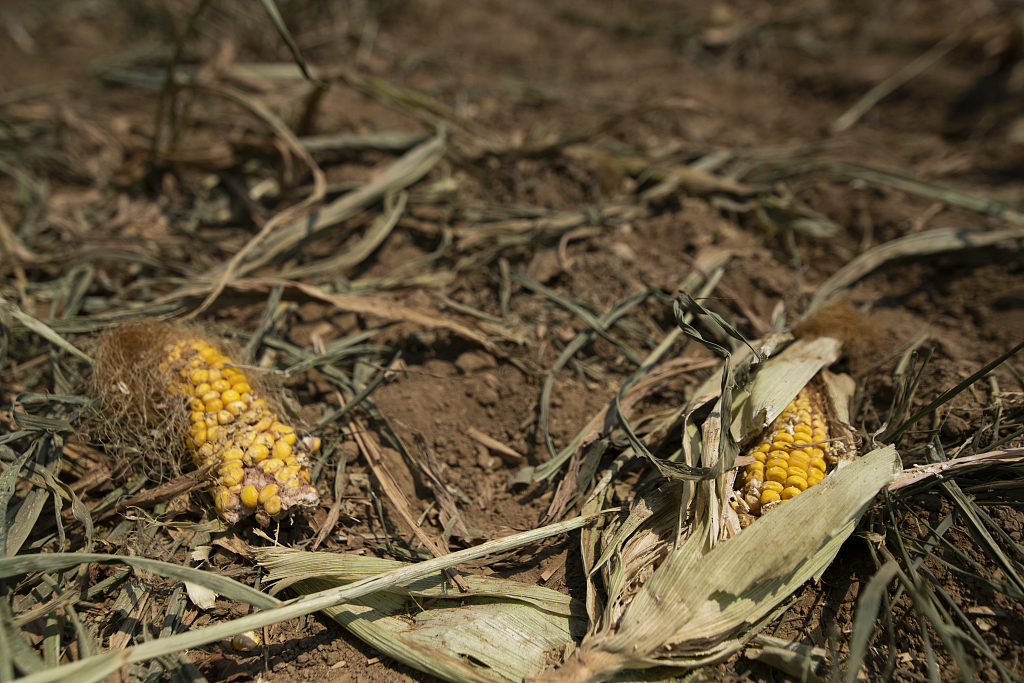
Dried corn cobs, damaged by the severe drought that hit Italy last year, Capua, Italy, October 8, 2022. /CFP
Many research projects are underway in Italy that could lead the way for future adaption measures.
In the agricultural sector, for example, a project named Dromamed is focused on finding maize varieties that are more tolerant to drought and head using germ plasm collections in various Mediterranean countries.
Moreover, after almost four years of delay, the Italian environment ministry published the country's first National Plan for Adaptation to Climate Change in December 2022. The plan aims to provide a framework for minimizing the risks of climate change, and improving the adaptive capacity of nature, society and the economy.
The plan is "absolutely necessary in Italy" to make "our cities, countryside, mountains, inland and coastal areas more resilient to climate change," in the words of environment and energy security minister Gilberto Pichetto.
(Cover image designed by CGTN's Jia Jieqiong; with input from agencies)
(If you have specific expertise and want to contribute, or if you have a topic of interest that you'd like to share with us, please email us at nature@cgtn.com.)
Search Trends
SITEMAP
Copyright © 2023 CGTN. 京ICP备16065310号

Disinformation report hotline: 010-85061466
SITEMAP
Copyright © 2023 CGTN. 京ICP备16065310号
Disinformation report hotline: 010-85061466