
Share







Copied
An exhibition featuring 128 sets of relics collected by the Naples National Archaeological Museum in Italy is currently running at the Nanshan Museum in Shenzhen, south China's Guangdong Province.
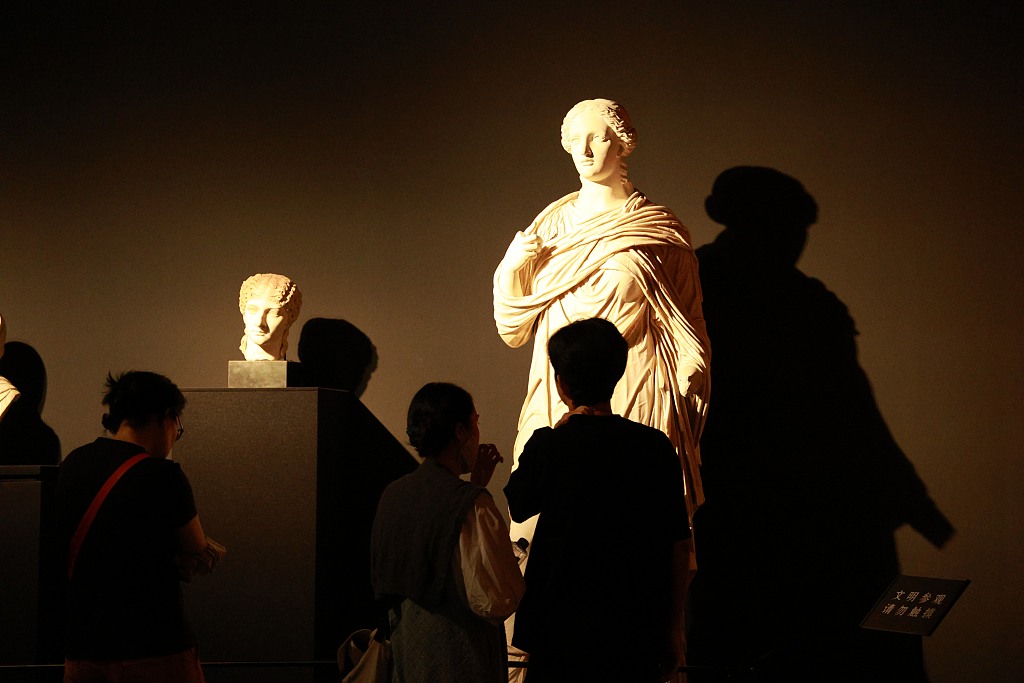
Visitors view sculptures at an exhibition on ancient Roman culture at the Nanshan Museum in Shenzhen, south China's Guangdong Province, August 2, 2023. /CFP
Themed "Love, Luxury and Beauty in Classical Antiquity — Masterpieces from the Museo Archeologico Nazionale di Napoli," the exhibition gathers together sculptures, frescoes, bronzes, pottery and glassware from ancient Rome, showcasing the once splendid culture of Pompeii, a city forever frozen in time.
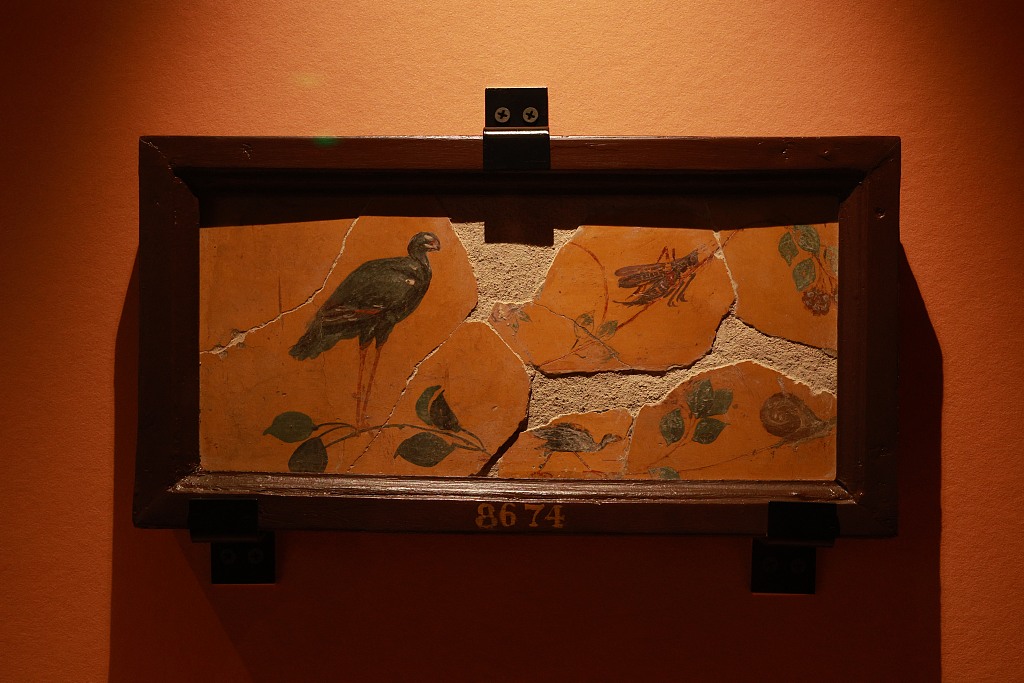
Fragments of frescoes featuring birds and leaves are on display at an exhibition on ancient Roman culture at the Nanshan Museum in Shenzhen, south China's Guangdong Province, August 2, 2023. /CFP
First built in the 6th century BC, Pompeii developed into a prosperous and highly civilized city under the influence of ancient Greece and Rome. The city enjoyed magnificent public buildings, advanced infrastructure, and numerous shops and entertainment venues. Most of them were decorated with exquisite paintings, frescoes or sculptures.
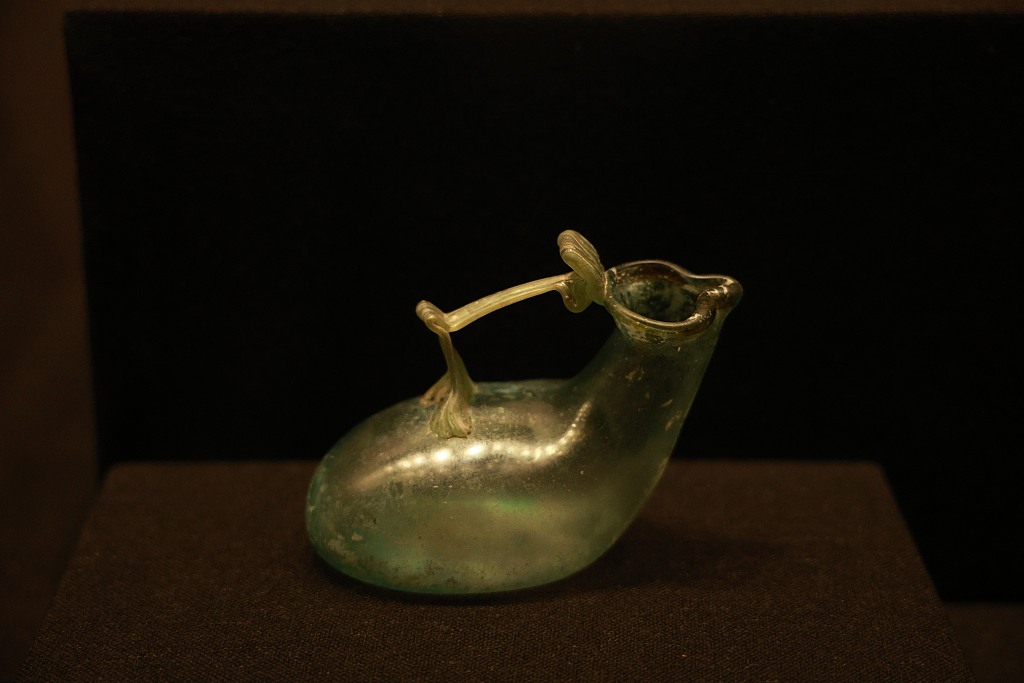
A vessel featuring an ingenious shape is on display at an exhibition on ancient Roman culture at the Nanshan Museum in Shenzhen, south China's Guangdong Province, August 2, 2023. /CFP
The second largest city of the Rome Empire vanished after the nearby Mount Vesuvius volcano erupted in 79 AD. Almost overnight, Pompeii and many of its 10,000 residents were buried under a blanket of ash. However, it is also fortunate that many of the city’s buildings, the corpses of the stricken population, and even many perishable daily items such as newly toasted bread were all preserved in the ash, avoiding the passage of time.
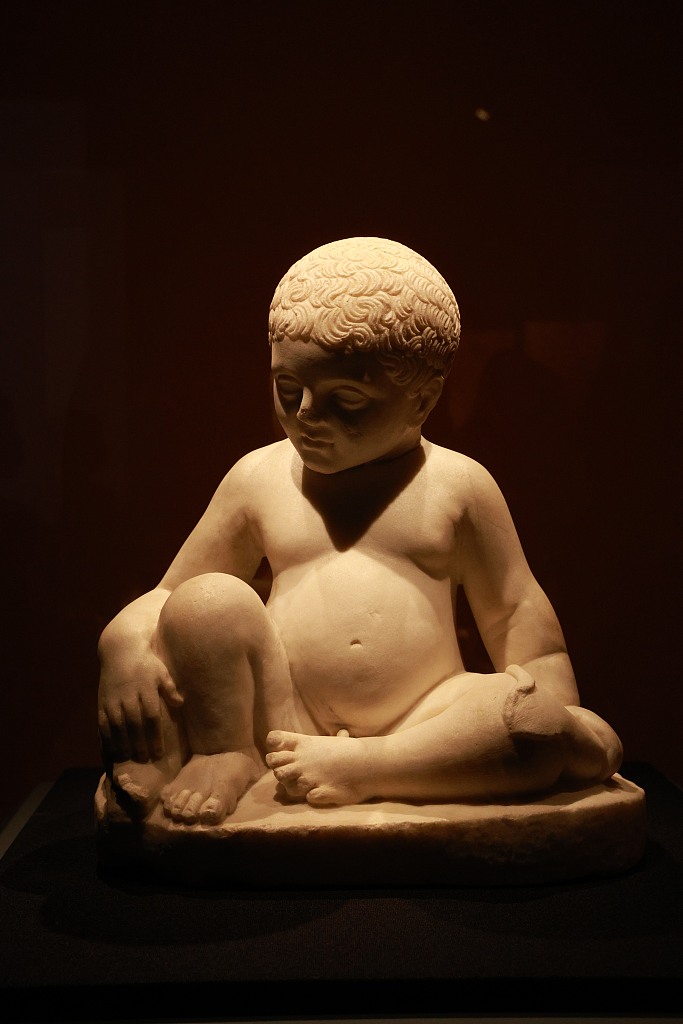
A marble sculpture of a boy is on display at an exhibition on ancient Roman culture at the Nanshan Museum in Shenzhen, south China's Guangdong Province, August 2, 2023. /CFP
Now, many of the unearthed relics are meeting the Chinese public for the first time, vividly depicting the real lives of the Roman people around 2,000 years ago. Visitors can take a closer look at the aesthetic tastes of the Pompeiian people, their devotion to life and love and popular mythological stories from the time.
The exhibition will run until September 3.
Search Trends
SITEMAP
Copyright © 2023 CGTN. 京ICP备16065310号

Disinformation report hotline: 010-85061466
SITEMAP
Copyright © 2023 CGTN. 京ICP备16065310号
Disinformation report hotline: 010-85061466