
Share







Copied
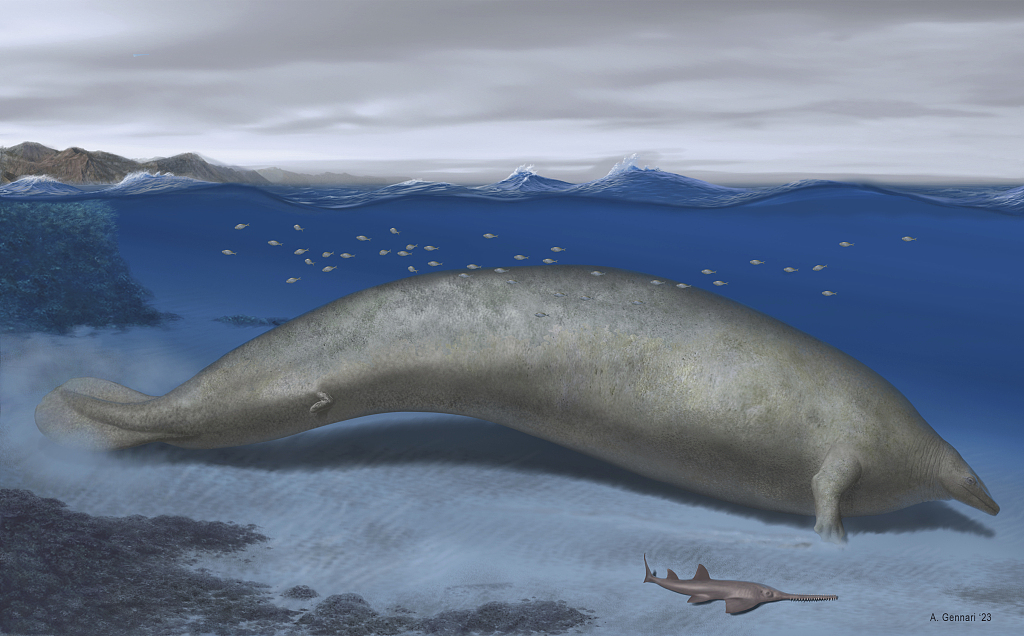
A new species of ancient whale might be the heaviest animal ever found. Researchers describe the new species named Perucetus colossus, or "the colossal whale from Peru," in the journal Nature, August 2, 2023. Alberto Gennari/Nature
Evidence of a previously undiscovered species of prehistoric whale which could have been the heaviest animal of all time has emerged this week.
Analysis of fossils, first discovered in Peru a decade ago, showed that gigantic body masses were achieved by these whales 30 million years earlier than previously thought, according to a study published in the scientific journal Nature on Wednesday.
The weight of the animal is estimated at between 85 and 340 tonnes, which is equivalent to or heavier than the blue whale, said the scientific team that analyzed the fossils.
Eli Amson, paleontologist at the State Museum of Natural History in Stuttgart, Germany, said: "For us, one of the crucial findings of the work is that the transition to true gigantism in whales evolved much earlier in Earth's history than we previously thought."
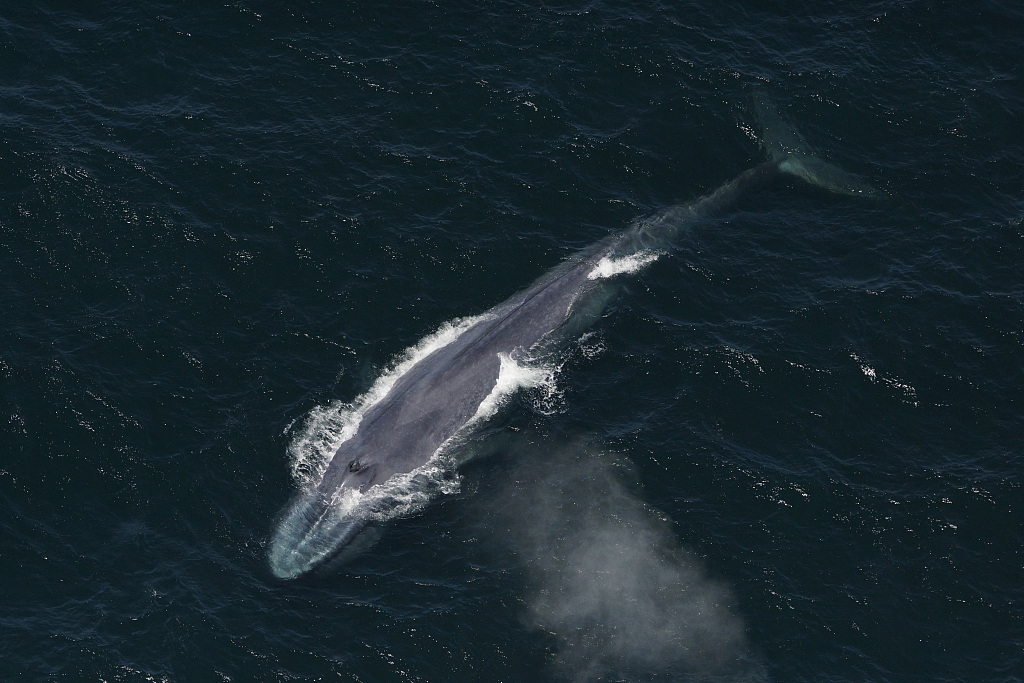
Blue whale. /CFP
The prehistoric whale has been named "Perucetus colossus," which translates as "the colossal whale from Peru," and was found in the desert on the southern coast of the country. It took several field campaigns to unearth the colossal skeleton.
The "ancient relative of today's whales, dolphins, and porpoises" lived in coastal waters around 39 million years ago. "The discovery of a truly giant species, such as Perucetus, which is affected by a sharp increase in bone mass, changes the understanding of whale evolution," the study found.
Each vertebra of the prehistoric whale weighs over 100 kilograms, while the ribs measure 1.4 meters. At five to eight tonnes, the 20-meter-long skeleton of the newly-discovered species is up to three times heavier than the 25-meter-long skeleton of a blue whale on display in the Hintze Hall of the Natural History Museum in London.
(If you have specific expertise and want to contribute, or if you have a topic of interest that you'd like to share with us, please email us at nature@cgtn.com.)
Search Trends
SITEMAP
Copyright © 2023 CGTN. 京ICP备16065310号

Disinformation report hotline: 010-85061466
SITEMAP
Copyright © 2023 CGTN. 京ICP备16065310号
Disinformation report hotline: 010-85061466