
Share







Copied
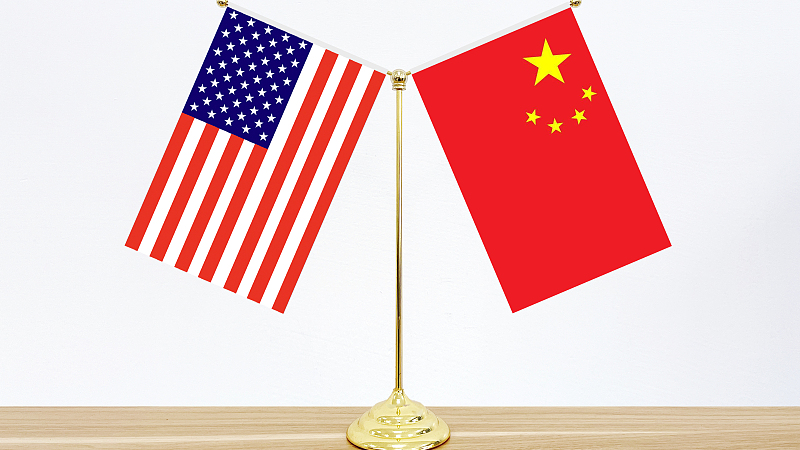
National flags of the U.S. and China. /CFP
Editor's note: Ruqiya Anwar, a special commentator on current affairs for CGTN, is a PhD scholar of Media and Communication Studies in Pakistan. The article reflects the author's opinions and not necessarily the views of CGTN.
On August 28, Chinese Minister of Commerce Wang Wentao and U.S. Commerce Secretary Gina Raimondo made significant progress by announcing the establishment of novel communication channels between China's Ministry of Commerce and the U.S. Department of Commerce. They have done this in recognition of the paramount importance of conducting open, fruitful dialogues in the realms of economy and trade. This resolute move is set to usher in a new era of collaboration, marking a refreshing departure from previous contentious interactions between the two economic giants.
Establishing a framework for exchanging information on export control is the core of this initiative. This approach, designed to clarify the nuances of their individual export control systems, is expected to promote communication. Both sides have vowed to communicate information on export control strictly in accordance with their respective legal frameworks, which is a commendable example of the spirit of collaboration. This demonstrates a dedication to openness, a crucial quality for fostering trust among people.
Wang made a point of highlighting China's willingness to work with the United States to create an environment that is favorable to bilateral commerce and investment at the historic meeting. Wang stressed the values of respect for one another, peaceful coexistence and win-win collaboration while articulating a vision of cooperative progress that goes beyond simple business dealings.
While the commitment to regular communication and annual meetings between commerce ministers is commendable, it is the content of these interactions that holds significance. In a candid exchange, China articulated concerns regarding several pertinent issues, including the U.S. Section 301 tariffs on Chinese goods, semiconductor policies, two-way investment restrictions, and sanctions on Chinese enterprises.
By discussing these issues honestly, both sides demonstrate their willingness to be prepared to discuss contentious topics and potentially may open up the possibility to practical solutions. The honesty with which both parties are attempting to address long-standing problems is exemplified by this open discussion.
A salient focal point of Wang's remarks was the assertion that the broadening of the concept of "national security" could have a detrimental impact on normal economic and trade interactions. A wide application of this concept is inconsistent with the values that support positive economic interactions.
Concerning unilateral and protectionist measures, critics claim that they go against both market regulations and the core ideas of fair competition. These issues are relevant given the increasingly complex supply chains and interconnected industrial networks that characterize the world economy.
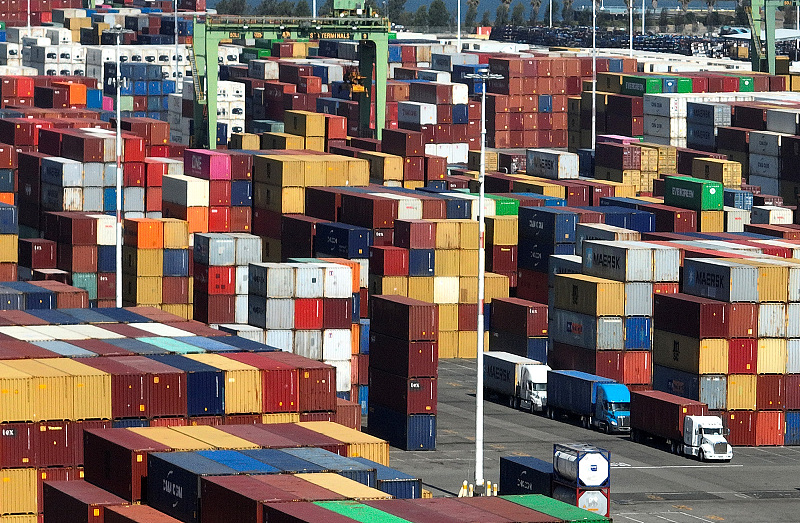
Shipping containers are seen stacked at the Port of Oakland in Oakland, California, U.S., August 7, 2023. /CFP
Particularly noteworthy is China's response to the U.S.'s frequent claim that it does not intend to decouple from China. Wang's call for specific measures in line with these promises emphasizes the significance of taking meaningful action to sustain a stable and cooperative economic relationship. This idea encompasses the broader idea of caution as well as the requirement for consistency in diplomatic rhetoric and actions.
The establishment of the working group, which will meet twice a year at the deputy ministerial level, underscores a commitment to sustained engagement. Furthermore, the commitment to maintain regular communication and arrange yearly meetings among commerce ministers acts as a tool to handle difficulties, create rapport and foster a shared understanding of each country's economic priorities.
Beyond the rhetoric, the bilateral interaction demonstrates a readiness to engage in technical consultations on trade secrets and confidential business information protection. This pragmatic part of the agreement indicates a knowledge of the complexities of modern trade relations, with the goal of addressing practical concerns while simultaneously addressing larger policy challenges.
The development comes at a time when economic uncertainty throughout the world is at an all-time high owing to evolving geopolitical dynamics, technology advancements, and shifting trade norms. The China-U.S. economic relationship has long been a centerpiece of this landscape, and this new communication framework signifies a nuanced step toward recalibrating their economic ties.
The announcement of the establishment of new communication channels between the commerce authorities of China and the United States is a significant stride in their bilateral relationship. By embracing mechanisms for information exchange, creating avenues for dialogues through working groups, and committing to regular high-level communication, both countries demonstrate a willingness to cooperate constructively in spite of their differences.
(If you want to contribute and have specific expertise, please contact us at opinions@cgtn.com. Follow @thouse_opinions on Twitter to discover the latest commentaries in the CGTN Opinion Section.)
Search Trends
SITEMAP
Copyright © 2023 CGTN. 京ICP备16065310号

Disinformation report hotline: 010-85061466
SITEMAP
Copyright © 2023 CGTN. 京ICP备16065310号
Disinformation report hotline: 010-85061466