
Share






Copied
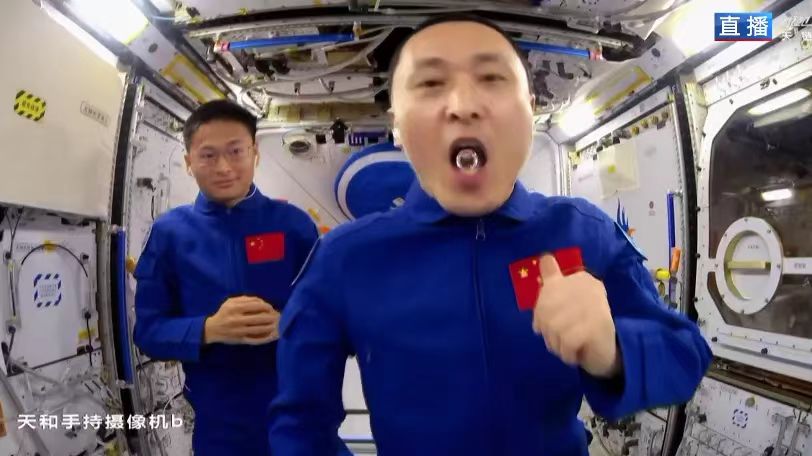
Zhu Yangzhu swallows water after demonstrating how the water surface reacts to being hit with a table tennis ball when livestreaming a science lecture from the space station, September 21, 2023. /CMG
China's Shenzhou-16 crew finished their science class on Thursday, making it the fourth lecture of the "Tiangong Class" series.
Composed of a commander, a flight engineer and a payload expert, the trio has been in orbit for over 110 days since they entered the China Space Station on May 30.
Consisting of three modules, the space station has entered the application and development stage. The stage began when the Shenzhou-15 spacecraft was launched in November 2022.
The Shenzhou-16 trio, Jing Haipeng, Zhu Yangzhu and Gui Haichao, rotated in orbit with the Shenzhou-15 members and completed their handover in early June.
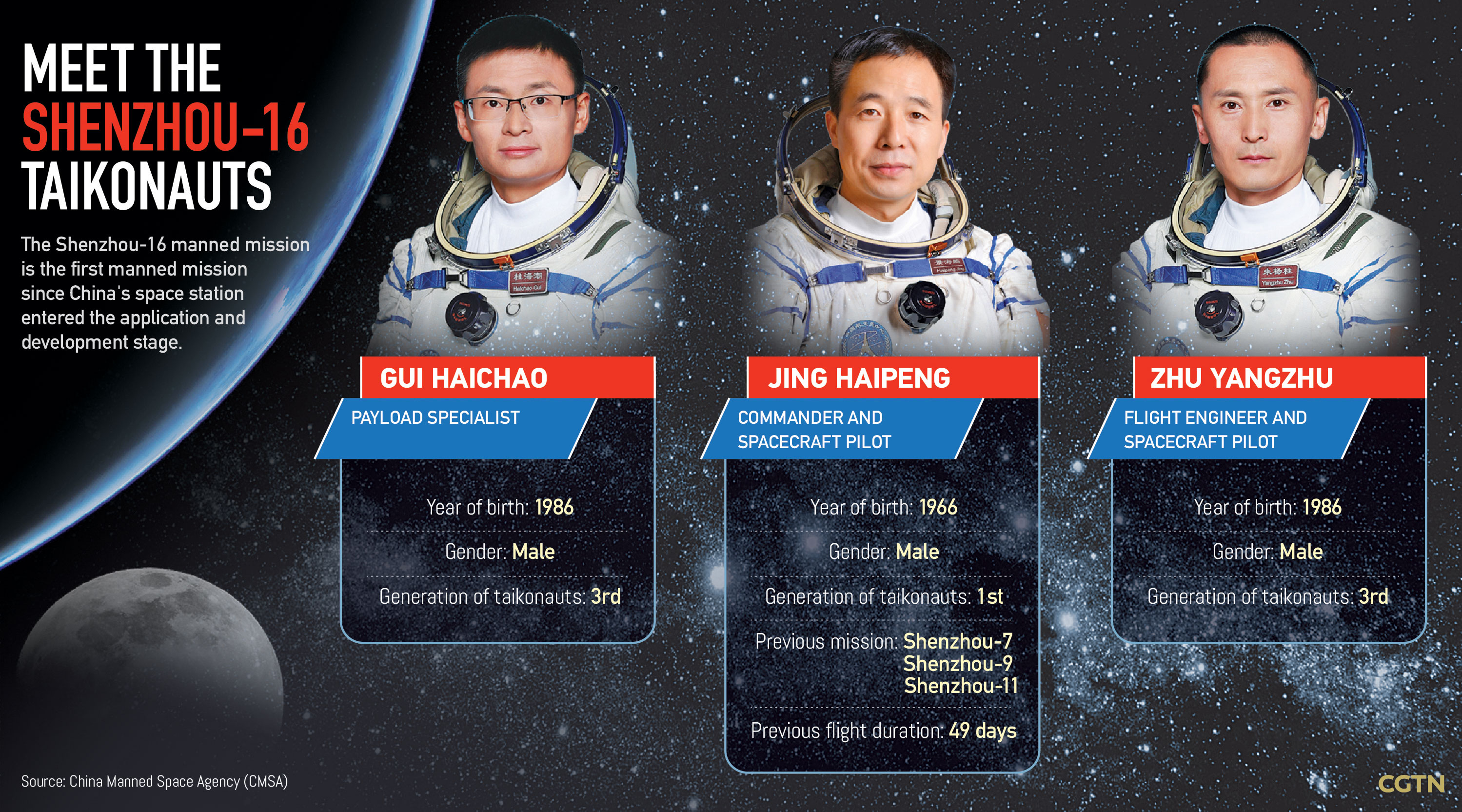
Profiles of the Shenzhou-16 crew. /CGTN
They've assisted the Tianzhou-5 cargo spacecraft to re-dock with and separate from the space station afterwards.
As their routine, they performed status inspection, equipment maintenance and payload entry and exit on the space station, so to ensure its safe and stable operation.
Payload refers to the instruments, equipment and organisms and specimens that are carried by a spacecraft necessary to the purpose of the flight.
During their first extravehicular activity on July 20, the three astronauts lifted three panoramic cameras during their eight-hour spacewalk.
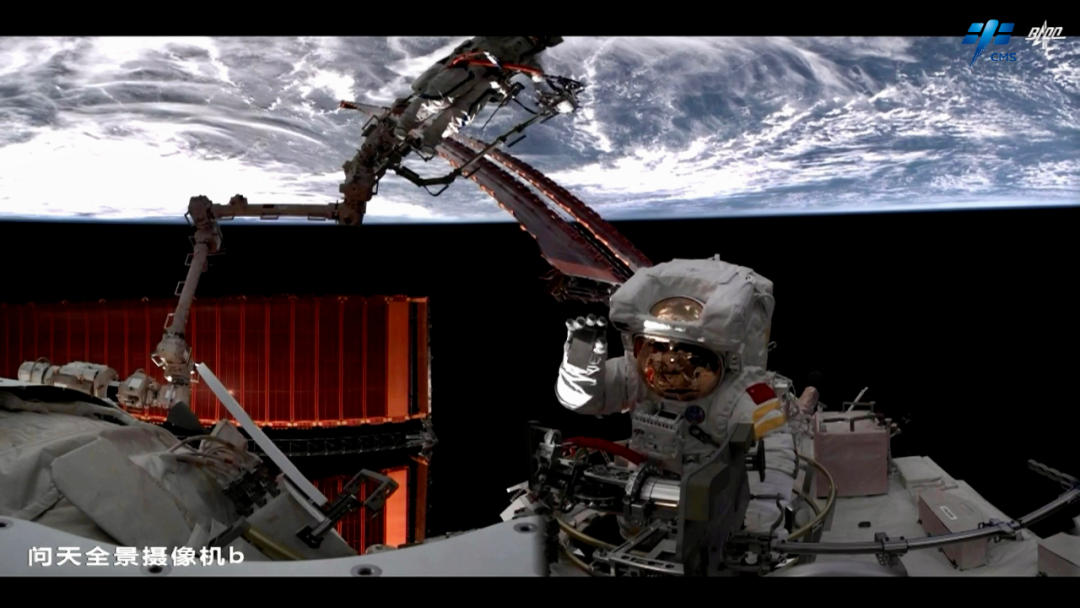
A Shenzhou-16 taikonaut during the extravehicular activity, July 20, 2023. /CMSA
The crew has carried out a series of space science experiments in life ecology, microgravity research and other fields.
Ma Guang, an astronaut instructor at the China Astronaut Research and Training Center, said that the three taikonauts have completed various experimental tasks successfully.
The trio has provided a large amount of data through health status monitoring and exercise, which will improve research on weightless protection, promote the development of aerospace medicine and provide technical reserves for subsequent manned deep space exploration.
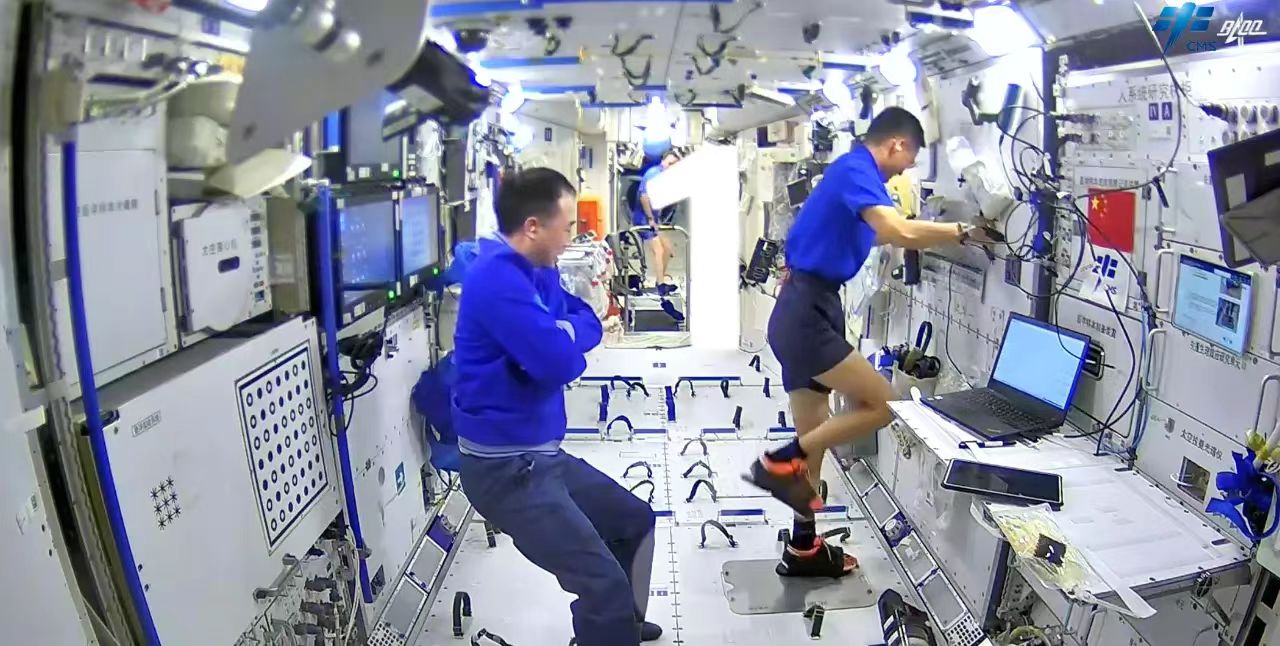
Shenzhou-16 taikonaut Gui Haichao (R) exercises in the China Space Station and Jing Haipeng stands next to Gui. /CMSA
Currently, according to a Xinhua report, citing a forum on aerospace medicine that kicked off Thursday in Beijing, China is capable of protecting astronauts from the effects of a weightless environment for 180 days in space.
Progress in this area has provided theoretical support for research in cardiovascular health, musculoskeletal systems, neurodegenerative diseases, human aging and drug screening on Earth, it added.
Search Trends
SITEMAP
Copyright © 2023 CGTN. 京ICP备16065310号

Disinformation report hotline: 010-85061466
SITEMAP
Copyright © 2023 CGTN. 京ICP备16065310号
Disinformation report hotline: 010-85061466