
Share







Copied
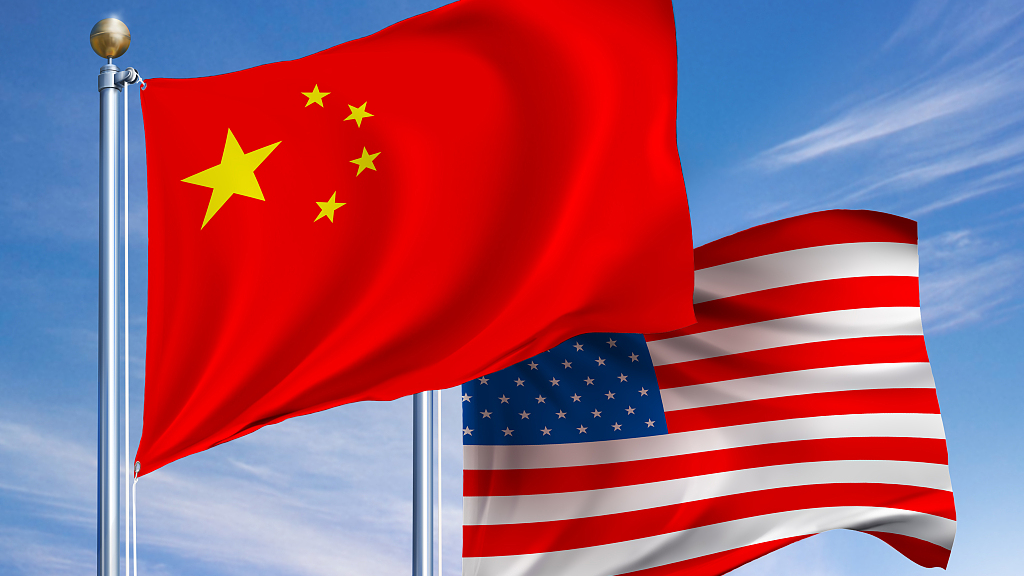
Chinese and American flags. /CFP
Editor's note: Hafijur Rahman, a special commentator on current affairs for CGTN, is a columnist and security and strategic analyst, working in a strategic studies center in Bangladesh. The article reflects the author's opinions and not necessarily the views of CGTN.
In the context of the escalating geopolitical competition between China and the United States, which was increasingly stiffening already abundant misperception on both sides, the establishment of meaningful, policy-level communication channels has long been a pressing issue. Significantly, since America's hysterical brouhaha and bumbling way of handling the Chinese unmanned civilian airship mishap in February this year, almost all forms of functional communication channels between the two powerful entities virtually came to a halt.
However, the last few months have seen a string of high-profile U.S. administration officials' visits to China. During these interactions, both sides pressed home on the establishment of effective bilateral communication platforms to manage misperception and bring the strained relationships back on a steady track.
In furtherance of these endeavors, an agreement was reached between Chinese Vice Premier, He Lifeng, and U.S. Secretary of Treasury, Janet Yellen, during the latter's visit to Beijing in July to form two working groups – an economic working group and a financial working group. Within the framework of these working arrangements, it was mutually agreed upon by both parties to convene regular and ad hoc meetings to enhance communication on economic and financial matters, with the ultimate objective of promoting robust and healthy economic competition between the two countries.
With the continued progress, on October 24, the China-U.S. economic working group convened its inaugural meeting via video link, followed by the financial working groups on October 25.
According to China's Ministry of Finance, the two-hour-long economic working group's virtual meeting with officials at the vice-ministerial level from both sides covered domestic and international macroeconomic situations, bilateral economic ties, and collaborative efforts in addressing global shared concerns. The conference, referred to as "productive and substantive" by the U.S. State Department, is expected to promote high-level and working-level engagements to address and resolve areas of disagreement, thereby facilitating widely-sought and urgently needed cooperation.
For the financial working group's meeting, both sides engaged in a "professional, candid, pragmatic and constructive" communication, agreeing to collaboratively work on "monetary and financial stability, financial regulation, sustainable finance, financial governance, anti-money laundering and countering financing of terrorism," according to the People's Bank of China.
The significance of the first-ever such meetings between top officials of the U.S. and China cannot be overstated – not just in the context that they have flagged the potent signals of the strained bilateral ties steadily coming back on a mutually agreeable track. Additionally, the timing of the meeting is also noteworthy, as those meetings almost coincided with the much-awaited U.S. visit of Wang Yi, a member of the Political Bureau of the Communist Party of China Central Committee and Chinese foreign minister. Wang's visit is expected to pave the way for a highly-anticipated but yet-to-be-confirmed summit between Chinese President Xi Jinping and U.S. President Joe Biden during the Asia-Pacific Economic Cooperation (APEC) Economic Leaders' Meeting next month.
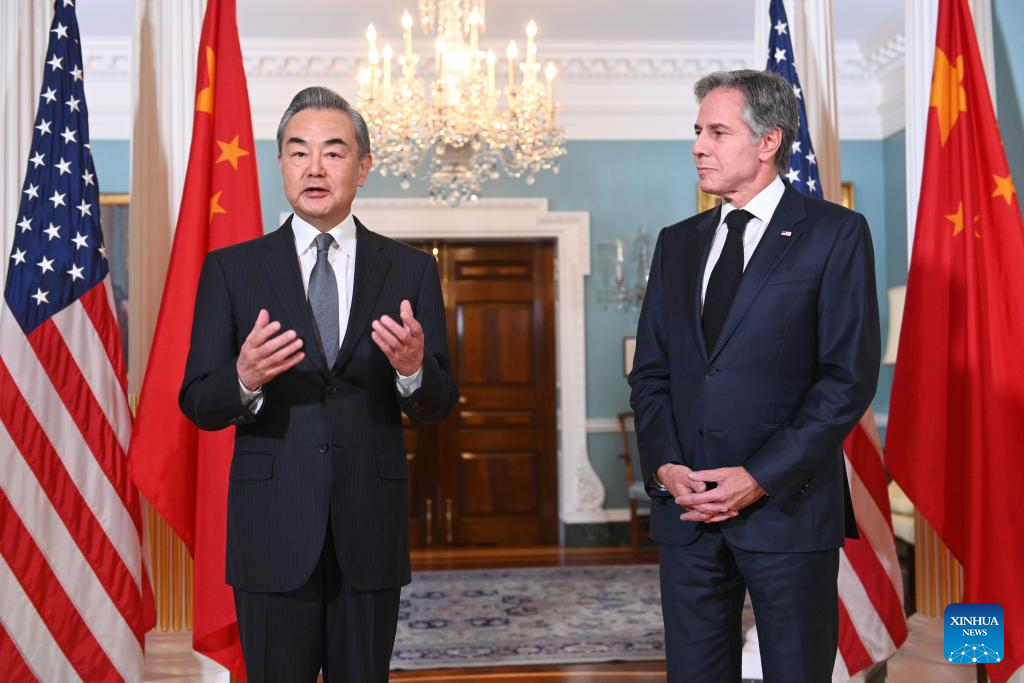
Wang Yi, member of the Political Bureau of the Communist Party of China Central Committee and Chinese foreign minister, holds talks with U.S. Secretary of State Antony Blinken in Washington, D.C., U.S., October 26, 2023. /CFP
The convening of these meetings, almost in conjunction with Wang's visit, is expected to enhance reciprocal confidence and pave the way for a prospective summit between Xi and Biden. However, much of the prospect of how such historic meetings would be played out in helping the world's two largest economies better navigate their frictions and ameliorate the world's most defining relation toward the greater global good largely depends on the extent to which the United States is politically willing to meet China halfway.
The time is now substantially ripe for both Chinese and American companies to embrace the conciliatory rhetoric emanating from the leadership of their respective nations and steer towards a constructive and fruitful path of mutual cohabitation while maintaining a healthy level of competition.
In the current global context, characterized by a significant level of turbulence and a pressing need for economic recovery and combatting climate extremity, driving bilateral ties on a path of constructive cooperation, continued stability, and mutual respect is more urgent than ever.
Earlier on October 24, Chinese President Xi Jinping, in a letter delivered at an annual dinner of the National Committee on U.S.-China Relations in New York, conveyed his country's willingness to cooperate with the U.S. as both sides manage their differences and work together to respond to global challenges. Officials from the current U.S. administration, including Biden himself during the Bali meeting with his Chinese counterpart at the sideline of the G20 summit and also the G7 summit in Hiroshima, have also repeatedly uttered conciliatory words, expressing the United States' readiness to rectify the current downward trajectory of the bilateral relationship.
However, it has almost always been evident that the rhetoric used by the United States has consistently failed to align with its corresponding deeds, particularly in light of its continuing tech assaults against China to prevent its technological progress. Just last week, in continuation of its aggressive policy of restricting China's tech ascendance, the Biden administration imposed an export on China-specific Nvidia and Intel graphic processing units to undercut Beijing's AI drive.
If the United States consistently fails to match its rhetoric with its actions on the ground, probably, the institutional dialogue mechanisms such as the economic and financial working groups would be rendered ineffective and devoid of tangible advantages to both countries.
Nevertheless, as was said earlier, the current moment presents an opportune time for both countries to "find the right way of getting along."
(If you want to contribute and have specific expertise, please contact us at opinions@cgtn.com. Follow @thouse_opinions on Twitter to discover the latest commentaries in the CGTN Opinion Section.)
Search Trends
SITEMAP
Copyright © 2023 CGTN. 京ICP备16065310号

Disinformation report hotline: 010-85061466
SITEMAP
Copyright © 2023 CGTN. 京ICP备16065310号
Disinformation report hotline: 010-85061466