By continuing to browse our site you agree to our use of cookies, revised Privacy Policy and Terms of Use. You can change your cookie settings through your browser.
Bridging civilizations: Media group gains insight into ancient Luoyang

Share







Copied
Chinese civilization has a long and profound history, and a visit to the Erlitou Site Museum of the Xia Capital in Luoyang, central China's Henan Province offers a deeper understanding of its ancient roots. A Latin American and Caribbean media delegation visited the museum during their "Journey to Chinese Civilization: Henan" cultural tour led by CGTN this week.
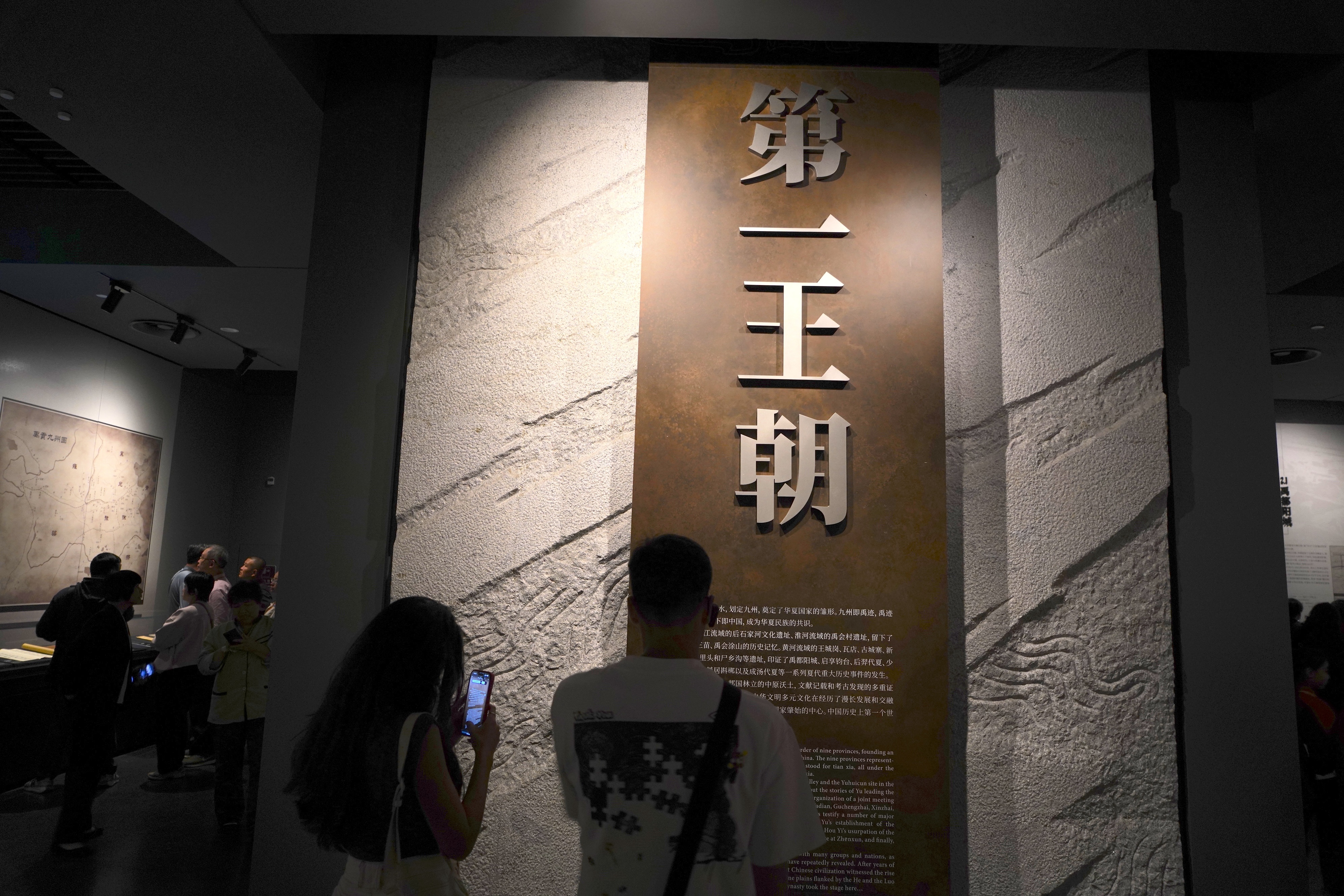
Visitors read an introduction to the Xia Dynasty at the Erlitou Site Museum of the Xia Capital in Luoyang, Henan Province, on April 22, 2025. /CGTN
The museum, the winner of the 2023 UNESCO Asia-Pacific Awards for Cultural Heritage Conservation, is built on the Erlitou archaeological site, believed to be the capital city during the middle-to-late Xia Dynasty, China's first recorded dynasty. Covering more than 3 million square meters, the site features some of the earliest milestones in Chinese history: the earliest palace city, urban road network, and sets of bronze ritual vessels – all highlighting the dawn of Chinese statecraft and ceremonial culture.
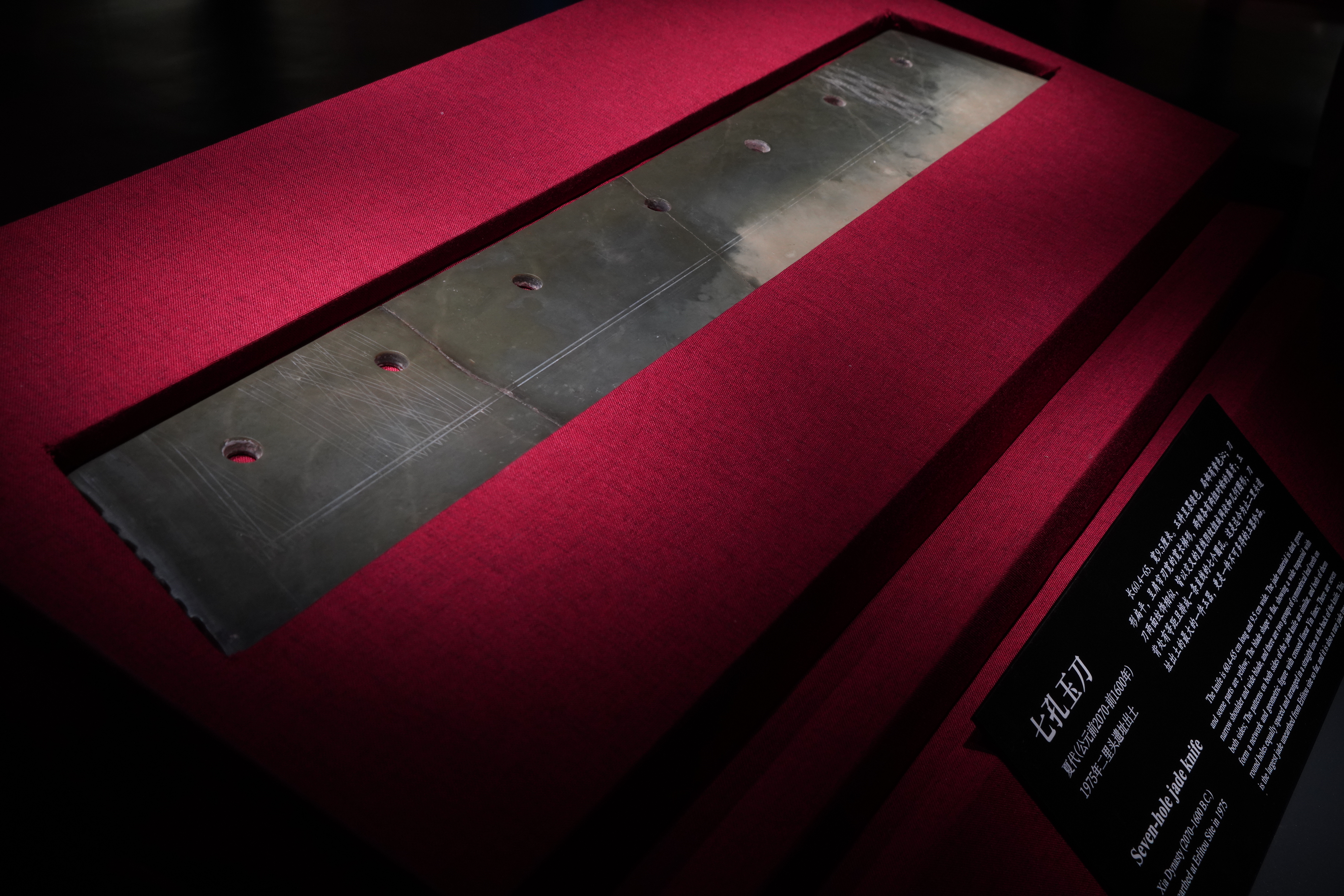
A seven-hole jade knife is displayed at the Erlitou Site Museum of the Xia Capital in Luoyang, Henan Province, on April 22, 2025. /CGTN
Visitors learned how the Erlitou culture marked the nation's transition from the Stone Age to the Bronze Age, ushering in the beginnings of the civilization of three dynasties – the Xia, Shang, and Zhou – where political power and moral order became deeply intertwined.
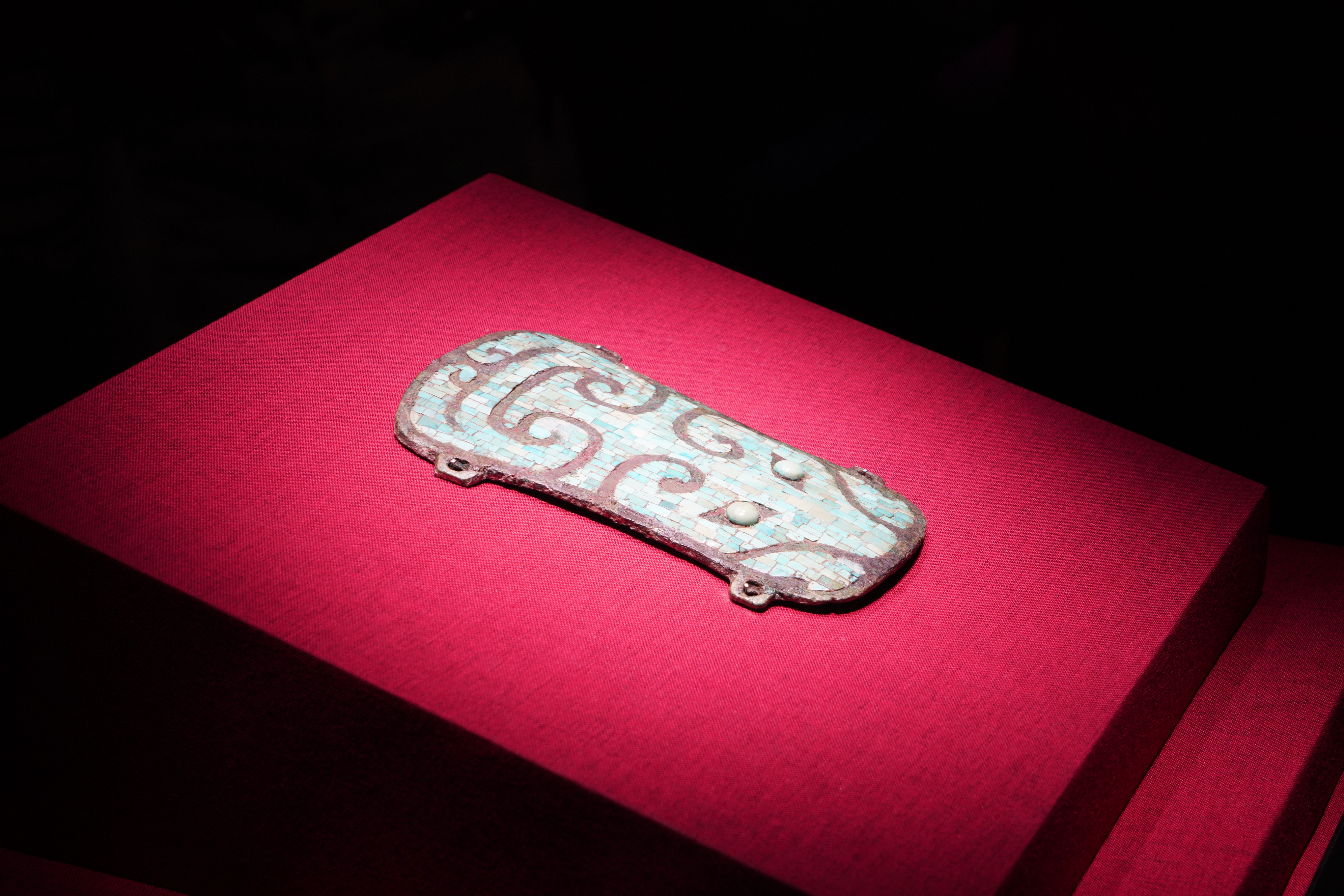
A turquoise-inlaid bronze plaque with a beast-mask motif is displayed at the Erlitou Site Museum of the Xia Capital in Luoyang, Henan Province, on April 22, 2025. /CGTN
The museum showcases over six decades of archaeological discoveries. It systematically presents the development of the history and culture of the Xia Dynasty and its contributions to China's early ceremonial systems.
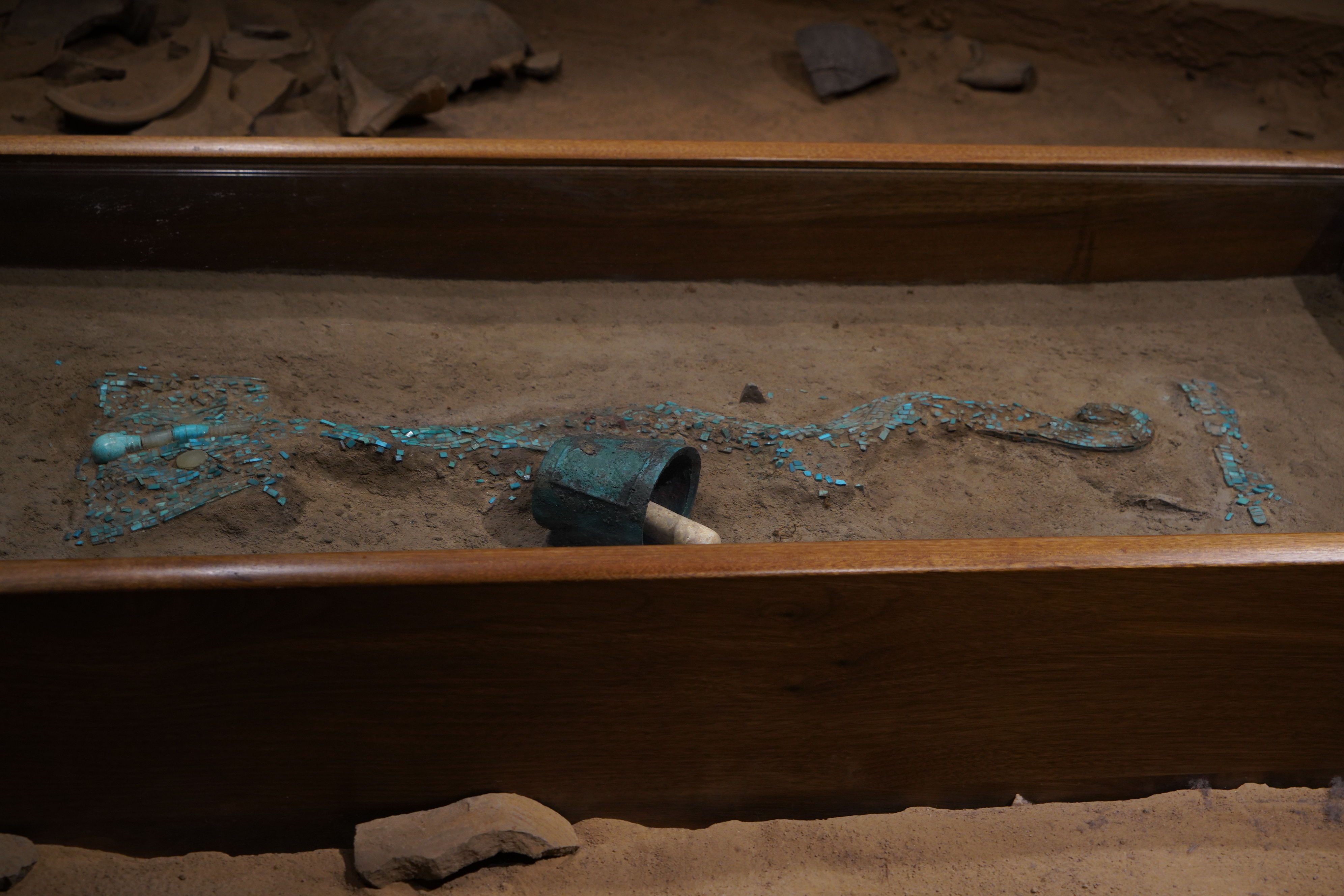
A replica of a dragon-shaped object inlaid with turquoise is displayed at the Erlitou Site Museum of the Xia Capital in Luoyang, Henan Province, on April 22, 2025. /CGTN
Seen from above, the museum resembles a coiled dragon, symbolizing the dragon as a powerful Chinese motif. This design also pays tribute to one of the site's most iconic discoveries – the earliest and most complete dragon-shaped artifact in China, made from turquoise.
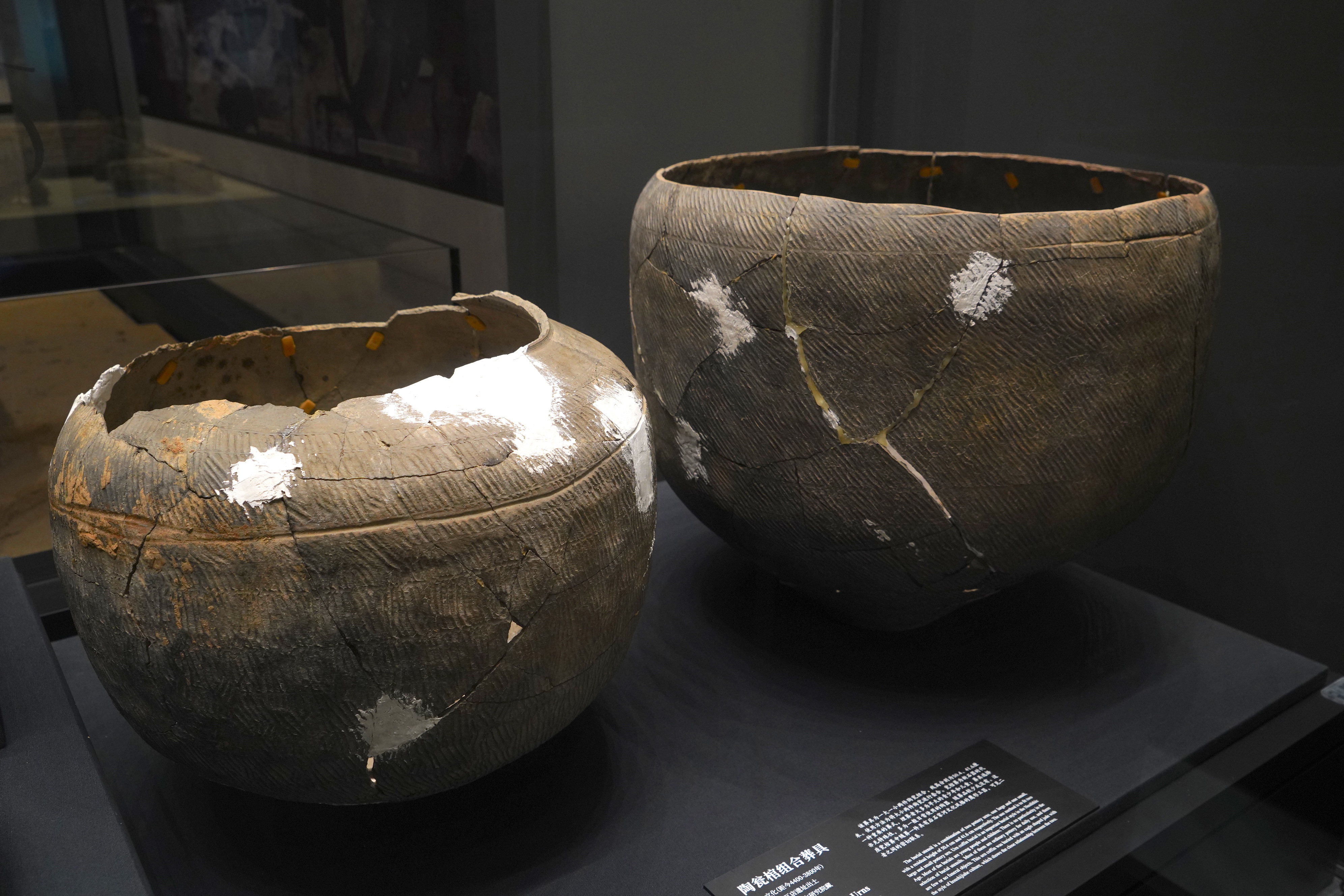
Pottery funerary urns are displayed at the Erlitou Site Museum of the Xia Capital in Luoyang, Henan Province, on April 22, 2025. /CGTN
A highlight of the exhibition is its exploration of the Xia Dynasty's ceremonial traditions. Through bronzeware, jade, and other relics unearthed from the site, the museum displays rich cultural practices including sacrificial rituals, music, wine, burial customs, totem worship, and military culture, providing a comprehensive view of early Chinese etiquette systems.
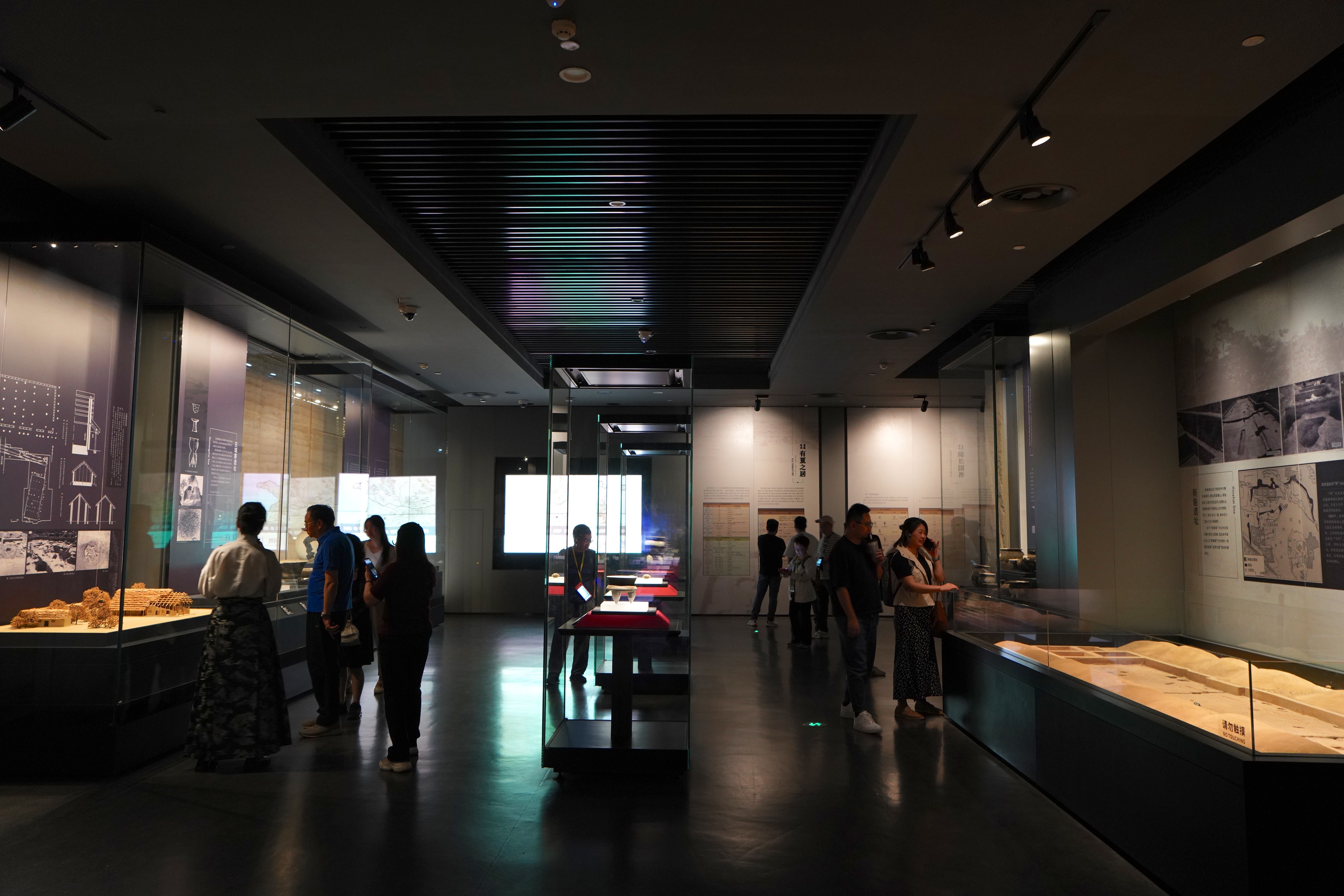
Visitors stroll through an exhibition hall at the Erlitou Site Museum of the Xia Capital in Luoyang, Henan Province, on April 22, 2025. /CGTN
The visit not only offered a window into the richness of China's ancient civilization but also fostered cultural dialogue and mutual understanding – bridging thousands of years of history through modern global exchanges.
Search Trends
SITEMAP
Copyright © 2023 CGTN. 京ICP备16065310号

Disinformation report hotline: 010-85061466
SITEMAP
Copyright © 2023 CGTN. 京ICP备16065310号
Disinformation report hotline: 010-85061466