By continuing to browse our site you agree to our use of cookies, revised Privacy Policy and Terms of Use. You can change your cookie settings through your browser.
CMG program showcases Gansu's cultural legacy

Share







Copied
On September 6, the Gansu episode of "China in Intangible Cultural Heritage," a large-scale cultural program jointly produced by China Media Group(CMG) and the Ministry of Culture and Tourism of China, premiered on the media group's CCTV-1 channel.
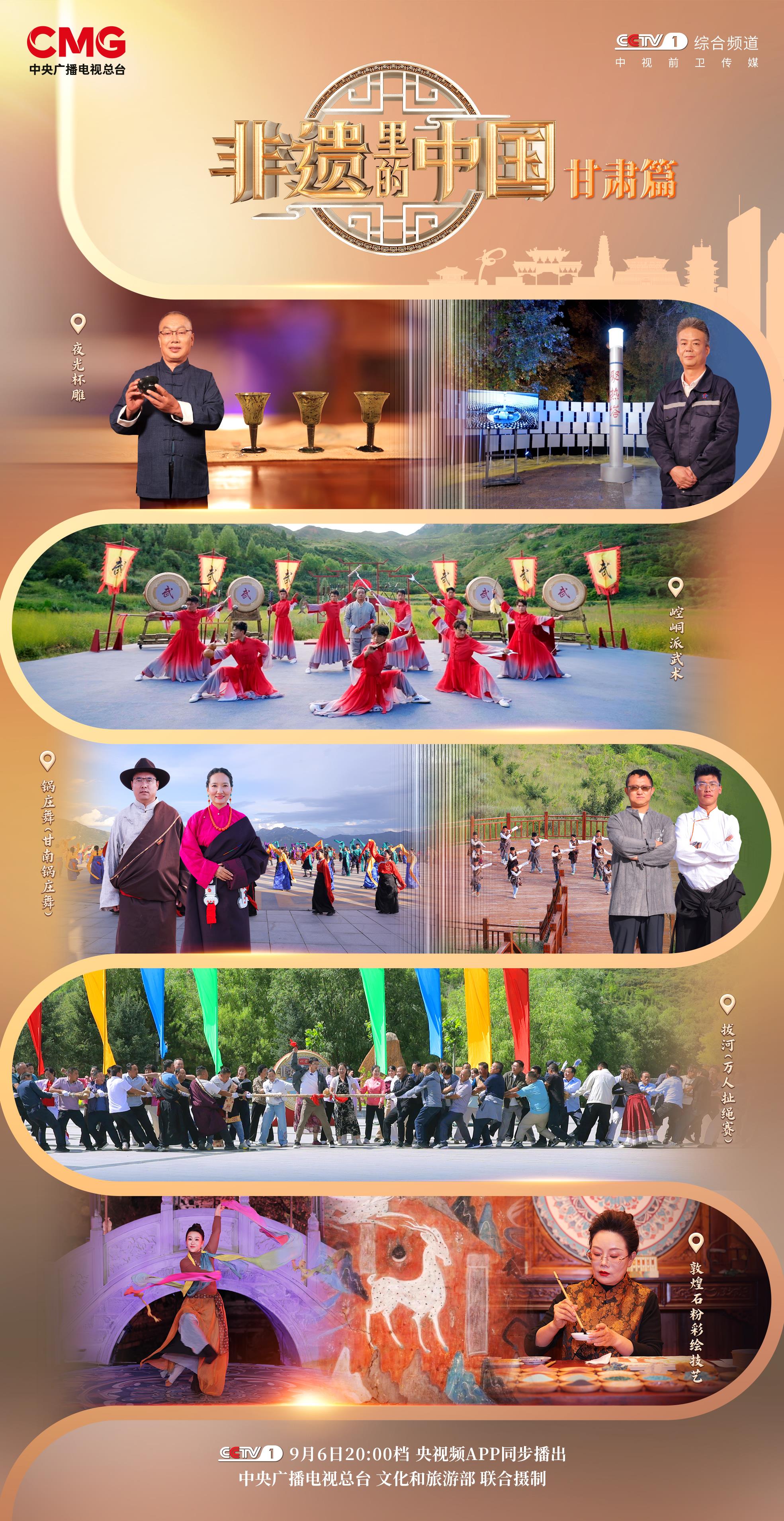
A poster for the Gansu episode of "China in Intangible Cultural Heritage" /CMG
The program highlighted more than 20 distinctive intangible cultural heritage practices, including the Guozhuang dance, tug-of-war, Kongtong martial arts, Dunhuang dance, Dunhuang stone-powder painting, and luminous cup carving.
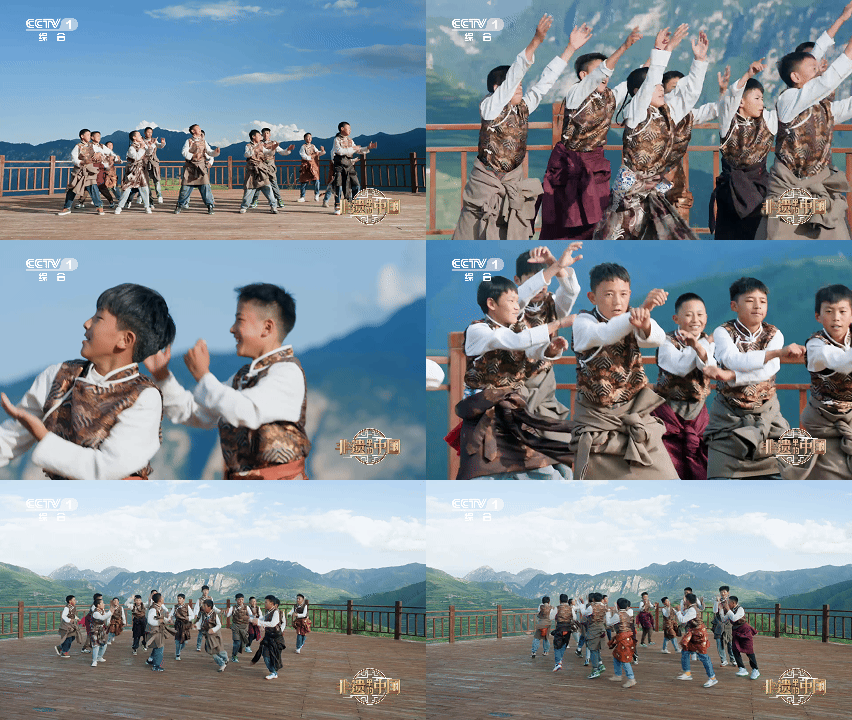
A screenshot shows the Guozhuang dance /CMG
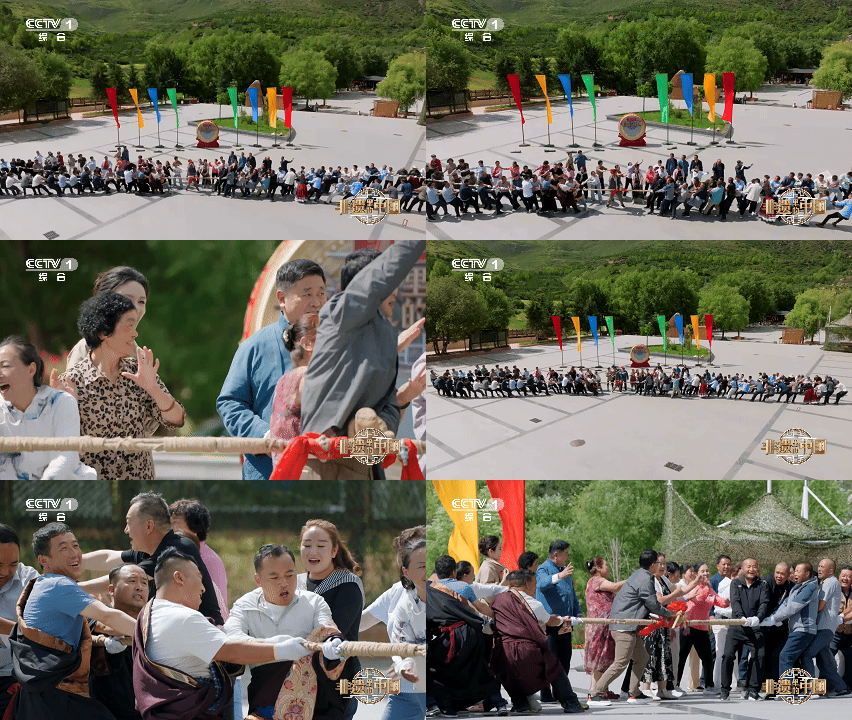
A screenshot shows the tug-of-war /CMG
Among them, the Guozhuang dance – performed by a group of people dancing in a circle and deeply connected to the daily life of Tibetans in Gannan Tibetan Autonomous Prefecture – serves as a vital carrier of local culture. A form of tug-of-war from Lintan County, with a history of over 600 years, originated as a military training exercise before evolving into a grand folk sport symbolizing unity, strength, and perseverance.
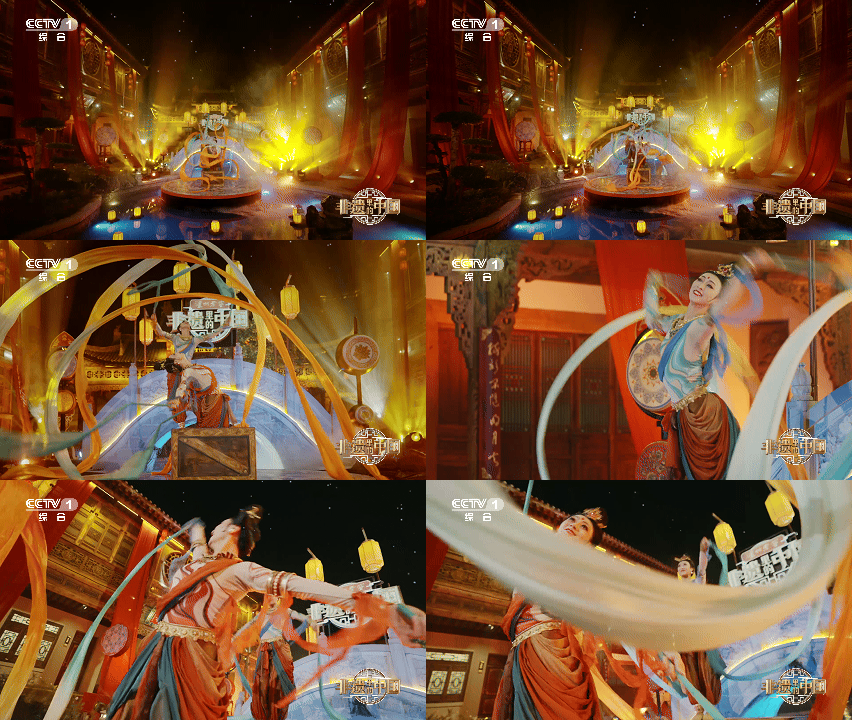
A screenshot shows the Dunhuang dance /CMG
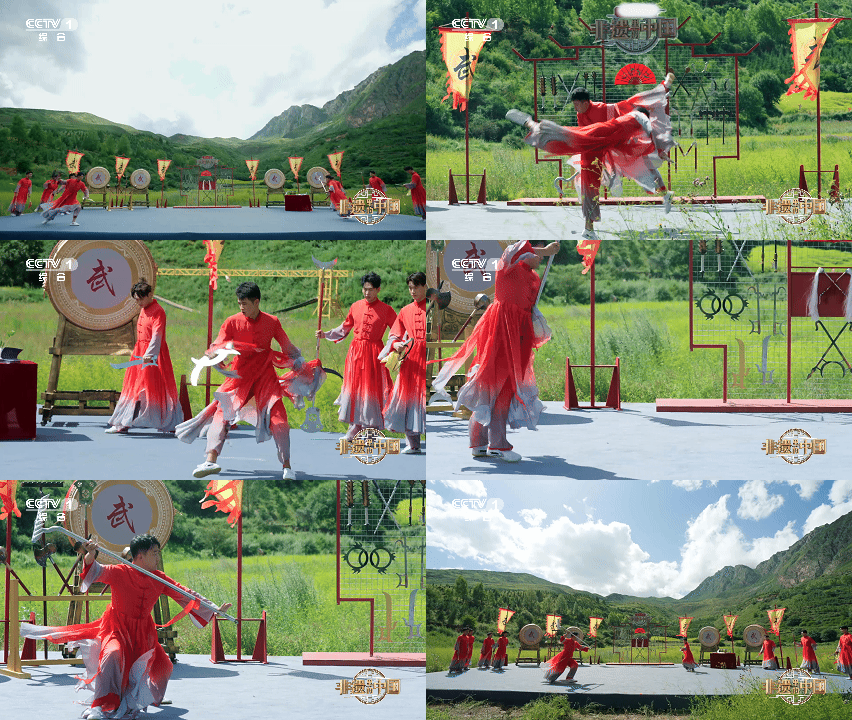
A screenshot shows the Kongtong martial arts /CMG
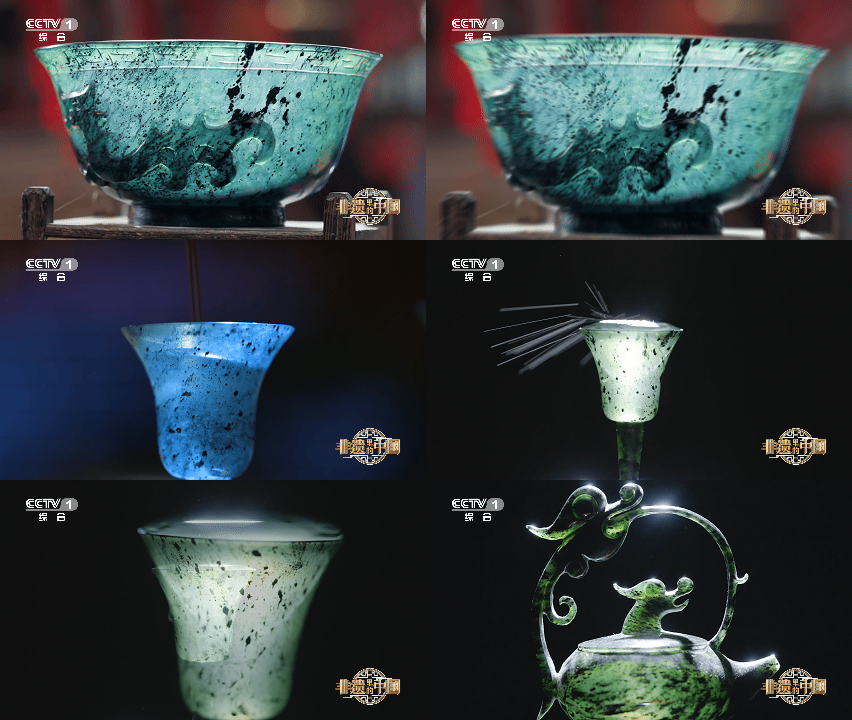
A screenshot shows the luminous cup carving /CMG
Gansu is home to 778 provincial-level and 83 national-level intangible cultural heritage items, three of which are inscribed on UNESCO's Representative List of the Intangible Cultural Heritage of Humanity. This rich heritage makes the province a key cultural crossroads along the ancient Silk Road.
Search Trends
SITEMAP
Copyright © 2023 CGTN. 京ICP备16065310号

Disinformation report hotline: 010-85061466
SITEMAP
Copyright © 2023 CGTN. 京ICP备16065310号
Disinformation report hotline: 010-85061466