
By continuing to browse our site you agree to our use of cookies, revised Privacy Policy and Terms of Use. You can change your cookie settings through your browser.
Full-scale test run completed: Beijing gears up for 2026 humanoid robot half-marathon

Share







Copied
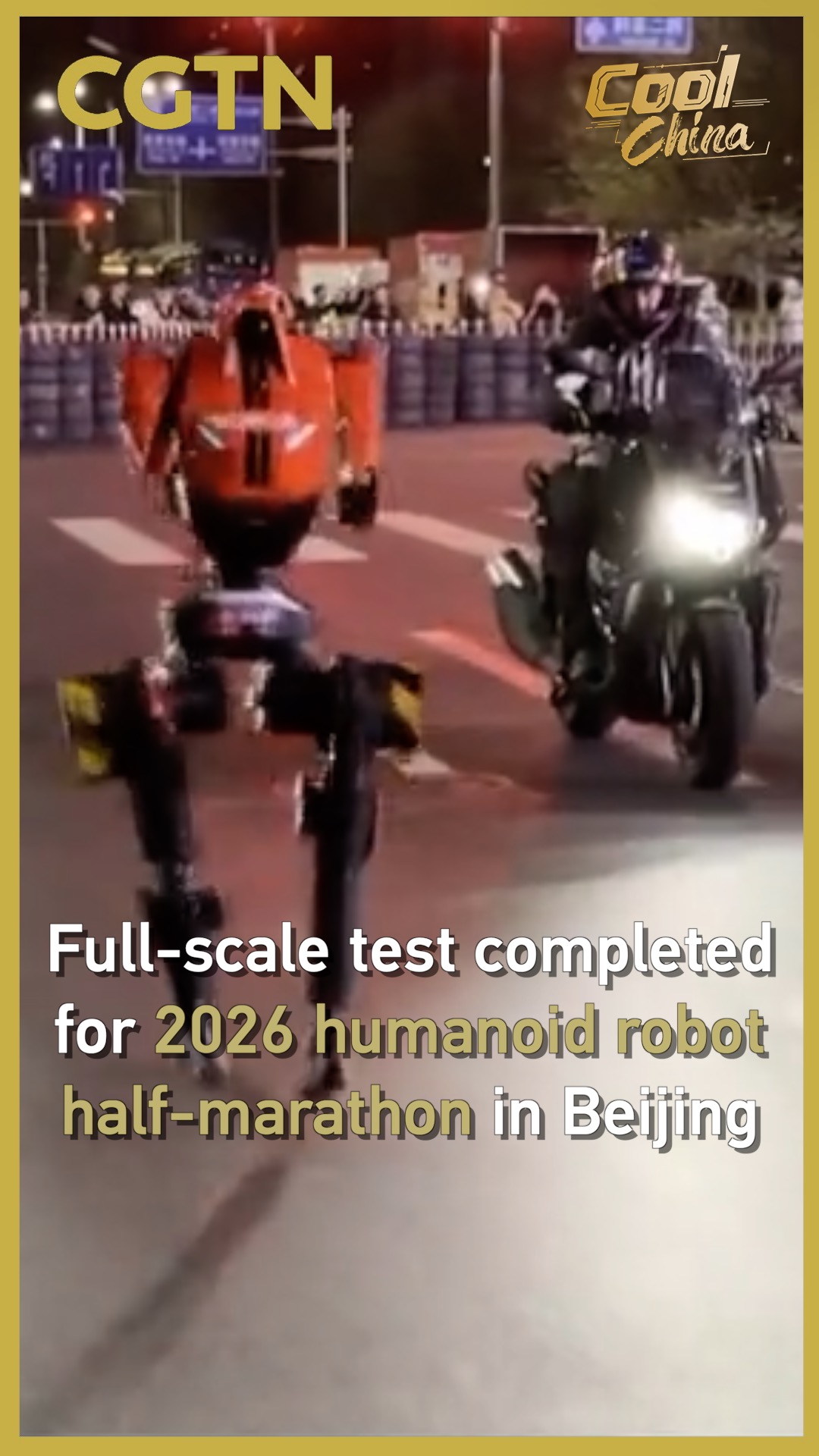
A full-scale test of the 2026 humanoid robot half-marathon was conducted from the evening of April 11 to the early morning of April 12 in Beijing's E-Town Economic and Technological Development Area, ahead of the official race on April 19.
The test simulated all key scenarios including track navigation, event scheduling, equipment coordination and emergency response to ensure a smooth and safe competition.
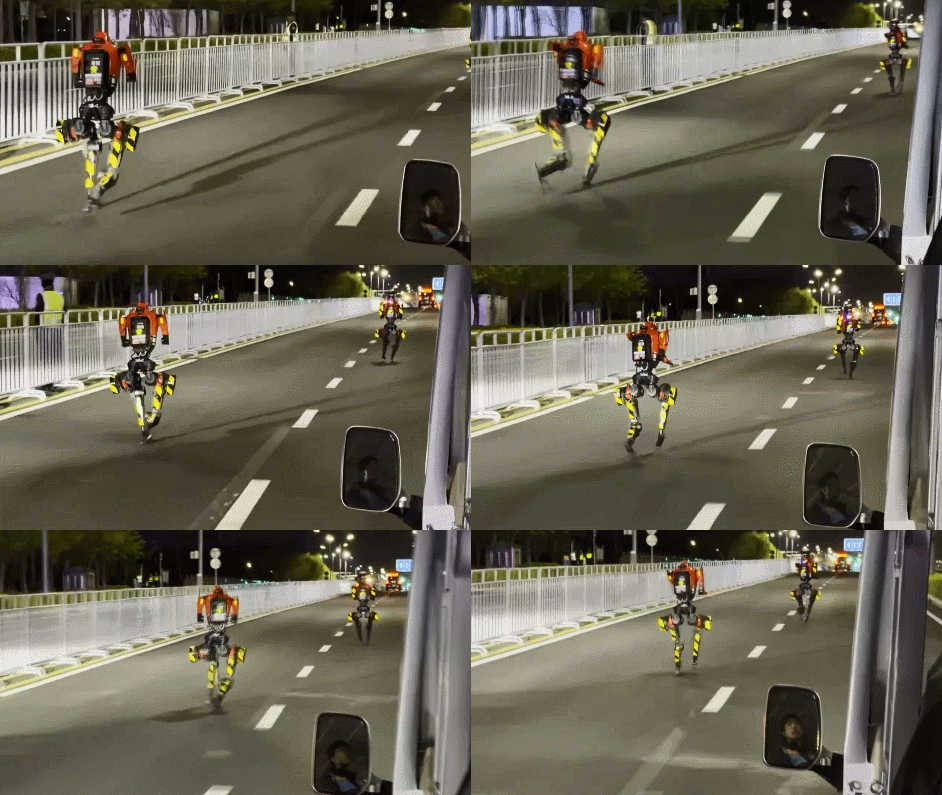
The humanoid robots competing in the full-scale test of the 2026 humanoid robot half-marathon. /CMG
More than 70 teams, including four international teams, participated in this test, with both autonomous navigation and remote-controlled robots taking part in nighttime trial.
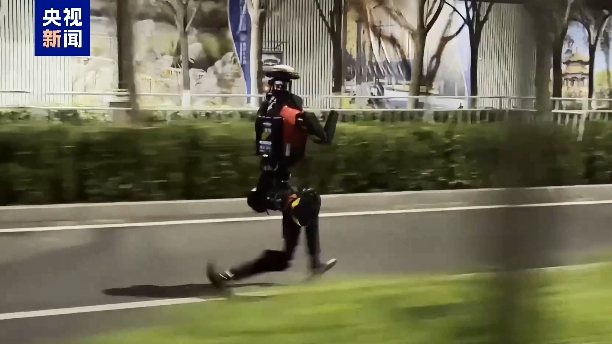
A robot running in the full-scale test of the 2026 humanoid robot half-marathon. /CMG
As the world's first humanoid robot marathon, this year's event sees over 100 teams' participation, a nearly fivefold increase compared to last year. It covers two main categories – autonomous navigation and remote control – with autonomous navigation teams accounting for nearly 40% of the total.
The rehearsal followed the complete 21.0975-kilometer race route under official race timing, track rules and support systems, testing the teams' performance in urban thoroughfares and ecological park terrain.
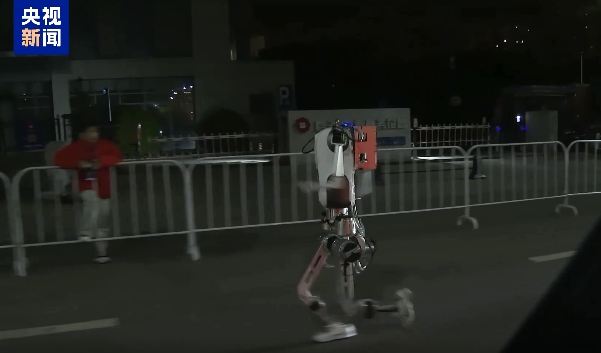
A robot competing in the full-scale test of the 2026 humanoid robot half-marathon. /CMG
A major highlight of this year's competition is the large-scale deployment of autonomous navigation technology. Robots must perceive and react to complex, dynamic environments, which demands high on computational capabilities. Meanwhile, long-distance running tests their battery life and energy management, while maintaining dynamic balance and precise gait control requires millisecond-level posture adjustments to prevent falls.
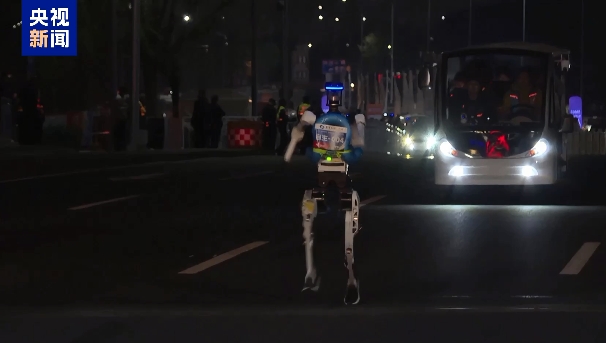
A robot in the full-scale test of the 2026 humanoid robot half-marathon. /CMG
The event has also upgraded its regulations, with stricter rules on human intervention, more scientific starting and running procedures, clearer scoring and penalty systems, more standardized resupply and equipment management, and more robust safety and emergency protocols.
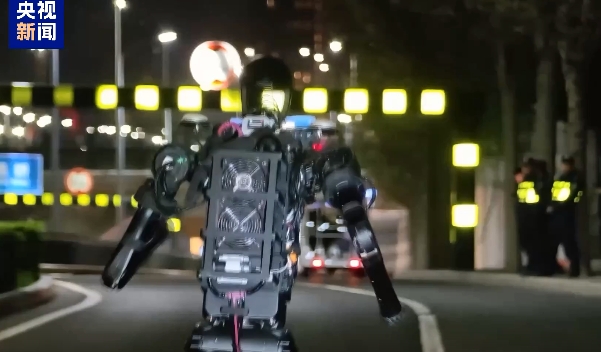
A robot in the full-scale test of the 2026 humanoid robot half-marathon. /CMG
Currently, robots' short-distance speed has improved significantly, and some racing teams are expected to reach the level of elite human athletes in terms of finishing times.
The official start of the race will mark a major step forward for the robotics industry, accelerating the transition of humanoid robots from laboratory prototypes to real-world applications.
Search Trends
