China successfully launched a Tianzhou-10 cargo spacecraft atop a Long March-7 Y11 carrier rocket from the Wenchang Spacecraft Launch Site in south China's island province of Hainan on Monday.
China Manned Space Agency said that the Tianzhou-10 cargo spacecraft successfully completed its status setup following orbital insertion and has docked smoothly with the aft port of the space station's Tianhe core module. Upon completion of the rendezvous and docking, the Tianzhou-10 will transition into the combined flight segment.
Tianzhou-10 is hailed as the world's most capable active-duty cargo spacecraft with the most comprehensive in-orbit support capabilities. This mission not only sets a new benchmark for payload capacity but also highlights the advancements in China's manned spaceflight endeavors.
Since the maiden flight of Tianzhou-1, the cargo spacecraft series has undergone significant technological upgrades.
Tianzhou-1 verified propellant refueling technology in space, marking the perfect conclusion of the space laboratory mission, while Tianzhou-2 docked with the core module to validate assembly management technologies.
Subsequent missions brought further advancements, as Tianzhou-3 transitioned into a batch production manufacturing model, and Tianzhou-5 astonished the world by achieving a rapid 2-hour rendezvous and docking, setting a new world record.
Major design improvements were implemented starting with Tianzhou-6, which increased the sealed cabin volume by 20% and boosted the cargo load capacity to over 7 tonnes.
According to Yu Lei, a senior engineer from the China Aerospace Science and Technology Corporation (CASC), "Starting from Tianzhou-6, we carried out a major design improvement, increasing the volume of the sealed cabin by about 20% and the weight of the cargo loaded to more than 7 tonnes. We have continued to make constant improvements up to Tianzhou-10."
In terms of payload, Tianzhou-10 is carrying nearly 6.2 tonnes of essential supplies, meticulously configured to sustain the orbiting outpost. The cargo manifest includes over 220 pieces (sets) of goods weighing approximately 5.2 tonnes, specifically tailored to support the daily work and life of the Shenzhou-23 and Shenzhou-24 crews.
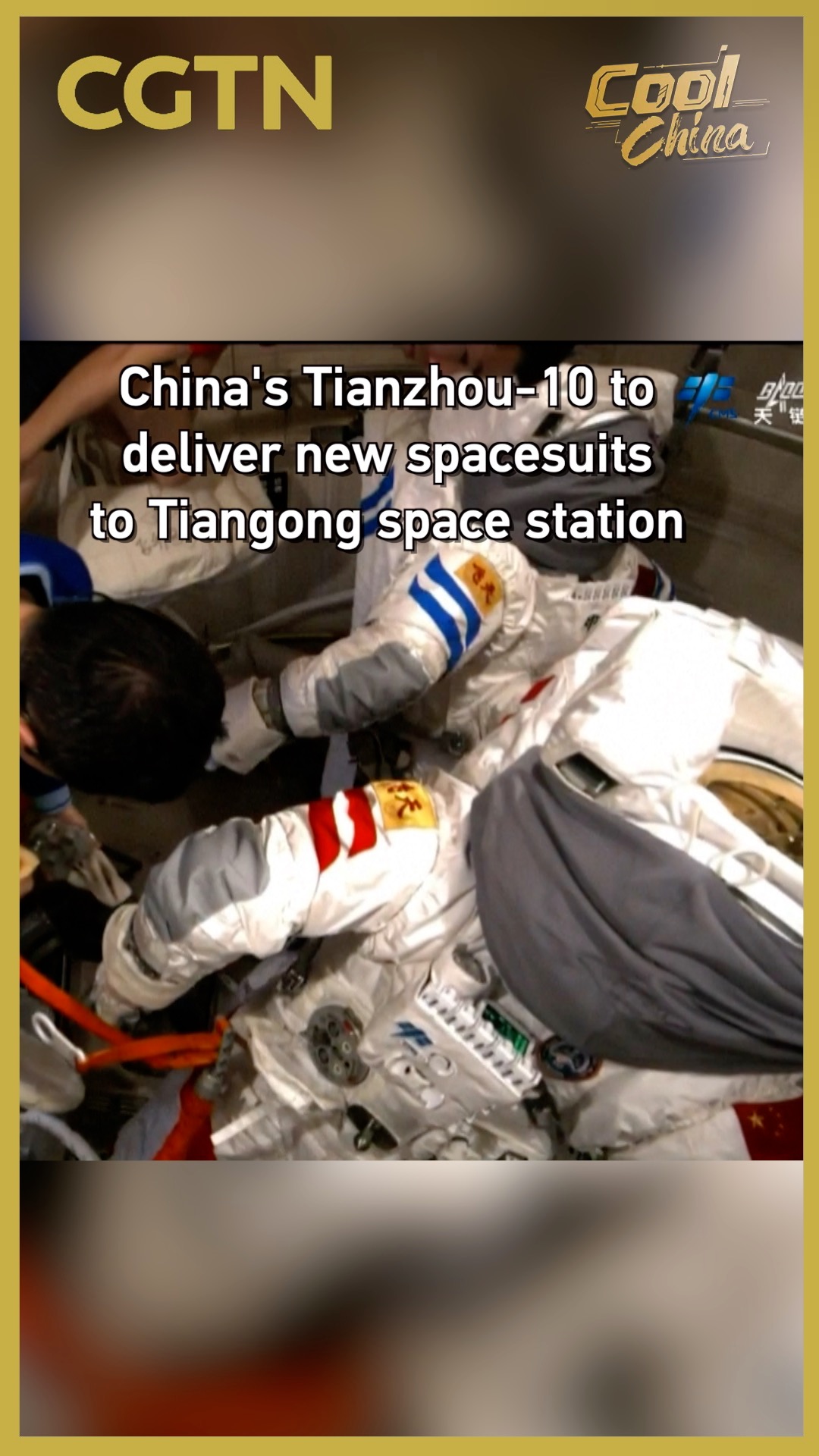
Beyond standard consumables, the spacecraft is delivering critical infrastructure, including one complete set of extravehicular spacesuits and various maintenance spare parts necessary for the long-term stable operation of the space station systems.
Furthermore, the mission includes approximately 700 kilograms of propellant dedicated to refueling the station, ensuring its ability to maintain orbit and conduct long-term scientific operations. This comprehensive resupply underscores the robustness of the logistical chain supporting China's permanent presence in low-Earth orbit.
This mission marks a significant operational milestone within the broader context of China's manned spaceflight program. The launch of Tianzhou-10 is the 5th cargo resupply mission since the space station entered its application and development stage, serving as the 39th launch of the project since its inception.
Furthermore, it marks the 641st flight of the venerable Long March rocket series and the 10th flight of the Tianzhou spacecraft. The flawless execution of this mission once again demonstrates the maturity, reliability and advanced capabilities of China's space station logistics system.