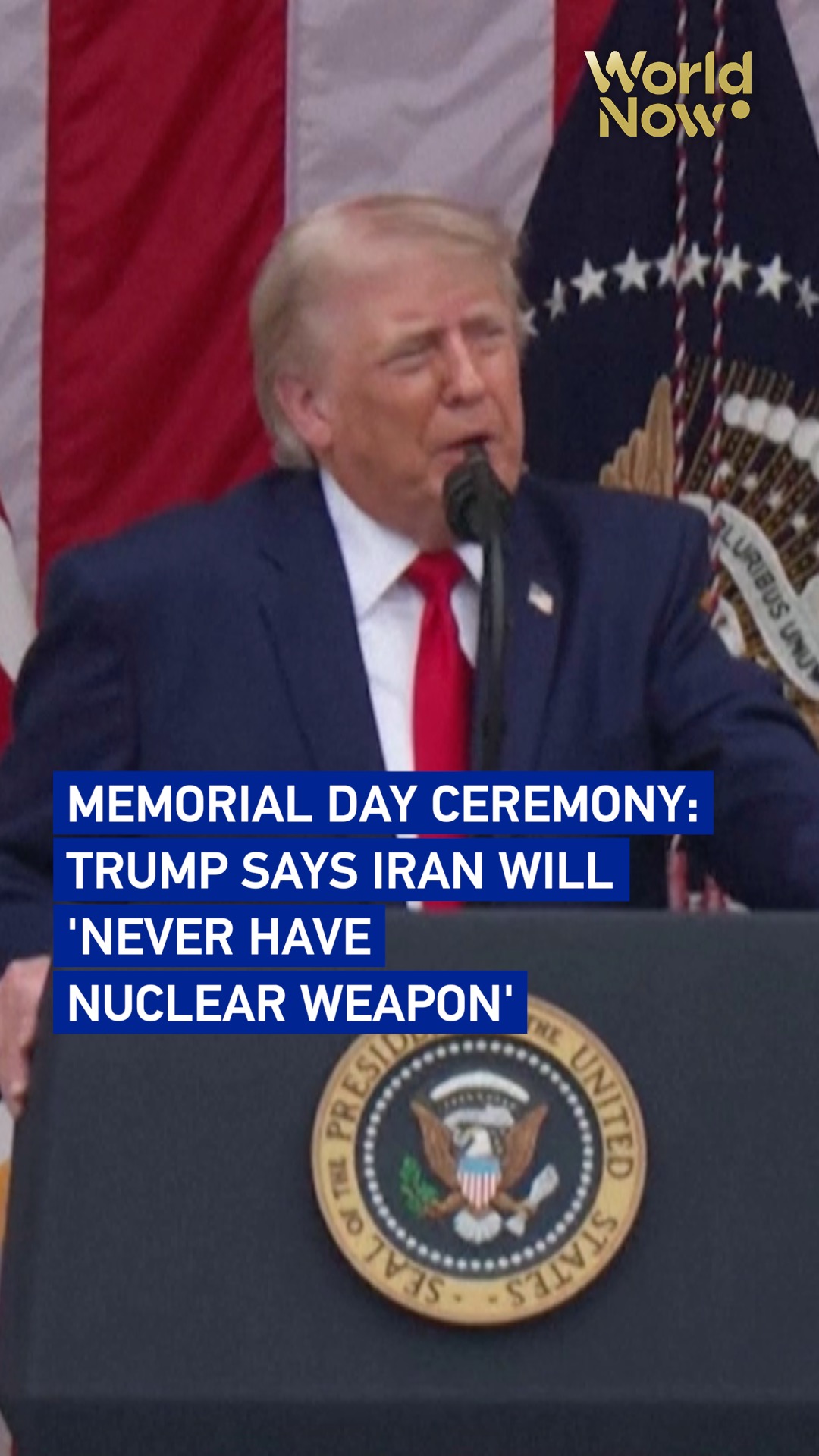
The US on Monday conducted "defensive" strikes in southern Iran against targets including boats which it said were attempting to lay mines and missile launch sites.
"US Central Command continues to defend our forces while using restraint during the ongoing ceasefire," said Navy Captain Tim Hawkins, a Central Command spokesperson.
The strikes came as Iran's top negotiator and its foreign minister were in Doha for talks with Qatar's prime minister on a potential deal with the US to end the nearly three-month-old war.
The discussions in Doha focused on the Strait of Hormuz and Iran's stockpile of highly enriched uranium, while Iran's central bank governor attended to discuss the potential release of frozen Iranian funds as part of a final deal, Reuters reported.
The US and Iran have played down hopes for an imminent breakthrough. In a lengthy post on Truth Social on Monday, US President Donald Trump said talks with Iran were going "nicely," but warned of fresh attacks if they failed. It "will only be a Great Deal for all, or no Deal at all," he wrote.
The Washington Post, citing an Iranian official, said on Monday that in the first phase of a possible Iran deal, Washington will release $12 billion in frozen Iranian assets, minesweeping in the Strait of Hormuz will begin, and the US blockade will be lifted.
However, the deal does not include a nuclear agreement, the Iranian official was quoted as saying.
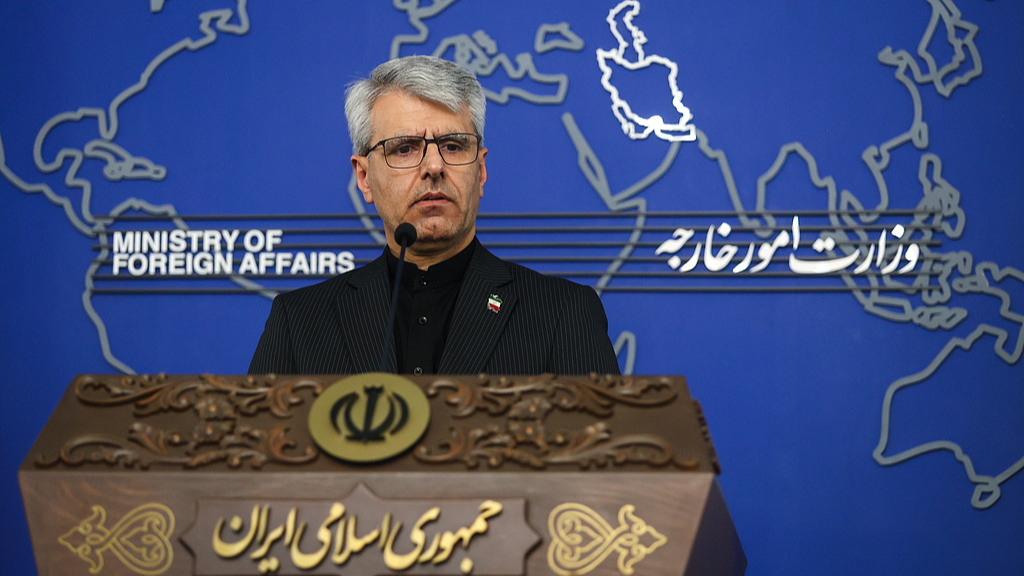
Esmaeil Baghaei, a spokesperson for the Iranian Foreign Ministry, during his weekly press conference in Tehran, Iran, May 25, 2026. /VCG
Sticking points in Iran deal
Trump has said his key aim in the war is to prevent Iran from developing a nuclear weapon with its highly enriched uranium.
On Monday, Trump wrote on Truth Social that "the Enriched Uranium (Nuclear Dust!) will either be immediately turned over to the United States to be brought home and destroyed or, preferably, in conjunction and coordination with the Islamic Republic of Iran, destroyed in place or, at another acceptable location, with the Atomic Energy Commission, or its equivalent, being witness to this process and event."
Earlier on Monday, Iran's Tasnim news agency reported that Tehran had not agreed to transfer enriched uranium abroad, rejecting a report by Saudi-based Al Hadath news channel claiming that "Iran is prepared to remove its highly enriched uranium from its territory."
Iranian Foreign Ministry spokesperson Esmaeil Baghaei said earlier that nuclear issues would only be negotiated after a framework accord was agreed.
Baghaei said the potential Iran deal contained no specific details on management of the Strait of Hormuz, through which about a fifth of the world's oil and liquefied natural gas usually flows.
Iran will not charge tolls for ships to pass through but there will be a cost for services offered such as navigation and steps to protect the environment, he said, under a protocol to be agreed with Oman, which lies on the opposite shore of the waterway.
Since the US and Israel launched strikes on Iran on February 28, only a few dozen vessels have been passing through the Strait of Hormuz compared with 125 to 140 daily previously.
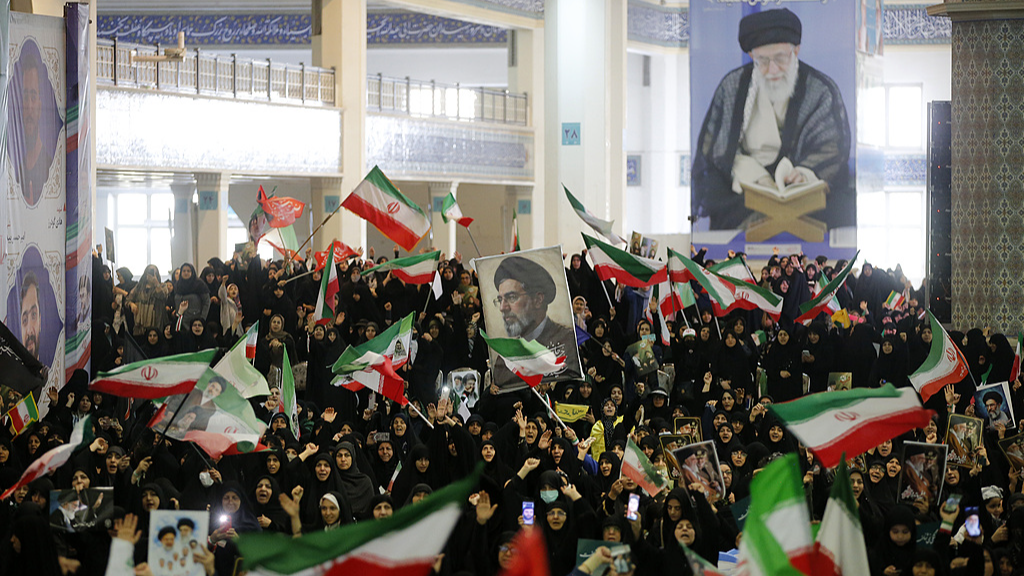
A memorial ceremony is held at the Imam Khomeini Mosalla Mosque for those who lost their lives in the conflict involving Iran, the United States and Israel following the February 28 attacks, Tehran, Iran, May 24, 2026. /VCG
Uncertain future
Iran, the United States and Israel reached a ceasefire on April 8 after 40 days of fighting. Following the truce, Iranian and US delegations held one round of peace talks in Islamabad on April 11 and 12, which failed to yield an agreement.
Over the past weeks, the two sides have reportedly exchanged several proposed plans outlining conditions for ending the conflict through Pakistani mediation.
The Doha talks on Monday marked the negotiations over a US-Iran memorandum of understanding on a ceasefire entering the final stage, said Li Zixin, assistant researcher at the China Institute of International Studies.
Noting statements form relevant parties have become increasingly frequent and tougher in tone, Li said this reflects that each side is seeking to maximize its own interests at the last minute while preparing public opinion for a possible phased de-escalation, with each hoping to leave the battlefield in the posture of a "winner."
Acknowledging Washington's red lines lie in keeping the strait open and securing commitments on the nuclear issue, while Tehran's bottom lines center on lifting the blockade and leaving the nuclear issue for follow-up negotiations, Li said there is still some room for compromise between the two sides.
However, Li warned if Washington and Tehran do reach a deal, Israel's demands may prove difficult to fully accommodate.
Ultimately, whether an agreement can be reached will depend on whether all sides can find a delicate balance between their respective red lines, Li said.
(With input from agencies)