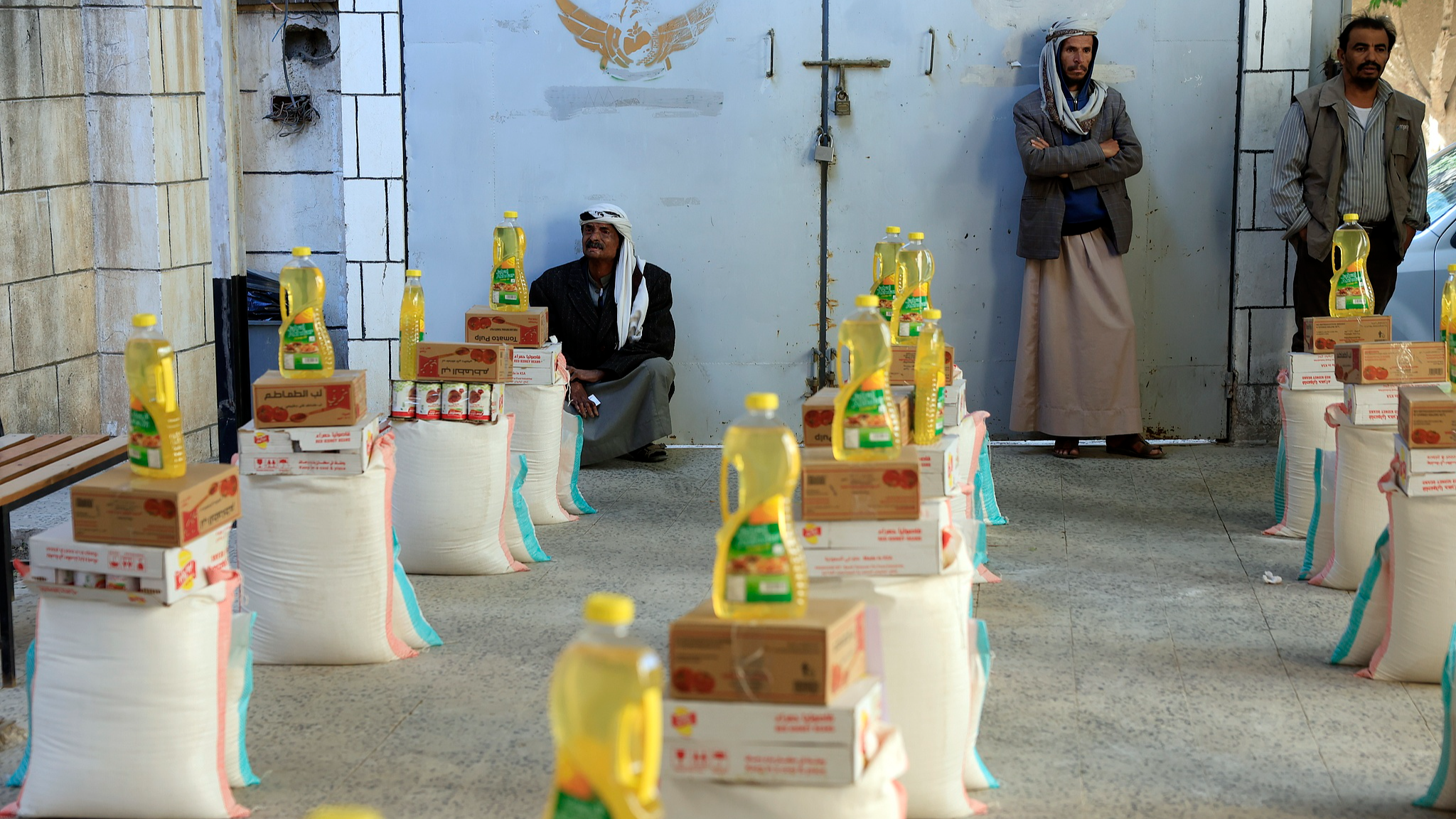
Yemenis wait to receive rations of food aid, supplied by the Mona Relief agency, at a distribution center in Sana'a, Yemen, 22 November 2025. /VCG
Nearly 5 million people, or one in two people across 12 government-controlled areas in Yemen, experienced high levels of acute food insecurity between March and May this year, a UN spokesperson said on Wednesday, citing the latest Integrated Food Security Phase Classification analysis.
To tackle the situation, the Food and Agriculture Organization, the World Food Programme, and the United Nations Children's Fund jointly called on the international community to urgently scale up funding for humanitarian food assistance, nutrition services, health, agriculture and resilience programming, Stephane Dujarric, spokesperson for the UN secretary-general, told a daily briefing.
Between June and September this year, an estimated 5.4 million people living in the government-controlled areas including Aden, Hadramawt, Marib and Taiz, are projected to face high levels of acute food insecurity, Dujarric said.
The agencies warned that without immediate, sustained and scaled-up action, millions of vulnerable people risk falling deeper into hunger, malnutrition and irreversible livelihood loss, the spokesperson noted, adding that the United Nations and its humanitarian partners published the 2026 Yemen Humanitarian Needs and Response Plan in March, seeking $2.16 billion to provide life-saving humanitarian assistance to 12 million people across Yemen.