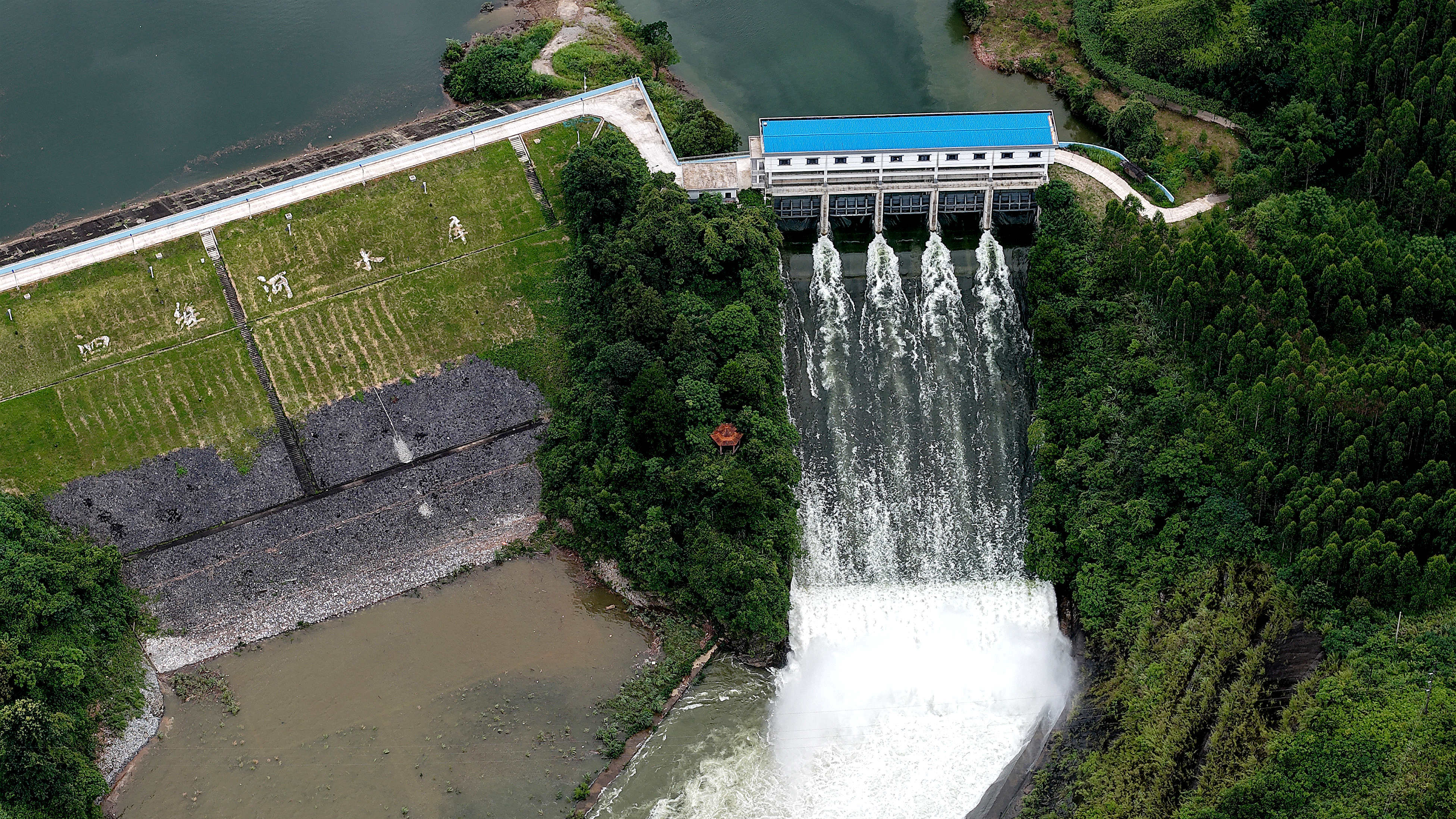
Water is released from the Siwei River Reservoir in Rong'an County, Liuzhou City, south China's Guangxi Zhuang Autonomous Region, to increase flood storage capacity ahead of Typhoon Maysak, July 5, 2026. /VCG
Heavy rainfall triggered by Typhoon Maysak has raised flood risks in south China's Guangxi Zhuang Autonomous Region, prompting authorities to step up emergency response efforts.
According to the Guangxi Hydrology Center, as of 8 p.m. on Saturday, 29 rivers and 36 hydrological stations across the region remained above flood warning levels by 0.11 to 4.10 meters.
The hydrology center said the Fangcheng hydrological station on the Fangcheng River reached a water level of 9.89 meters at 11 a.m. on Saturday, 4.39 meters above the warning level, marking the highest level recorded since the station was established in 1982.
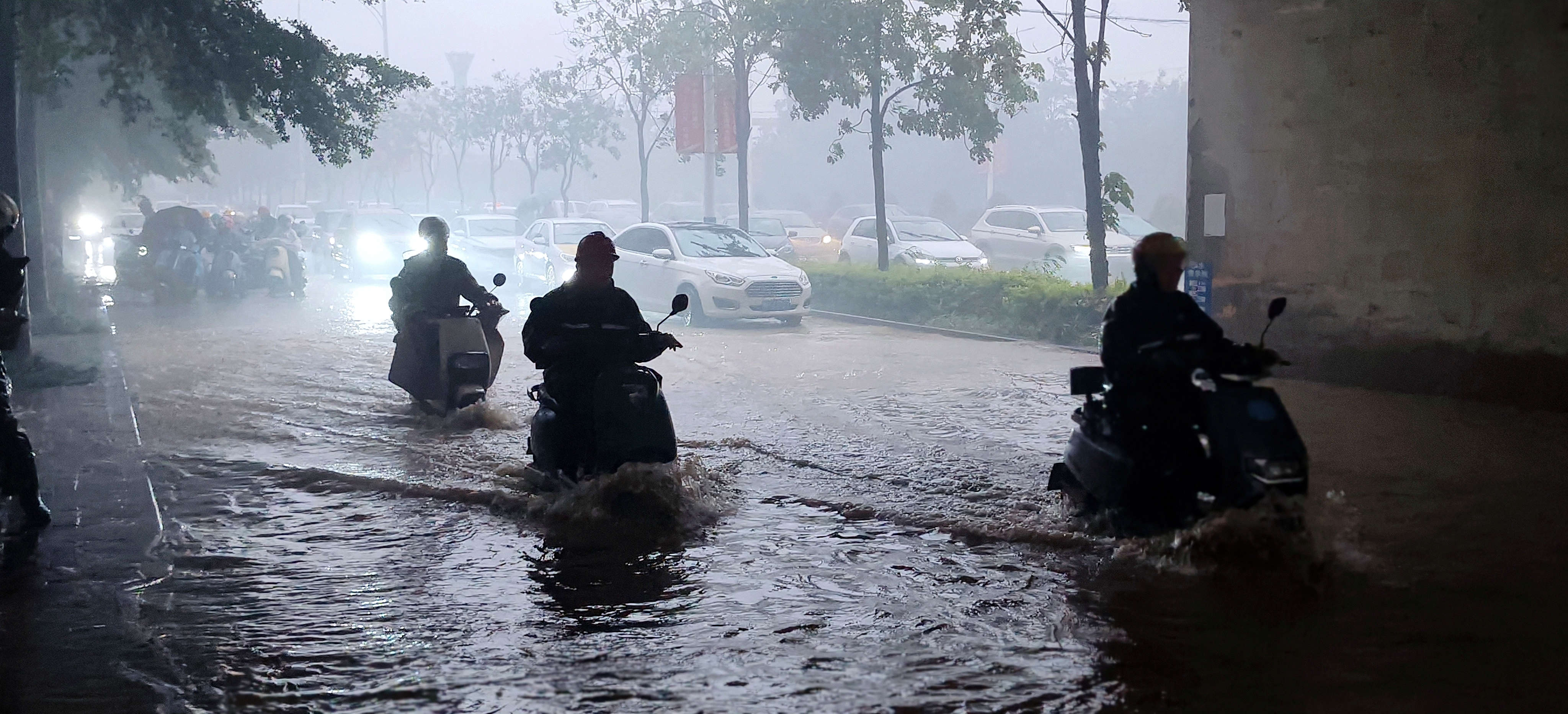
Vehicles make their way through floodwaters beneath a railway bridge in Fangchenggang, south China's Guangxi Zhuang Autonomous Region, July 5, 2026. /VCG
In response to the worsening flood situation, the Guangxi Department of Water Resources raised the regional emergency flood response from Level IV to Level III on Saturday, while the Guangxi Hydrology Center maintained a yellow flood alert.
The Ministry of Water Resources also upgraded its flood emergency response for Guangxi to Level III, warning that parts of the region could receive 80 to 190 millimeters of rainfall between July 5 and 7, with some areas expected to receive up to 400 millimeters. The ministry said major rivers, including the Xijiang, Liujiang and Guijiang, could exceed warning levels, while 23 counties were placed under the highest-level warning for possible mountain torrents.
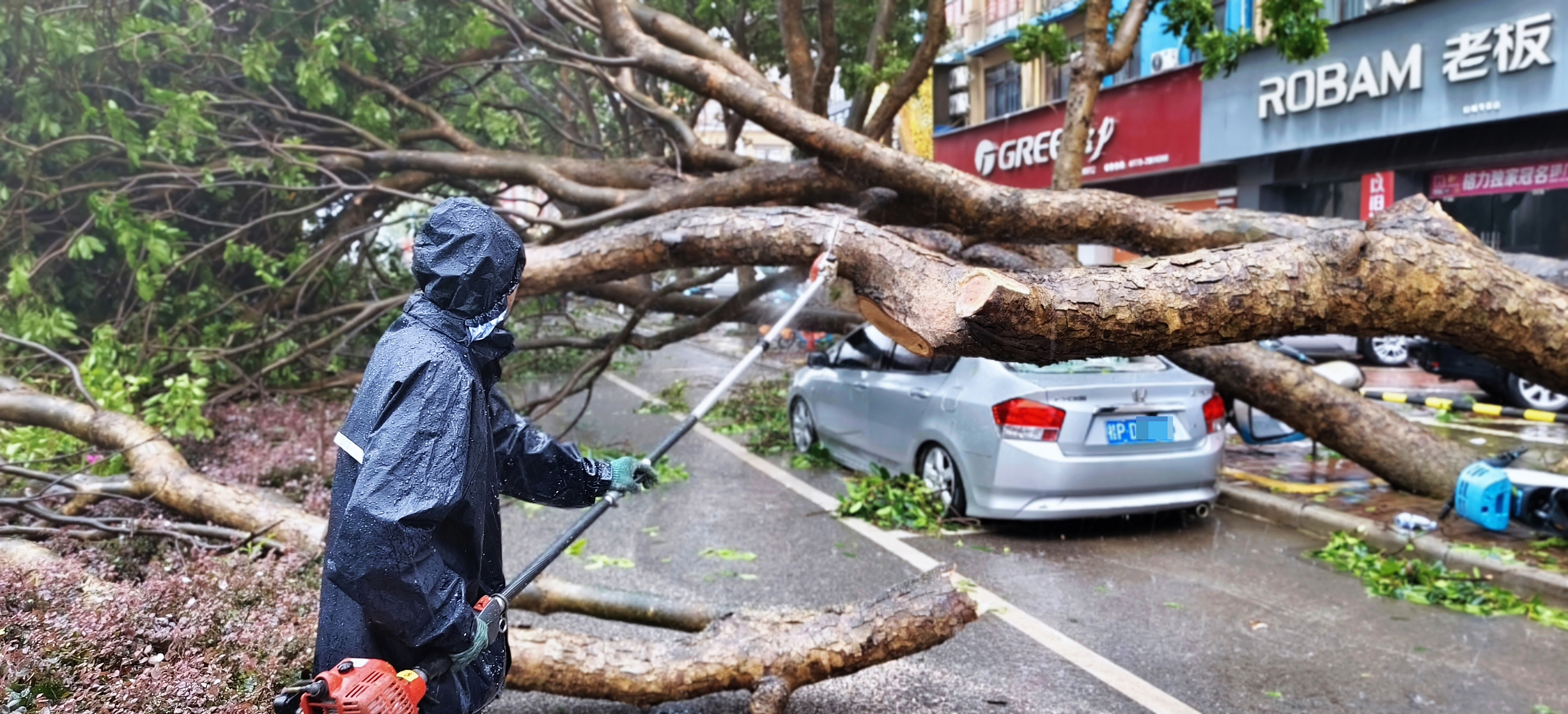
Workers clear trees felled by strong winds in Fangchenggang, south China's Guangxi Zhuang Autonomous Region, July 5, 2026. /VCG
Meanwhile, the Ministry of Emergency Management dispatched additional working teams to Guangxi and northeast China's Liaoning Province to support flood-control and disaster relief efforts as heavy rainfall affected other parts of the country.
Authorities warned that heavy rainfall is expected to continue across southern China, including parts of Guangdong, Guizhou, Yunnan and Hunan, before extending to the middle and lower reaches of the Yangtze River, increasing the risks of river flooding, flash floods, geological disasters and urban waterlogging.